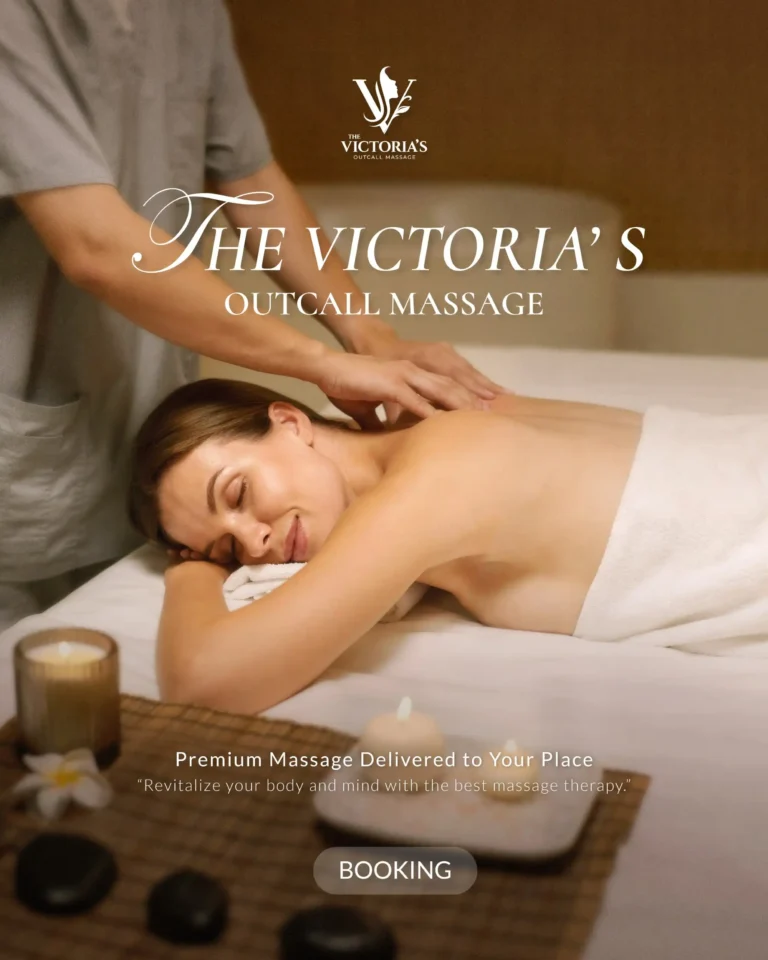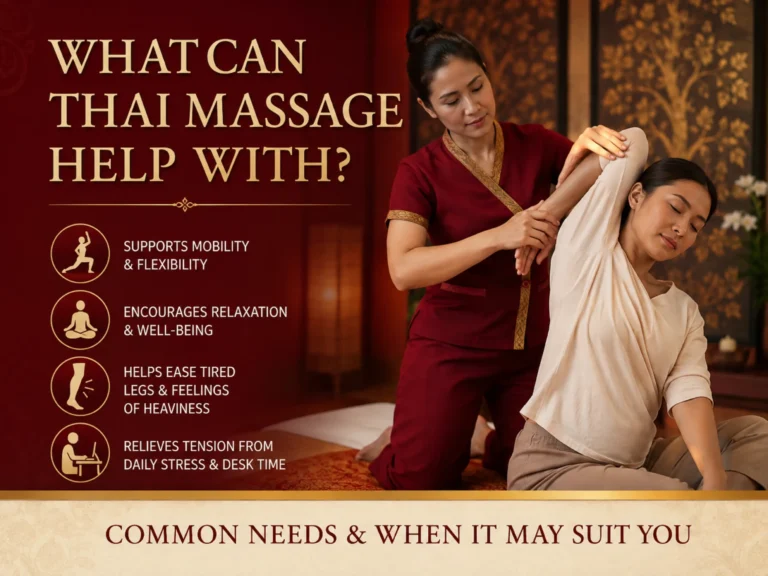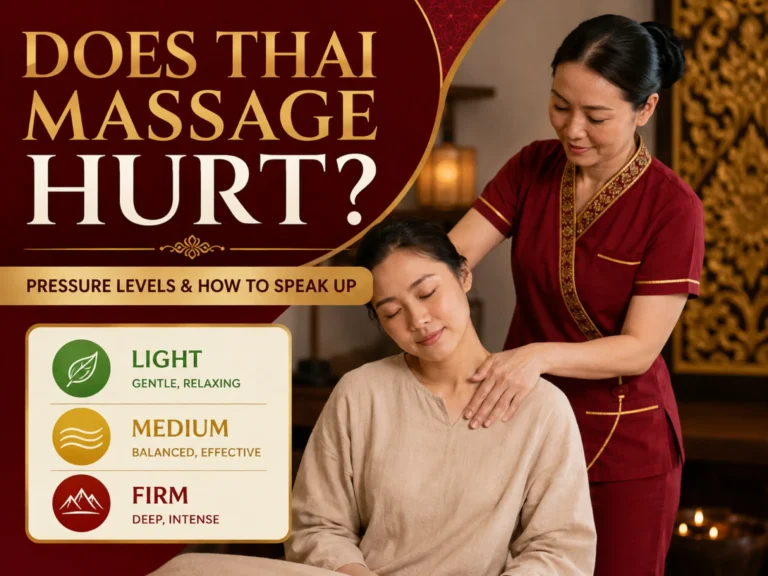
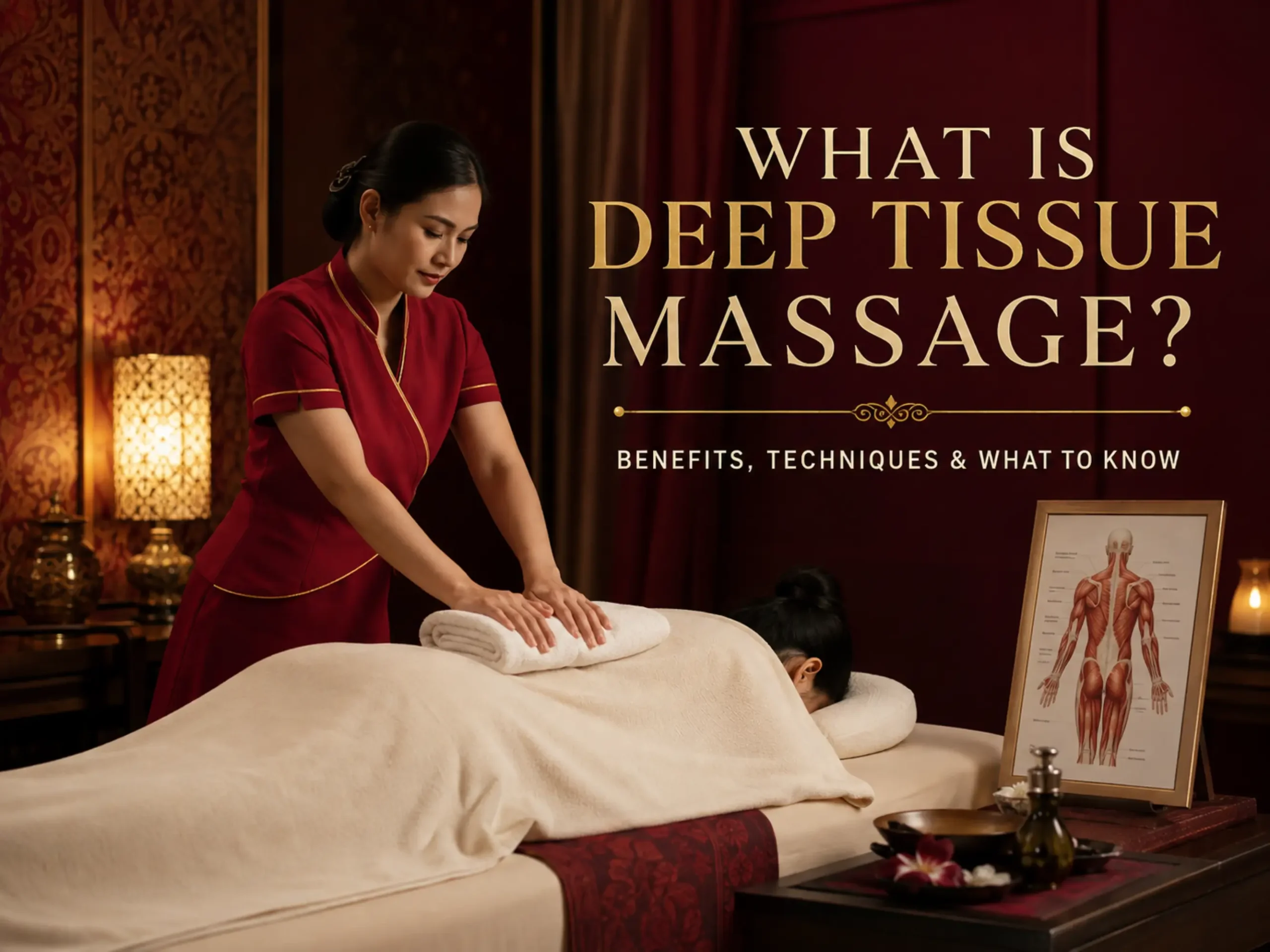
Wondering what Deep Tissue Massage is, what it can help with, who it is suitable for, and how it differs from Thai or Swedish massage? Deep Tissue Massage uses relatively slow movements and pressure adjusted to the client’s condition to work on muscles and tissues with more accumulated tension than a typical relaxation massage.
This article explains the principles, common techniques, how the massage may feel, aftercare, and precautions to help you decide whether Deep Tissue Massage matches your goals and physical condition. If you are still unsure which massage type to choose, see the overview at Types of Massage You Should Know
Table of Contents
What Is Deep Tissue Massage?
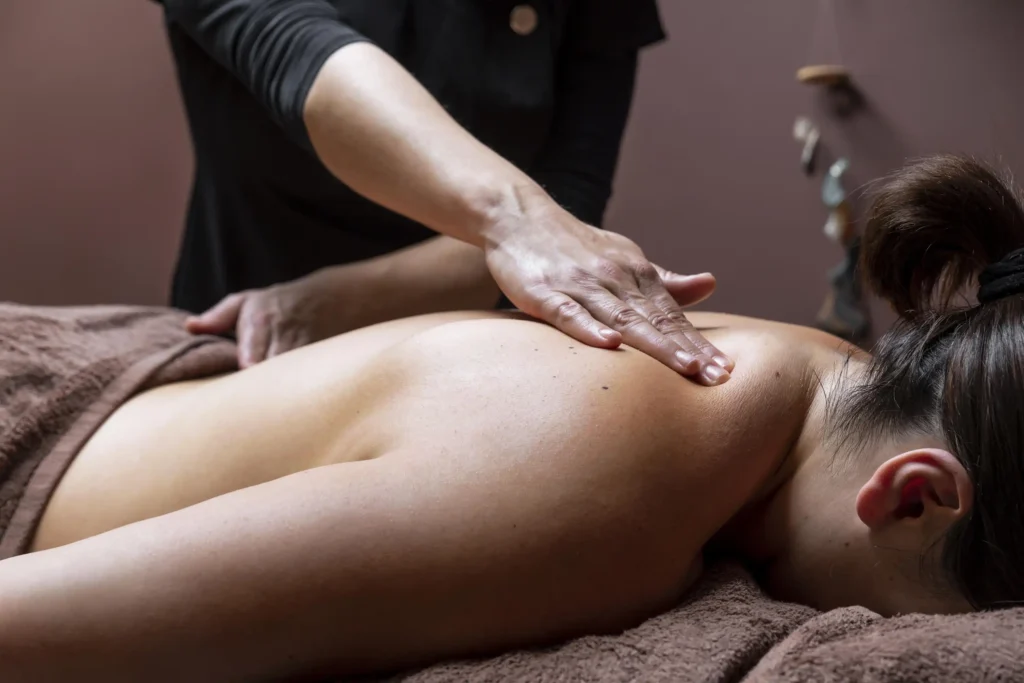
Deep Tissue Massage is a technique that uses slow, sustained pressure on tight muscles. Depending on the area and appropriate pressure level, the therapist may use the thumbs, knuckles, palms, forearms, or elbows. The goal is not to press as hard as possible, but to apply pressure accurately and gradually.
This type of massage often works with deeper muscle layers than a relaxation massage, including some connective tissue and fascia around the muscles. The goal is to reduce feelings of accumulated tightness, make movement feel more comfortable, and help clients become aware of areas that are overused or habitually tense.
Deep Tissue Massage is not a medical treatment, and results vary from person to person. If you have severe pain, numbness, weakness, an acute injury, or a suspected medical problem, consult a doctor or healthcare professional before getting a massage.
How Is Deep Tissue Massage Different from a Regular Massage?
The main differences are the goal, pressure level, pace, and areas of focus. A typical relaxation massage often uses flowing movements and light to medium pressure for overall comfort, while Deep Tissue Massage usually spends more time on specific muscles that are tight or heavily used.
| Massage Type | Main Goal | Pressure and Technique | Suitable for People Who Want |
|---|---|---|---|
| Deep Tissue Massage | Work on accumulated tightness in specific muscles | Slow pace with medium to relatively deep pressure, adjusted by area | Focus on muscles tightened by work, exercise, or repetitive posture |
| Swedish Massage | Overall relaxation | Stroking, kneading, and continuous rhythmic movements | Comfort, reduced fatigue, and a gentler experience |
| Thai Massage | Pressure, stretching, and body movement | Uses pressure with stretching and generally does not focus on oil | People who enjoy stretching and multiple body positions |
| Oil Massage | Relaxation while reducing friction on the skin | Uses oil and flowing movements | People who want comfort and a relaxing atmosphere |
If your goal is relaxation and you do not like deep pressure, you may want to start with Swedish Massage or oil massage. If you want to focus on specific areas of tightness, Deep Tissue Massage may be more suitable.
What Techniques Are Used in Deep Tissue Massage?
The exact techniques used depend on the therapist’s assessment, the muscle location, sensitivity to pressure, and the client’s goals. A good session should begin with light or medium pressure to prepare the tissues before gradually increasing intensity.
1. Slow Deep Pressure
The therapist uses slow, sustained pressure along the muscles rather than fast or abrupt pressure. This gives the client time to adjust and communicate if the pressure becomes too strong.
2. Cross Fiber Technique
This technique works across the direction of muscle fibers in selected areas to focus on tight spots. It requires precision and should not be used on inflamed, injured, or sharply painful areas.
3. Trigger Point Work
The therapist may focus on areas that feel knotted or sensitive to pressure, holding pressure briefly and adjusting based on the body’s response. Clients should immediately report numbness, radiating pain, or unusual pain.
4. Myofascial Work
Some approaches use gradual pressure across the tissues around the muscles to help the area feel more relaxed and move more comfortably. This technique does not always require strong pressure.
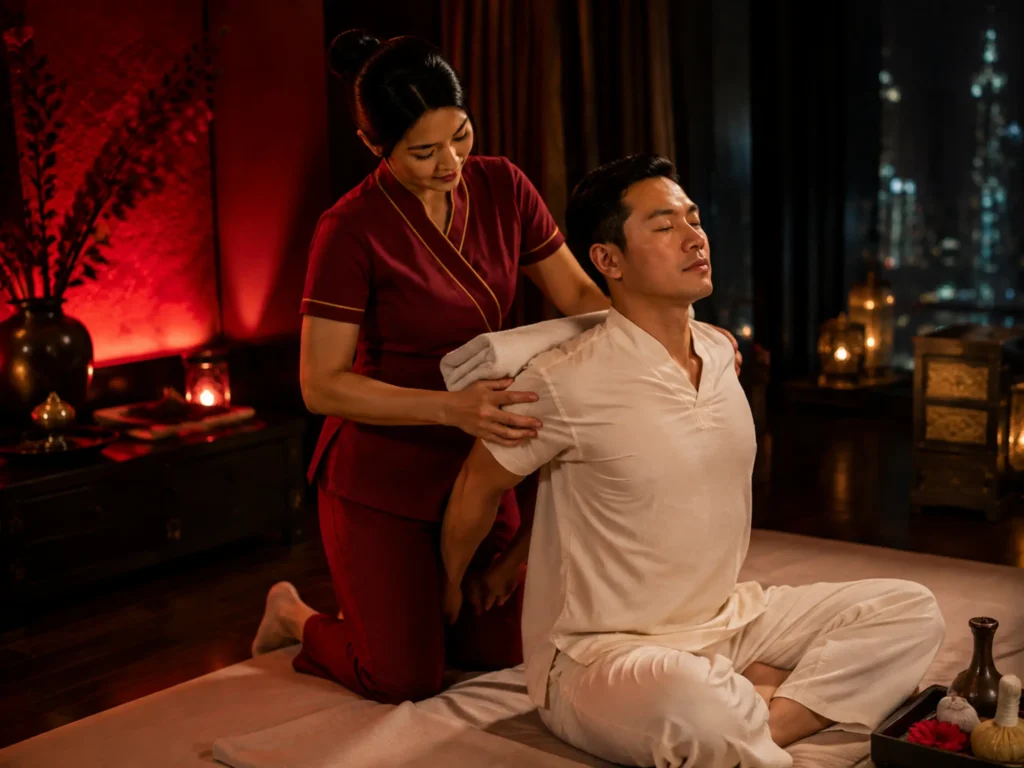
What Can Deep Tissue Massage Help With?
Many clients choose Deep Tissue Massage when they want to focus on tightness in specific areas such as the neck, shoulders, back, shoulder blades, hips, thighs, or calves. However, it is more appropriate to say that massage may “help you feel more comfortable” rather than guarantee treatment results, because the causes of pain and tightness can vary.
Relieve Persistent Muscle Tightness
Long periods of sitting, repetitive mouse use, lifting, exercise, or staying in the same posture can cause accumulated tightness in certain areas. Deep Tissue Massage can focus on these muscles, but pressure should be assessed area by area rather than applied equally across the body.
Reduce Feelings of Fatigue After Physical Activity
For people who exercise or use their bodies heavily, massage may help them feel more relaxed after muscle use. However, strong massage should not be performed immediately when there is injury, swelling, redness, heat, or acute pain. Read more at How Long Should You Wait Before a Massage After a Workout?
Help Movement Feel More Comfortable
When tightness decreases, some people may temporarily find it easier to turn the neck, raise the arms, bend, or walk. Results depend on the cause of the tightness, daily habits, and how the body is cared for after the session.
Ease Physical Tension
Although Deep Tissue Massage is more intensive than a relaxation massage, the slower pace, steady breathing, and release of tense muscles may help some people feel lighter and more relaxed after the session.
Who Is Deep Tissue Massage Suitable For?
This massage may suit people who want to focus on specific muscles and can communicate about pressure throughout the session. It should not be chosen simply because you believe “stronger is better.”
Office Workers
People who sit for long periods, use computers continuously, or feel tightness in the neck, shoulders, and back may choose Deep Tissue Massage to focus on repeatedly used areas. However, radiating numbness down the arm, severe headaches, or weakness should be medically evaluated first.
Athletes and People Who Exercise
People who run, cycle, lift weights, or train regularly often have muscle groups that are used more heavily. Massage can be adjusted to focus on those areas, but it should be distinguished from injury care and should not replace rehabilitation recommended by a professional.
People with Accumulated Muscle Tightness
This may include people who feel tightness in the back, shoulder blades, shoulders, or calves from repetitive activities without warning signs. However, “chronic” does not mean you should keep getting massages without identifying the cause. If symptoms do not improve or interfere with daily life, consult a professional.
People Who Prefer Medium to Deeper Pressure
Deep Tissue Massage pressure can be adjusted and does not need to start very strong. First-time clients should begin at a medium level and increase pressure only in selected areas as comfortable.
Is Deep Tissue Massage Painful?
Deep Tissue Massage may feel intense, but it should not be so painful that you hold your breath, tense up, pull away, or experience numbness or sharp pain. Mild tightness or tenderness in some areas may occur, but it should remain within a level the client can tolerate and communicate about.
Before starting, tell the therapist your preferred pressure level, any previous injuries or surgeries, and any areas you do not want touched. During the massage, you can ask for less pressure, a change in position, or an immediate stop. A suitable massage should not measure quality by how much pain you can tolerate.
Why Do Some People Feel Sore After Deep Tissue Massage?
Some people may feel mild tightness or soreness after the massage, especially when heavily used areas were worked on or when they are not accustomed to that level of pressure. Symptoms should gradually improve rather than continue to worsen.
- Temporarily avoid strenuous exercise if the muscles are still sore
- Drink according to your thirst; there is no need to force unusually large amounts of water
- Take a warm shower or move gently if it feels comfortable
- Avoid repeatedly pressing areas that are painful or bruised
- If pain is severe, swelling or bruising is significant, numbness or weakness occurs, or symptoms do not improve, consult a healthcare professional.
How Is Deep Tissue Massage Different from Swedish Massage?
Swedish Massage and Deep Tissue Massage may both use oil and share some kneading techniques, but their goals differ. Swedish Massage generally emphasizes relaxation and continuous full-body movements, while Deep Tissue Massage usually spends more time on specific muscle areas.
| Contents | Swedish Massage | Deep Tissue Massage |
|---|---|---|
| Goal | Overall Relaxation | Localized Tightness |
| Pressure Level | Light to Medium | Medium to Relatively Deep, Adjusted by Area |
| Pace | Flowing and Continuous | Slower with Sustained Pressure |
| Suitable For | Beginners or People Seeking Relaxation | People Wanting to Focus on Heavily Used Muscles |
| How You May Feel Afterward | Often Feels Relaxing Immediately | Some People May Experience Temporary Mild Soreness |
If you are still unsure, read What Is Swedish Massage? to compare the details before choosing a service.
How Is Deep Tissue Massage Different from Thai Massage?
Both styles can feel firm, but their approaches differ. Thai massage often combines pressure along different lines with stretching and body movement, while Deep Tissue Massage generally focuses on specific muscles using slow, sustained pressure.
| Contents | Thai Massage | Deep Tissue Massage |
|---|---|---|
| Oil Use | Generally Does Not Use Oil | May Use a Small Amount of Oil or Lotion |
| Main Techniques | Pressure, Stretching, and Positioning | Slow Pressure, Kneading, and Focused Tissue Work |
| Clothing | Usually Performed in Clothing That Allows Easy Movement | Depends on the Service Format and Area Being Massaged |
| Main Focus | Stretching and Full-Body Work | Localized Muscle Tightness |
| Suitable For | People Who Enjoy Stretching and Rhythmic Pressure | People Who Want to Focus on Accumulated Muscle Tightness |
Read more at What Is Thai Massage? and the direct comparison article Thai Massage vs Deep Tissue Massage: What’s the Difference?
Is Deep Tissue Massage the Same as Sports Massage?
Not exactly. Sports Massage is an approach designed around a person’s sport, training phase, and preparation or recovery goals. Techniques may therefore vary depending on the sport and whether the session is before or after competition.
Deep Tissue Massage may be one of the techniques used in some Sports Massage sessions, but this does not mean every athlete needs deep pressure, nor does it mean every Deep Tissue Massage session is a Sports Massage.
Precautions Before Deep Tissue Massage
Tell the therapist before starting if you have medical conditions, take medication that increases bruising risk, have a history of surgery, or are pregnant. Sharing relevant information helps the therapist avoid higher-risk areas and adjust pressure appropriately.
- Wounds, Burns, Infected Rashes, or Skin Inflammation in the Area to Be Massaged
- A Recent Accident, Fracture, Dislocation, or Acute Injury
- Unexplained Swelling, Redness, Heat, or Severe Pain
- Numbness, Weakness, Radiating Pain, or Loss of Movement Control
- A Tendency to Bleed Easily, Certain Medications, or Medical Restrictions
- Fever, Feeling Unwell, or Suspected Infection
The article Massage Contraindications and Precautions provides more information for an initial assessment, but it cannot replace medical advice.
How to Prepare for Deep Tissue Massage
- Avoid large meals and alcoholic drinks before the session
- Tell the therapist about tight areas, injuries, and areas you do not want massaged
- Disclose medical conditions, medications, pregnancy, or relevant surgical history
- Start with medium pressure, especially if you have never had deep massage before
- Communicate immediately if you feel sharp pain, numbness, radiating pain, or discomfort
- Allow time to rest after the massage if you plan to exercise or do strenuous activities
If you are booking an outcall service, prepare a clean, quiet area with enough space around the bed or massage mat. See the preparation steps at How to Prepare Before Your Massage Therapist Arrives

Summary: What Is Deep Tissue Massage?
Deep Tissue Massage uses a slow pace and pressure adjusted to the individual to focus on muscles or tissues with accumulated tightness. The key is not using the strongest possible pressure, but choosing the right area, technique, and intensity for each person.
This massage may be suitable for office workers, people who exercise, or those who want to focus on specific muscles. However, it should not replace medical evaluation or treatment. Severe or unusual symptoms should be assessed by a professional first.
For details about the service format, service areas, and booking process, visit Victoria Bangkok Deep Tissue Massage Service This article is intended for education, while the service page provides booking-related details.
Frequently Asked Questions About Deep Tissue Massage
Is Deep Tissue Massage Suitable for Office Workers?
Can Deep Tissue Massage Help with Back Pain?
How Often Should You Get Deep Tissue Massage?
Is Deep Tissue Massage Suitable for Beginners?
Does Deep Tissue Massage Always Have to Be Very Strong?
Can You Exercise After Deep Tissue Massage?
References
- National Center for Complementary and Integrative Health. Massage Therapy: What You Need To Know. NCCIH. https://www.nccih.nih.gov/health/massage-therapy-what-you-need-to-know
- National Center for Complementary and Integrative Health. 6 Things To Know About Massage Therapy for Health Purposes. NCCIH. https://www.nccih.nih.gov/health/tips/things-to-know-about-massage-therapy-for-health-purposes
- National Center for Complementary and Integrative Health. Massage Therapy for Health: What the Science Says. NCCIH. https://www.nccih.nih.gov/health/providers/digest/massage-therapy-for-health-science
- National Center for Complementary and Integrative Health. Low-Back Pain and Complementary Health Approaches: What You Need To Know. NCCIH. https://www.nccih.nih.gov/health/low-back-pain-and-complementary-health-approaches-what-you-need-to-know
- Romanowski, M., Romanowska, J., & Grześkowiak, M. A Comparison of the Effects of Deep Tissue Massage and Therapeutic Massage on Chronic Low Back Pain. Studies in Health Technology and Informatics / PubMed. https://pubmed.ncbi.nlm.nih.gov/22744541/
- Majchrzycki, M., Kocur, P., & Kotwicki, T. Deep Tissue Massage and Nonsteroidal Anti-inflammatory Drugs for Low Back Pain: A Prospective Randomized Trial. The Scientific World Journal / PubMed. https://pubmed.ncbi.nlm.nih.gov/23533477/
- Romanowski, M. W., et al. Comparison of Deep Tissue Massage and Therapeutic Massage for Lower Back Pain, Disease Activity, and Functional Capacity of Ankylosing Spondylitis Patients: A Randomized Clinical Pilot Study. Evidence-Based Complementary and Alternative Medicine / PubMed. https://pubmed.ncbi.nlm.nih.gov/28845185/
- Furlan, A. D., Giraldo, M., Baskwill, A., Irvin, E., & Imamura, M. Massage for Low-Back Pain. Cochrane Database of Systematic Reviews / PubMed. https://pubmed.ncbi.nlm.nih.gov/26329399/
Contact Victoria Bangkok
We provide professional outcall massage services in Bangkok, delivered by a team of experienced massage therapists. Enjoy a relaxing experience that is private, convenient, and safe.
- Phone: 093-093-4663
- WhatsApp: Victoria Bangkok
- LINE Official Account: Victoria Bangkok
- Website: www.victoriabangkok.com
- Maps: The Victoria Outcall Bangkok
📌 We recommend booking in advance so we can arrange the most suitable massage therapist for your needs.
- Date
- View
- Comment