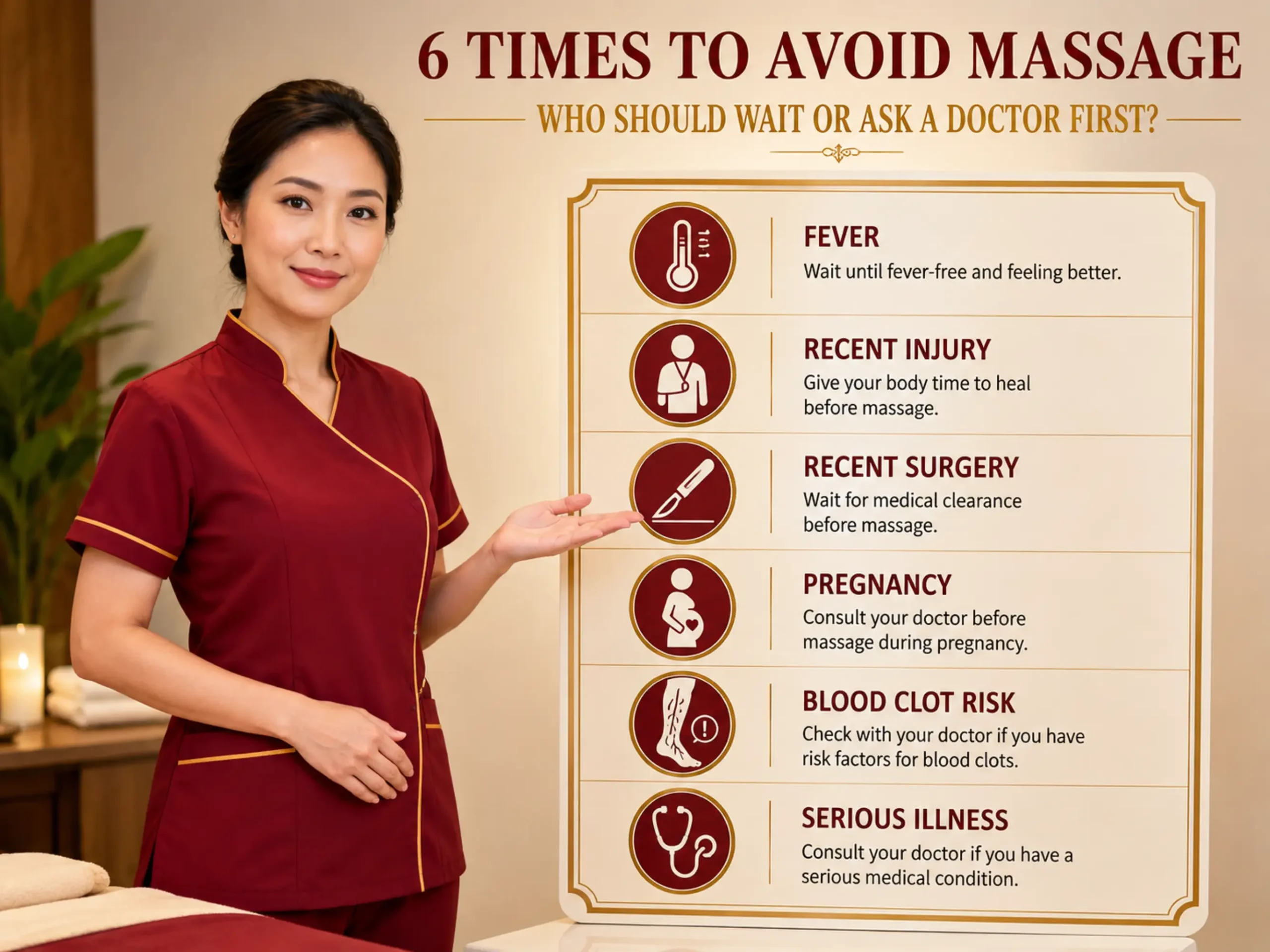
Massage is a popular way to relax muscles and reduce tension, but that does not mean every type of massage is suitable for everyone in every situation, especially massage that involves strong pressure, stretching, or pressure applied to an area that is currently injured.
In general, massage performed by a trained provider carries a relatively low risk. However, rare serious adverse effects have been reported, including nerve injury, fractures, and complications related to blood clots. These cases are more often associated with forceful massage or clients who already have underlying risk factors.
Before booking a massage, you should therefore consider your current health and always tell the therapist about any important medical information. This article explains 6 important massage contraindications, when massage should be postponed, when you should consult a doctor first, and which symptoms mean the massage should be stopped immediately.
Note: This content is for general information only and is not a substitute for medical diagnosis or professional medical advice. Anyone with an underlying medical condition, unusual symptoms, or recent medical treatment should consult a doctor before receiving massage.
Contents
How Many Types of Massage Contraindications Are There?
To make the decision easier, massage precautions can be divided into two main groups:
1. Situations When Massage Should Be Avoided for Now
These are situations in which massage should be postponed until symptoms improve, the condition has been assessed, or a healthcare professional gives approval. Pressure, kneading, or stretching could increase the risk of injury or make the condition worse.
2. Situations When You Should Consult a Doctor First
This does not always mean massage is prohibited. The decision must be made individually. Some people may be able to receive gentle massage, while others may need to avoid certain areas, reduce pressure, or choose a therapist experienced with the relevant condition.
Summary of 6 Massage Contraindications
| Precaution | What to do |
|---|---|
| Fever or acute infection | Postpone the massage until symptoms resolve |
| Suspected blood clot or DVT | Avoid massage and seek medical assessment |
| Fracture, acute injury, or open wound | Do not massage the affected area |
| Emergency or severe unexplained symptoms | Do not use massage to treat the symptoms; seek medical evaluation |
| Recent surgery or medical procedure | Wait for medical clearance |
| Fragile bones, bleeding tendency, or certain medications | Consult a doctor and inform the therapist |
1. Fever, Infection, or Acute Illness
If you have a fever, chills, severe fatigue, a heavy cough, vomiting, diarrhea, or suspect an infection, postpone the massage. You should not try to use massage to “sweat out” a fever or expect it to make the illness resolve faster.
Fever and infection may indicate that your body is fighting an illness. Traveling for a massage can also add physical stress and increase the chance of spreading infection to the therapist or other people.
For certain techniques, such as lymphatic drainage massage, medical sources advise avoiding treatment when a person has fever, infection, or infected skin inflammation.
What should you do?
- Postpone the appointment until the fever is gone and acute symptoms have improved
- Seek medical care if you have a high fever, difficulty breathing, unusual drowsiness, or worsening symptoms
- Do not hide symptoms in order to keep the original appointment
2. Suspected Blood Clot or Deep Vein Thrombosis
Anyone diagnosed with a blood clot, deep vein thrombosis (DVT), or suspected of having one should not have the affected area massaged and should not receive massage without medical advice.
Warning signs can include:
- Unusual swelling in one leg
- Calf pain or tightness without a clear cause
- Warmth or discoloration of the skin in the affected area
- Rapidly developing swelling
- Chest pain, shortness of breath, or a rapid heartbeat
Massage is not a way to diagnose or treat a blood clot, and you should not experiment with pressing, kneading, or rubbing an area where a clot is suspected. The NCCIH notes that serious complications related to blood clots have been reported after massage, although such cases are rare.
What should you do?
If one leg is swollen and painful, or if leg symptoms are accompanied by chest pain or difficulty breathing, stop activity and seek medical assessment. Do not book a massage in an attempt to treat the pain yourself.
3. Fracture, Acute Injury, Open Wound, or Skin Infection
Do not massage directly over a fracture, dislocation, newly torn muscle, wound, burn, infected skin, or an area that is still very swollen, red, or painful.
Some injuries may feel like muscle tightness, but if severe pain began after a fall, impact, accident, or exercise, the area should be assessed first to determine whether bones, tendons, or other tissues have been damaged.
People with fractures or bone abnormalities may need to avoid deep massage and have the technique modified appropriately.
Areas to avoid
- Open wounds or wounds that are still bleeding or draining
- Rashes of unknown cause
- Areas that are red, hot, swollen, or suspected to be infected
- Recently fractured bones or fractures that have not healed properly
- Recently sutured areas
- Areas with severe bruising or unusually strong tenderness
4. Emergency Symptoms or Severe Unexplained Symptoms
Massage should not be used instead of medical evaluation when severe or sudden symptoms occur, such as:
- Chest pain or pressure
- Difficulty breathing
- Dizziness or loss of consciousness
- Sudden weakness or numbness in the arms or legs
- Slurred speech or facial drooping
- A severe headache unlike any previous headache
- Severe abdominal pain
- Back pain after an accident
- Loss of bladder or bowel control together with numbness or weakness
Do not try massage, acupressure, or forceful body manipulation to see whether these symptoms improve. They may not be caused by muscles and may require urgent medical assessment.
5. Recent Surgery, Procedure, or Unhealed Wound
After surgery, the body needs time to recover. Tissues, surgical wounds, blood vessels, and internal structures may not yet be strong enough. Massage that starts too soon or places pressure in the wrong area may cause pain, swelling, irritation, or interfere with recovery.
Do not massage over a surgical wound until the doctor or healthcare professional responsible for your care has approved it. Some forms of scar massage may be useful at certain stages, but they should begin only after the wound has fully closed and appropriate guidance has been given, not immediately after surgery.
Tell the therapist if you have recently had treatment such as:
- Surgery
- Injections or medical procedures
- Laser treatment or skin procedures
- Chiropractic treatment or joint treatment
- Tooth extraction or oral surgery
- Cancer treatment with chemotherapy or radiotherapy
People undergoing cancer treatment may need reduced pressure, avoidance of certain areas, or a gentler type of massage. Consult your treatment team first.
6. Fragile Bones, Bleeding Risk, or High-Risk Medication
People with severe osteoporosis, fragile bones, low platelet counts, a tendency to bleed easily, or those taking anticoagulant medication should not receive forceful massage without first disclosing their health information.
Excessive pressure may cause bruising, injury, or an increased risk of fracture in vulnerable people. The NCCIH notes that some reported serious adverse events involved forceful massage and clients who already had a higher risk of injury.
Tell the therapist if you:
- Take anticoagulant or blood-thinning medication
- Bruise or bleed easily
- Have osteoporosis or have fractured a bone after only minor impact
- Have numbness or reduced sensation
- Are an older adult with bone or joint problems
- Have been advised by a doctor to avoid pressure or forceful stretching
Who Should Consult a Doctor Before Massage?
The following conditions are not necessarily absolute contraindications in every case, but you should ask your doctor or healthcare provider first, especially if you are considering Thai massage, deep tissue massage, or a massage that involves stretching and strong pressure.
Pregnant Clients
Pregnant clients should disclose their stage of pregnancy, any complications, and medical advice they have received. Choose a provider who understands massage during pregnancy and avoid positions or pressure that may be inappropriate.
People with Heart or Circulatory Conditions
People with heart disease, swelling related to heart disease, uncontrolled blood pressure, or circulation problems should get advice before choosing a massage type. Certain massage techniques may not be appropriate for people with cardiovascular or circulatory conditions.
People with Cancer or Undergoing Treatment
Massage may need to be modified in both location and pressure. Tumors, wounds, irradiated areas, medical-device sites, and vulnerable bones may need to be avoided. Deep massage may not be suitable for some patients.
People with Diabetes or Numbness
If peripheral neuropathy is present, sensation may be reduced, making it harder to accurately judge pressure, heat, or pain. Tell the therapist and avoid excessive pressure.
People with Varicose Veins or Chronic Leg Swelling
Do not apply deep pressure directly over veins that are enlarged, swollen, painful, or inflamed. If swelling develops suddenly in only one leg, medical assessment is needed to rule out a blood clot.
People with Kidney Disease or Edema
Swelling can be caused by several systemic conditions. Do not assume it is simply poor circulation or try lymphatic drainage massage on your own. People with kidney failure or certain heart conditions may not be suitable candidates for lymphatic drainage massage.
Warning Signs That Mean You Should Stop the Massage Immediately
During massage, tell the therapist immediately if you feel unwell. You do not need to tolerate pain because you believe that “the more it hurts, the more effective it is.”
Stop the massage if any of the following occurs:
- Sharp pain or pain that becomes clearly worse
- Numbness or an electric-shock sensation traveling down an arm or leg
- Muscle weakness or difficulty moving an arm or leg normally
- Dizziness, lightheadedness, nausea, or feeling faint
- Difficulty breathing or chest tightness
- Unusual palpitations
- Severe headache
- Itching, burning, swelling, or a rash after using massage oil
- Discomfort with the position or pressure
- Feeling unsafe or uncomfortable with the touch
You have the right to ask for less pressure, change position, avoid certain areas, or stop the service at any time.
What Should You Tell the Therapist Before Massage?
Complete information helps the therapist choose a more appropriate technique, pressure level, and areas to work on or avoid. Before the session begins, tell the therapist at least the following:
Underlying Medical Conditions
For example: heart disease, high or low blood pressure, diabetes, kidney disease, osteoporosis, joint disease, skin conditions, or vascular disease.
Current Medications
Especially anticoagulants, medications that increase bleeding risk, medications that affect alertness or sensation, or medicines related to significant underlying conditions.
Recent Injuries and Treatment
Tell the therapist when you had an accident, fracture, dislocation, surgery, injection, medical procedure, or physiotherapy.
Areas of Pain, Numbness, or No-Touch Areas
Clearly explain where the pain is, when it started, whether it radiates, and whether numbness or weakness is present. Also identify any areas that you do not consent to having massaged.
Pregnancy or Possible Pregnancy
Tell the therapist your stage of pregnancy, any complications, and medical recommendations so positions can be adjusted and unsuitable techniques avoided.
Allergies to Oils or Products
People with sensitive skin should disclose allergies to essential oils, massage oils, herbs, or skincare products. A small patch test may be appropriate before broader use.
What Type of Massage Is Suitable When You Have Health Limitations?
If a doctor has confirmed that massage is appropriate, the service may still need to be modified according to your condition, for example:
| Limitation | Possible service adjustment |
|---|---|
| Bruise easily or take anticoagulants | Choose lighter pressure and avoid deep tissue massage |
| Fragile bones or limited mobility | Avoid forceful manipulation or stretching |
| Sensitive skin | Use gentle products and patch-test first |
| Localized wound or skin problem | Avoid the affected area |
| Pregnancy | Choose a provider with appropriate pregnancy-massage knowledge |
| Undergoing medical treatment | Follow medical advice and tell the therapist about the treatment plan |
Choosing a gentler massage does not automatically make it suitable. The service still needs to be assessed in relation to your individual health condition.
How to Prepare for Massage Safely
Before your appointment:
- Check whether you have a fever, signs of infection, or any new unusual symptoms
- Do not drink alcohol before the service
- Avoid eating a very large meal immediately before massage
- Prepare a list of medications and relevant health information
- Tell the therapist what pressure you prefer and which areas should be avoided
- Choose a trained therapist who asks about your health before beginning
- Do not force yourself to continue if your body feels unwell
Frequently Asked Questions About Massage Contraindications
Can I get a massage if I only have a mild cold?
Should I get a massage immediately if I have severe back pain?
Can I have my legs massaged if I have varicose veins?
Can I get a massage while taking blood-thinning medication?
Can pregnant women receive massage?
Should I tolerate pain during massage?
Summary of Massage Contraindications
Massage can help the body relax, but safety should always come first. If you have a fever, an infection, a suspected blood clot, a fracture, an open wound, severe unexplained symptoms, or have recently had surgery, postpone massage and seek appropriate advice first.
People with underlying health conditions, pregnancy, ongoing cancer treatment, anticoagulant use, fragile bones, or heart, kidney, and circulation problems should consult a doctor and provide the therapist with accurate information.
Before the session begins, tell the therapist where you have pain, your injury history, medications, allergies, and any areas you do not want touched. If unusual pain, numbness, dizziness, chest tightness, or difficulty breathing occurs during the massage, stop the service immediately.
If you have no contraindications and would like to relax, you can review the most suitable options on the Victoria Bangkok Massage Services page, or read the preparation steps and How to Book an Outcall Massage before making an appointment.

References
- Cambridge University Hospitals: Scar Massage Information
https://www.cuh.nhs.uk/patient-information/scar-massage-information/ - National Center for Complementary and Integrative Health: Massage Therapy – What You Need to Know
https://www.nccih.nih.gov/health/massage-therapy-what-you-need-to-know - National Center for Complementary and Integrative Health: Things to Know About Massage Therapy
https://www.nccih.nih.gov/health/tips/things-to-know-about-massage-therapy-for-health-purposes - Cancer Research UK: Massage Therapy
https://www.cancerresearchuk.org/about-cancer/treatment/complementary-alternative-therapies/individual-therapies/massage - Cleveland Clinic: Lymphatic Drainage Massage
https://my.clevelandclinic.org/health/treatments/21768-lymphatic-drainage-massage
- https://kaizenhealthgroup.com/dos-donts-before-after-massage-session/
- https://www.pampermefromheadtotoe.com/2023/04/29/things-to-avoid-when-giving-and-providing-massage/
Contact Victoria Bangkok
We provide professional outcall massage services in Bangkok, delivered by a team of experienced massage therapists. Enjoy a relaxing experience that is private, convenient, and safe.
- Phone: 093-093-4663
- WhatsApp: Victoria Bangkok
- LINE Official Account: Victoria Bangkok
- Website: www.victoriabangkok.com
- Maps: The Victoria Outcall Bangkok
📌 We recommend booking in advance so we can arrange the most suitable massage therapist for your needs.
- Date
- View
- Comment