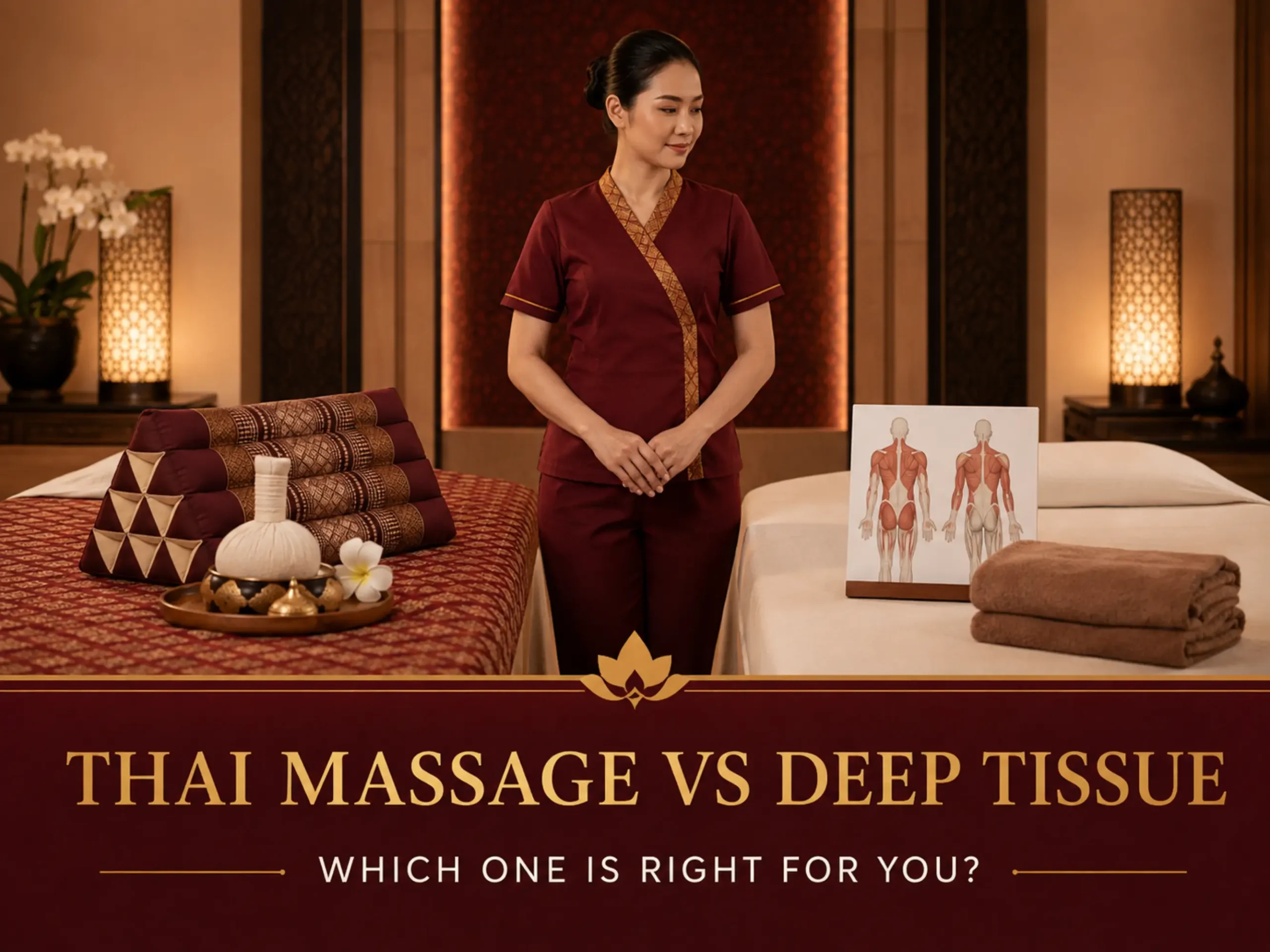
Thai massage and Deep Tissue Massage are both programs that apply pressure to the muscles, but the difference isn’t just about which one is firmer. The differences you should consider to make your decision are the techniques used, the nature of the pressure, the clothing worn during the service, and the goals of the massage.
Thai massage uses rhythmic pressure combined with movement and stretching of various parts. The client usually lies on a mat, wears loose, flexible clothing, and generally, no oil is used. On the other hand, Deep Tissue Massage uses slow, continuous pressure, gradually going deeper into target muscles. It is usually performed on a massage table and may use a little oil, exposing only the area being massaged while keeping the rest covered.
Quick summary: Choose Thai massage when you want to take care of multiple body parts, want pressure combined with stretching, and don’t want to use oil. Choose Deep Tissue when you have clear points of tension, want to focus on specific muscle areas, and are okay with using oil and slower pressure. Both should start with a comfortable pressure and be adjusted during the massage. You don’t need to endure pain to get results.
Table of Contents
What is Thai Massage?
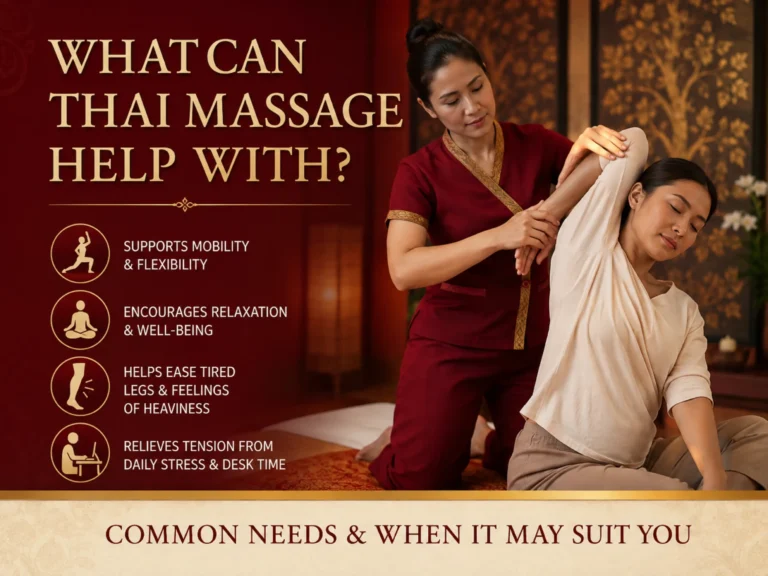
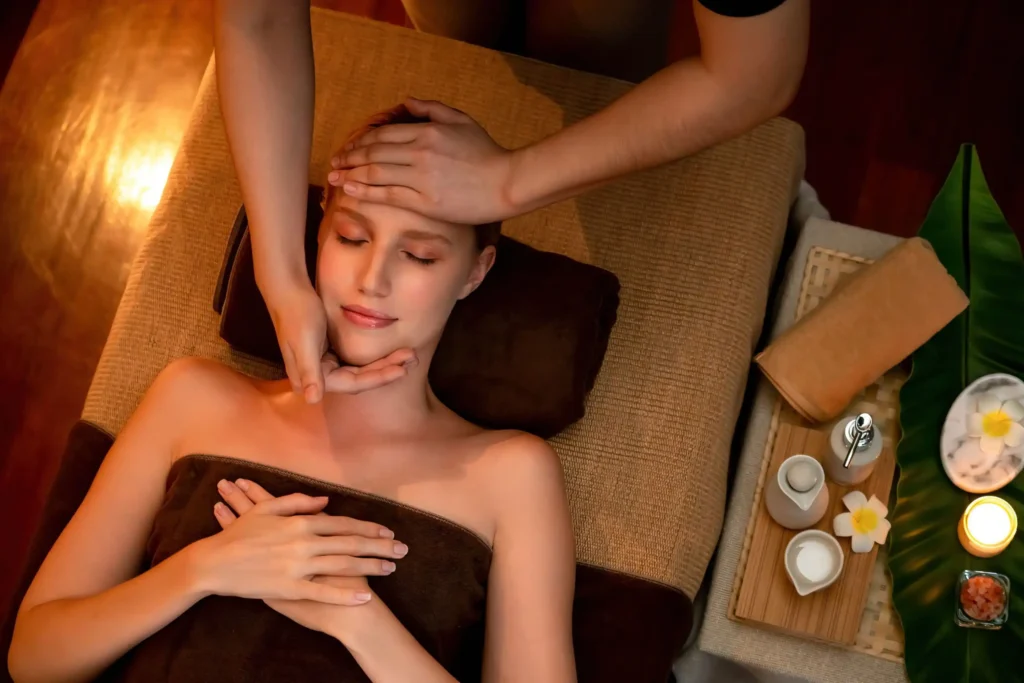
Thai massage, or Nuad Thai, uses a combination of techniques, including pressing with the thumbs, palms, elbows, or other body parts, kneading, rhythmic weight application, and assisted mobilization or stretching of the arms, legs, hips, and torso within the client’s comfortable range.
The World Health Organization has established benchmark guidelines for training in Nuad Thai, reflecting that Thai massage involves specific knowledge and skills that providers should be properly trained in.
The elements that distinguish Thai massage from Deep Tissue include:
- Usually performed on a mat or a floor support, making position changes and assisted stretching convenient.
- The client wears loose, flexible clothing that allows easy movement throughout the program.
- Generally, no oil is used.
- Uses rhythmic pressure alternating with movement and stretching.
- The main goal is often the overall care of multiple parts, rather than just a single point of tension.
- The pressure level and range of motion can be adjusted.
A review of research on Thai massage for people with chronic pain showed signs that the massage may be associated with reduced pain and changes in muscle flexibility or tension. However, the researchers also stated that more studies are needed to confirm long-term benefits and clearly compare it with other forms of care.
What is Deep Tissue Massage?
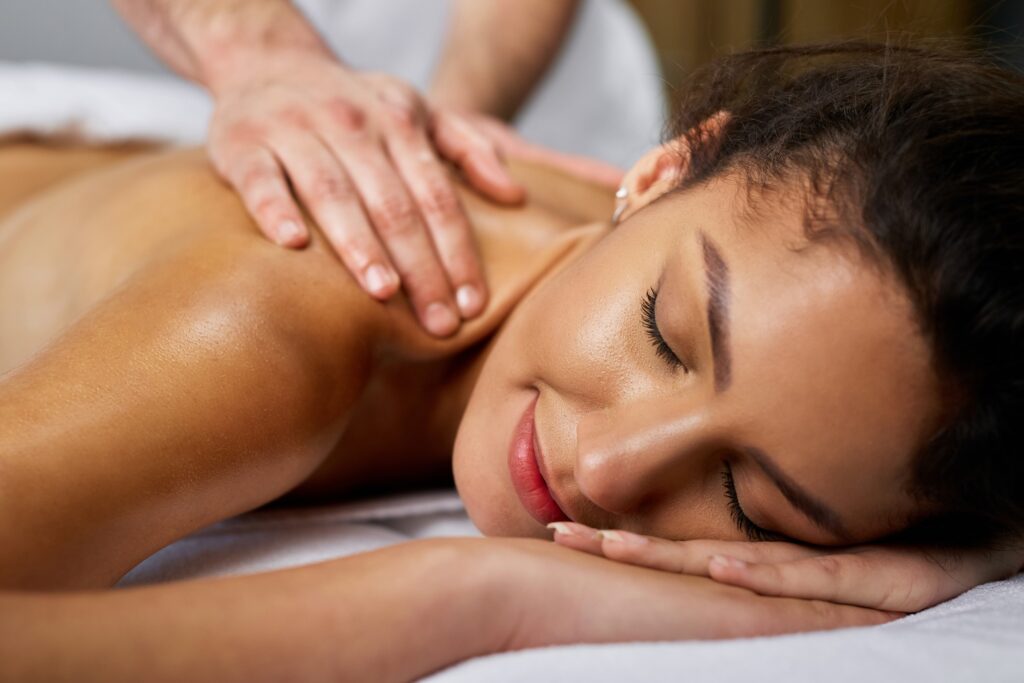
Deep Tissue Massage is a massage that focuses on working with muscles or soft tissues at a deeper level than a general relaxation massage. The key feature is the use of slow, continuous pressure, gradually increasing weight instead of fast pressing. Therapists often choose to work on specific areas, such as the upper back, around the shoulder blades, waist, hips, thighs, or calves.
Elements that differentiate Deep Tissue from Thai massage include:
- Usually performed on a massage table.
- May use oil or massage products.
- Uses slow, continuous, sustained pressure, or gradually goes deep into the target muscles.
- The main goal is specific muscles or tension points, rather than whole-body care.
- May use palms, fingers, knuckles, or forearms.
- Does not focus on full-body stretching or frequent position changes as much as Thai massage.
Deep Tissue does not have the exact same standard techniques everywhere. The format, pressure level, and massage sequence may vary based on the therapist’s training and the client’s goals. Therefore, you should ask for details of the program before booking.
Some research has found that soft tissue massage or Deep Tissue may help with certain types of pain in the short term. However, the overall evidence for massage for pain varies depending on the condition, the massage method, and the quality of the research. Therefore, it should not replace medical examination or treatment by a healthcare professional.
Comparison Table: Thai Massage vs. Deep Tissue
| Comparison Topic | Thai Massage | Deep Tissue |
|---|---|---|
| Main Techniques | Pressing, kneading, rhythmic weight application, and assisted stretching of multiple parts | Slow pressing, holding, and gradually going deep into target muscles |
| Nature of Pressure | Rhythmic pressure that changes depending on the posture or area | Continuous, slower pressure focused on specific points |
| Goal | Overall care, reducing stiffness, and increasing comfort in movement | Focuses on tension points or specific muscles |
| Clothing | Wear loose, flexible, and easy-to-move-in clothing | Expose only the area being massaged and cover other parts with a drape |
| Use of Oil | Generally none | Usually uses a little oil to control hand movements |
| Massage Surface | Usually a mat or floor support | Usually a massage table |
| Position Changes | Frequent position changes and stretching of multiple parts | Fewer position changes, staying in the target area longer |
| Best When | Feeling tense in many parts, disliking oil, and wanting stretching | Having clear tension points and wanting to focus on specific areas |
| Beginners | Can start with light to medium pressure and reduce the amount of stretching | Start with light to medium pressure before gradually increasing depth |
1. Different Massage Goals
The goal of Thai massage is generally overall body care, reducing stiffness in multiple areas, and making movement feel more comfortable. It is therefore suitable for those who sit, walk, or stay in the same posture for a long time and want both pressure and stretching in one program.
The goal of Deep Tissue is more about working on specific tension points or muscles, such as:
- Muscles around the shoulder blades
- Shoulders and upper back
- Waist or hips
- Thighs or calves
- Areas that feel knotted or chronically tense
If you don’t have specific tension points to focus on and your goal is mainly relaxation, a deep Deep Tissue massage may not be necessary. Conversely, if you want to focus on specific muscles, a full-body Thai massage might not be as targeted as a program working on specific areas.
2. Difference in Body Stretching
Stretching is one of the prominent features of Thai massage. The therapist may help move your arms, legs, hips, or torso within a safe range.
People who sit at work or travel for long periods might enjoy the feeling of being stretched. However, those with injuries, stiff joints, acute pain, or who have recently had surgery should not undergo forceful stretching without a prior assessment.
Deep Tissue does not focus on numerous stretching postures like Thai massage, although there may be some joint mobilization or slight stretching involved in the massage.
3. Difference in Applying Pressure
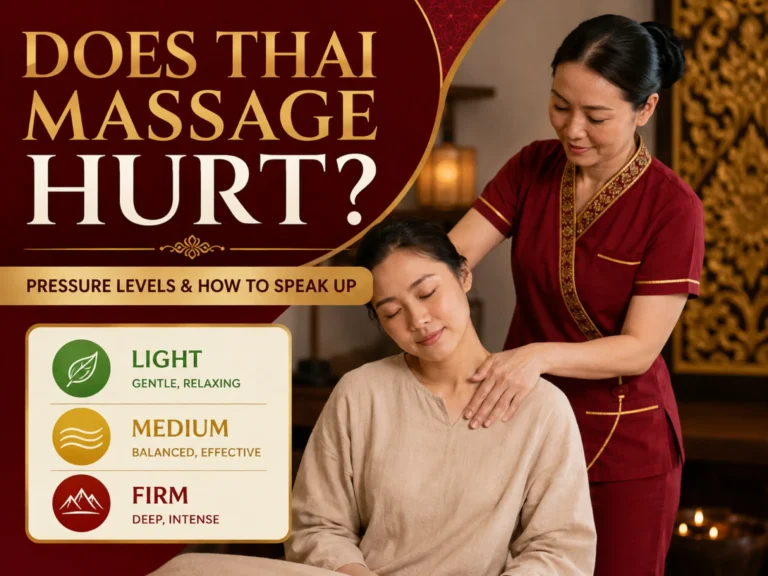
Both types can be adjusted to light, medium, or heavy pressure, but the nature of the pressure is clearly different.
Thai massage typically uses rhythmic pressure along the muscles, alternating with kneading, weight application, and stretching. The pressure changes according to the posture and body part. Deep Tissue usually uses slow, sustained pressure, gradually increasing the weight in the same area to work specifically on target muscles.
Deep massage should not cause pain that makes you tense up or hold your breath. If you feel sharp pain, numbness, radiating pain, or like pressure is being applied directly to the bone, you should tell the therapist to stop or reduce the pressure immediately.
4. Difference in Oil Usage and Attire
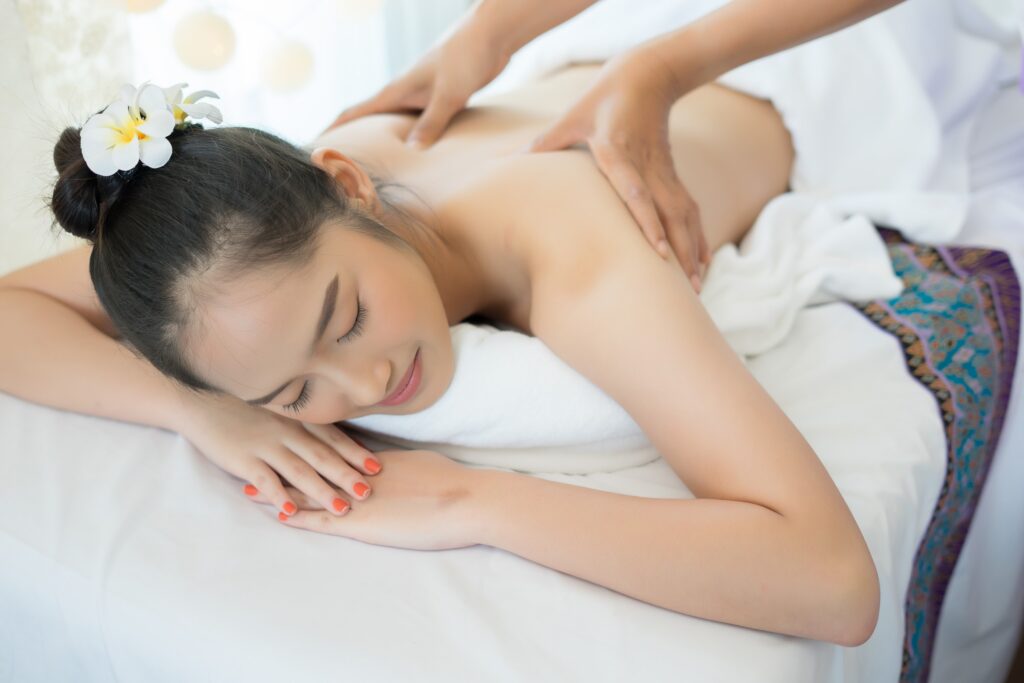
Thai Massage: Generally does not use oil. The client should wear a loose, flexible T-shirt and long pants that are not tight and have no hard parts that interfere with pressing or stretching. The clothing allows for convenient position changes and maintains privacy throughout the program.
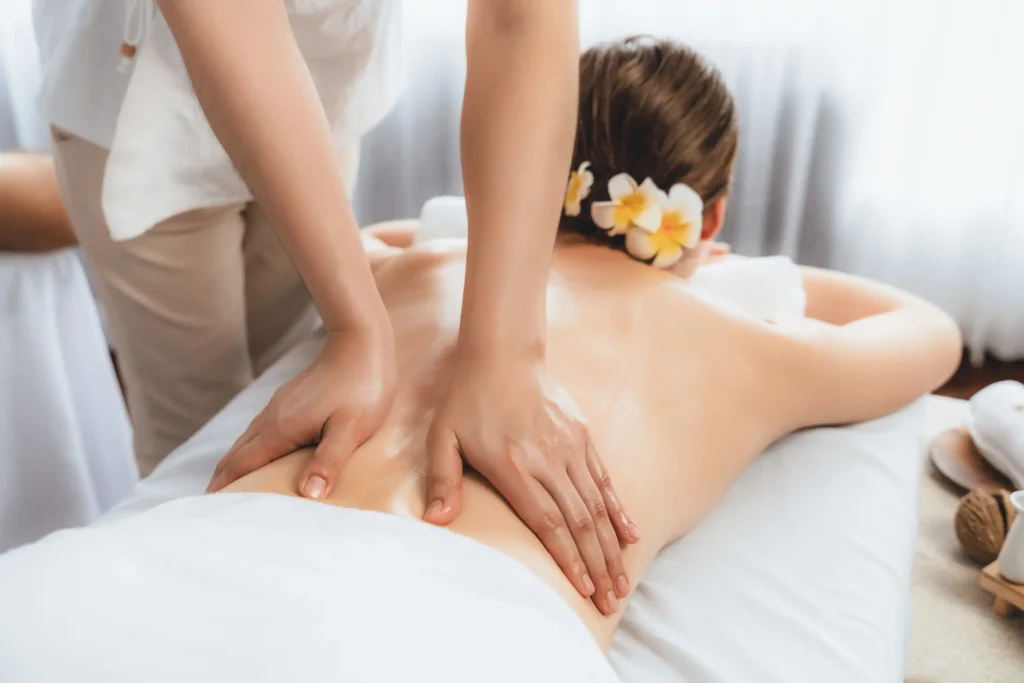
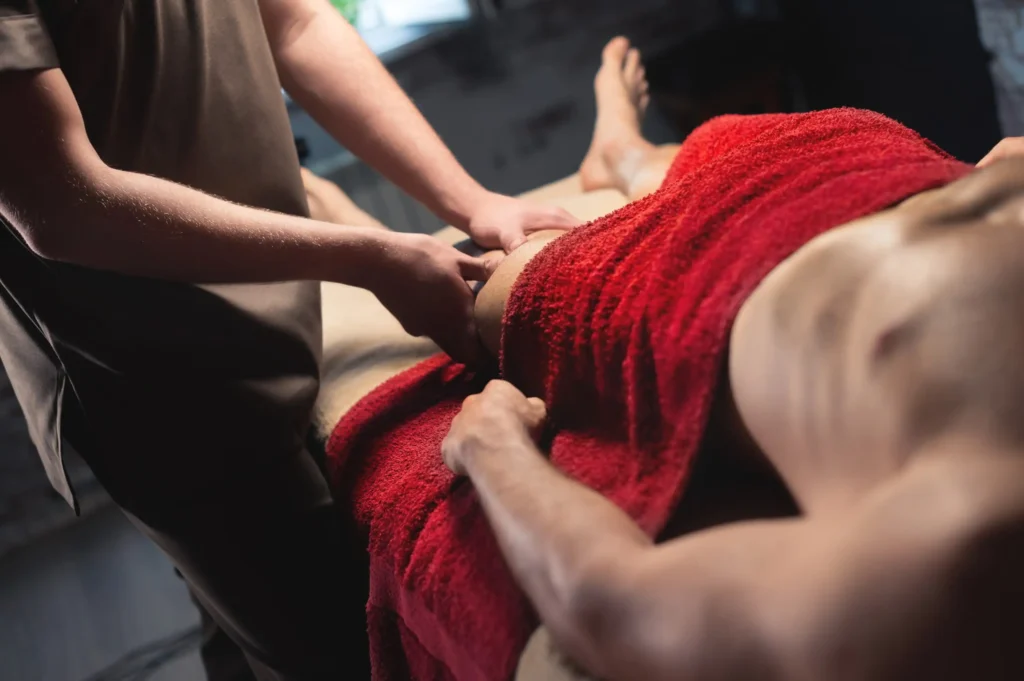
Deep Tissue: Usually uses an appropriate amount of oil to allow the therapist to control the pressure and movement on the skin. The client may change into provided attire or remove only the clothing from the area needing massage. The therapist should expose only the part being worked on and use a drape to cover the rest of the body for privacy.
Those with sensitive skin or oil allergies should inform the therapist before the service begins.
5. Difference in Post-Massage Feeling
After a Thai massage, some people may feel their body moves more fluidly, while others might feel temporarily achy if they are not used to stretching or received too much pressure.
After Deep Tissue, the area that received deep pressure may feel sore or sensitive to the touch for a short period. However, it should not cause severe pain, swelling, numbness, weakness, or abnormal bruising.
NCCIH states that the risks associated with massage are generally quite low when performed by trained professionals. However, rare serious side effects, such as nerve injury, bone fractures, or blood clots, have been reported, sometimes associated with vigorous massage types like Deep Tissue, or in people with pre-existing risk factors.
Who is Thai Massage Suitable For?
Choose Thai massage when your goals and the desired service format align with these points:
- Feeling stiff from sitting or walking for a long time.
- Want both pressure and stretching.
- Do not want to use oil.
- Prefer a massage that cares for multiple parts of the body.
- Comfortable with changing positions during the massage.
- No acute injuries or limitations in movement.
Those who have never had a Thai massage before should start with light to medium pressure and inform the therapist beforehand if they want to reduce stretching in certain postures.
Who is Deep Tissue Suitable For?
Choose Deep Tissue when your goals and the desired service format align with these points:
- Have clear areas of muscle tension.
- Want to focus on the back, shoulders, shoulder blades, hips, or legs.
- Accustomed to medium to deep pressure massages.
- Do not want to change positions or have full-body stretching much.
- Can communicate the pressure level with the therapist at all times.
- Have no contraindications to deep massage.
Deep Tissue does not necessarily always suit those who are in “a lot of pain,” because severe pain may be caused by an injury, inflammation, or other problems that should not receive heavy pressure.
How to Choose Thai Massage or Deep Tissue Based on Symptoms?
Feeling stiff from sitting for a long time
You might choose a medium-pressure Thai massage because it involves pressing and stretching multiple areas. However, forceful stretching should be avoided if you already have back or joint pain.
Have tension points around the shoulder blades or upper back
You might choose a targeted Deep Tissue massage, starting with medium pressure. There is no need to ask for maximum pressure right from the beginning. Alternatively, consider a Neck & Shoulder Massage service when the tension is mainly in the upper area.
Want relaxation more than fixing tension points
Both Thai massage and Deep Tissue may not be the gentlest options. If your main goal is resting, a light to medium pressure oil massage or aroma massage might be more suitable.
Don’t like oil
Thai massage is better because it is generally performed through clothing.
Don’t like being stretched or changing positions often
Deep Tissue or a targeted oil massage may be more suitable, but you should clearly state the level of pressure you desire.
Chronic back pain
You should not choose a program based on the name alone. Research on massage for back pain has found positive results in some groups, but the quality and certainty of the evidence vary, and some benefits may only be short-term.
If you have chronic pain, worsening pain, or neurological symptoms, you should be evaluated before choosing a deep pressure massage.
Which Hurts More: Thai Massage or Deep Tissue?
You shouldn’t judge by the program name alone, because the feeling depends on the actual characteristics of the technique and pressure setting, including:
- The therapist’s pressure level
- Muscle tension
- The client’s familiarity
- The location being massaged
- The technique used
- Injuries or underlying diseases
Deep Tissue often feels deeper, more sustained, and more localized, while Thai massage may feel rhythmic and create a stretch sensation across multiple parts. Therefore, they are different sensations, not a ranking of which program must always be firmer.
A feeling of “tight but still relaxing” may be acceptable for some, but sharp pain, numbness, radiating pain, breathlessness, or a feeling that you have to endure it should not be considered normal.
Is It True That the Harder the Massage, the Better the Results?
Not necessarily. A higher level of pressure does not guarantee that it will be suitable or yield better results, because the goal of the massage is to care for the body without causing injury.
An appropriate massage should:
- Allow pressure adjustment at any time.
- Not make the client tense up.
- Avoid injured areas.
- Not apply pressure directly on bones or joints.
- Stop when there are abnormal symptoms.
- Take health history into account.
How Many Minutes Should I Choose?
60 Minutes
Suitable for those who want to focus on specific parts such as the neck, shoulders, shoulder blades, back, or legs, and suitable for those who want to try Thai massage or Deep Tissue Massage for the first time.
90 Minutes
Suitable for those who want a massage on multiple areas, or want the therapist to have time to gradually adjust the pressure before working on tension points.
120 Minutes
May be suitable for those who are accustomed to massage, whose body is ready, and have no abnormal symptoms. But a longer program does not mean it is better for everyone.
Note: For beginners, 60-90 minutes is usually sufficient, and the focus should be on the technique and pressure level rather than the duration alone.
Who Should Avoid Deep Tissue or Deep Pressure Massage?
You should consult a healthcare professional before receiving Deep Tissue or deep pressure massage if you have:
- Blood clotting disorders
- Low platelet count
- Use of anticoagulant medication
- Brittle bones or risk of fractures
- Open wounds, infections, or skin inflammation
- Recent surgery or injury
- Pregnancy with risk factors
- Varicose veins with abnormal symptoms
- History of blood clots
- Unexplained pain, swelling, redness, or heat
The NCCIH advises that those with bleeding disorders, low platelet counts, or who use anticoagulant medication should avoid vigorous massage and Deep Tissue, and massage should not be performed over areas of skin that have wounds or are compromised.
What Symptoms Require Seeing a Doctor Instead of a Massage?
You should abstain from massage and receive an evaluation if you have:
- Acute pain after a fall or accident
- Numbness and weakness in the arms or legs
- Severe radiating pain
- One leg is swollen, red, or hot
- Fever along with a swollen, painful area
- Chest pain or difficulty breathing
- Abnormal bowel/bladder control along with back pain
- Continuously worsening severe pain
- Pain so severe you cannot bear weight or move
Massage should not be used to delay a medical examination when there are symptoms that may require medical treatment.
What Should I Inform the Therapist Before the Massage?
You should communicate important information, including:
- Points of pain or tension
- Characteristics of symptoms, such as tightness, sharp pain, numbness, or radiating pain
- Duration of symptoms
- Any previous injuries or surgeries
- Underlying medical conditions
- Current medications
- History of blood clots or easy bleeding
- Pregnancy
- Desired pressure level
- Postures or areas you do not want massaged
- History of oil allergies
The therapist should ask about symptoms before starting and give the client the opportunity to adjust the pressure during the program.

Summary: Thai Massage vs. Deep Tissue, Which is Better?
Choose Thai massage when you want pressing, kneading, and stretching techniques across multiple parts, want overall body care, do not want to use oil, and prefer to wear loose clothing throughout the program.
Choose Deep Tissue when you have clear points of muscle tension, want slow and continuous pressure in specific areas, do not want full-body stretching, and are okay with the use of oil and exposing only the area being massaged.
However, if you are very tired, want to rest, or have never had a deep pressure massage before, you might start with a light to medium pressure oil massage or aroma massage first. Both should be adjusted to your body, and the massage should not cause abnormal pain.
The important thing is not which program is “firmer,” but which program’s techniques, nature of pressure, clothing, and goals better match your needs.
If you’ve made your decision, you can view the details of the Thai Massage program or the Deep Tissue Massage program directly. Both programs can be booked as an outcall massage service in Bangkok. You should inform the provider of your tense areas, desired pressure level, and health limitations before the service begins. See the procedure on the How to Book an Outcall Massage page.
Frequently Asked Questions
Are Thai massage and Deep Tissue the same?
Does Deep Tissue have to hurt to work?
Can someone who has never had a massage choose Deep Tissue?
Does Thai massage make the body more flexible?
Which should I choose for neck, shoulder, and back pain?
Is it normal to be sore after Deep Tissue?
Note: This article is intended for general informational purposes and does not replace medical diagnosis or treatment by a healthcare professional. Those with underlying diseases, who are using anticoagulant medication, are pregnant, recently had surgery, or have abnormal symptoms should consult a specialist before receiving a massage service.
References
- World Health Organization. Benchmarks for Training in Traditional / Complementary and Alternative Medicine: Benchmarks for Training in Nuad Thai. WHO. https://www.who.int/publications/i/item/9789241599672
- National Center for Complementary and Integrative Health. Massage Therapy: What You Need To Know. NCCIH. https://www.nccih.nih.gov/health/massage-therapy-what-you-need-to-know
- Keeratitanont, K., Jensen, M. P., Chatchawan, U., & Auvichayapat, P. The Efficacy of Traditional Thai Massage for the Treatment of Chronic Pain: A Systematic Review. Complementary Therapies in Clinical Practice / PubMed. https://pubmed.ncbi.nlm.nih.gov/25682523/
- Furlan, A. D., Giraldo, M., Baskwill, A., Irvin, E., & Imamura, M. Massage for Low-Back Pain. Cochrane Database of Systematic Reviews / PubMed. https://pubmed.ncbi.nlm.nih.gov/26329399/
- Kumar, S., Beaton, K., & Hughes, T. The Effectiveness of Massage Therapy for the Treatment of Nonspecific Low Back Pain: A Systematic Review of Systematic Reviews. International Journal of General Medicine / PubMed. https://pubmed.ncbi.nlm.nih.gov/24043951/
- Romanowski, M., Romanowska, J., & Grześkowiak, M. A Comparison of the Effects of Deep Tissue Massage and Therapeutic Massage on Chronic Low Back Pain. Studies in Health Technology and Informatics / PubMed. https://pubmed.ncbi.nlm.nih.gov/22744541/
Contact Victoria Bangkok
We provide professional outcall massage services in Bangkok, delivered by a team of experienced massage therapists. Enjoy a relaxing experience that is private, convenient, and safe.
- Phone: 093-093-4663
- WhatsApp: Victoria Bangkok
- LINE Official Account: Victoria Bangkok
- Website: www.victoriabangkok.com
- Maps: The Victoria Outcall Bangkok
📌 We recommend booking in advance so we can arrange the most suitable massage therapist for your needs.
- Date
- View
- Comment