Thai massage includes pressure, kneading, and assisted stretching. People who have never tried it before often wonder how painful Thai massage should feel, whether you need to tolerate pain, and how to tell the therapist when the pressure is too strong.
The answer is that Thai massage may feel tight, heavy, or slightly tender in some areas, but an appropriate level should still allow you to breathe normally, relax your muscles, and avoid gritting your teeth to endure the pressure. If you feel sharp pain, numbness, radiating pain, or a joint being forced, ask the therapist to reduce the pressure or stop immediately.
The key principle is that massage pressure should be adjusted to the client’s response rather than using the same pressure for everyone. Communication before, during, and after the massage is therefore part of a safer and more effective service than believing that “the more it hurts, the better it works.”
In general, massage has a relatively low risk when performed by a trained practitioner. However, rare serious adverse effects have been reported, especially with very forceful massage or in people who already have a higher risk of injury.
Table of Contents
Why Can Thai Massage Feel Painful or Tight?
Thai massage differs from a light relaxation massage because it usually combines pressure with several types of movement, such as:
- Pressure with the thumbs or palms
- Applying body weight to the muscles
- Kneading tight areas
- Moving the arms, legs, and hips
- Assisted muscle stretching
- Changing body positions during the session
Some areas may be more sensitive to pressure than others, such as the calves, outer thighs, hips, shoulders, and around the shoulder blades. Sensation also depends on several factors, including:
- Muscle tightness
- How familiar you are with massage
- Lack of rest
- Exercise or a lot of walking before the massage
- Previous injuries
- The therapist’s pressure level
- Joint range of motion
- Individual pain sensitivity
Therefore, two people who choose the same program may experience it very differently.
What Sensations Are Normal During Thai Massage?
During Thai massage, you may experience the following sensations:
Heavy or Firm Pressure
Pressure may feel heavy over the muscles, but you should still be able to relax and breathe normally.
Tightness During Stretching
Some positions may create a stretching sensation, but it should not feel as though a joint is being forced or a muscle is tearing.
Mild Tenderness in Tight Areas
Very tight areas may feel tender under pressure, but after asking the therapist to reduce the pressure, the sensation should remain tolerable.
Warmth or Relaxation
Some people may feel warmer muscles or easier movement after appropriate pressure and stretching.
Mild Soreness After Massage
People who are not used to massage or receive more stretching may feel mildly sore afterward, but the soreness should gradually improve rather than continue to worsen.
What Sensations Should You Not Endure?
Ask the therapist to stop or reduce the pressure immediately if you experience:
- Sharp, needle-like pain
- Pain radiating into an arm or leg
- Numbness or an electric-shock sensation
- Muscle twitching together with pain
- A joint feeling twisted or forced
- Deep pain over a bone
- Difficulty breathing
- Dizziness or nausea
- Feeling that you have to hold your breath
- Your body tensing so much that you cannot relax
- Pain that increases every time the same area is pressed
Massage should not cause numbness or weakness. If either occurs, stop and reassess the symptoms. Do not keep pressing the same area in an attempt to make a “blocked line release.”
Normal Sensations vs Warning Signs
| Potentially acceptable sensation | Symptom requiring immediate adjustment or stopping |
|---|---|
| Mild tightness during stretching | Sharp pain or a tearing sensation |
| Heavy pressure | Pain severe enough to make you hold your breath |
| Mild localized tenderness | Numbness, radiating pain, or electric-shock sensations |
| Mild soreness after massage | Pain that continues to worsen |
| Muscles feeling warm | Abnormal swelling, redness, or heat |
| Easier movement | Inability to move or weakness in an arm or leg |
| Temporary mild tenderness | Heavy bruising or severe pain |
Does Thai Massage Need to Hurt to Be Effective?
No.
The belief that “the more it hurts, the better it works” can cause clients to tolerate excessive pressure. Pressure should be adjusted to the goal and physical condition, rather than using maximum force on everyone.
Massage that is too strong may cause:
- Protective muscle tension
- Post-massage soreness
- Bruising
- Irritation of an injured area
- Irritation of nerves or joints
- Difficulty relaxing during the massage
The NCCIH notes that rare serious injuries have been reported after massage, including nerve injuries, fractures, or complications involving blood clots. Some cases have been associated with very forceful massage or clients who already had higher injury risks.
An appropriate pressure level should therefore be based on how the body responds, not on the idea that pain must be endured.
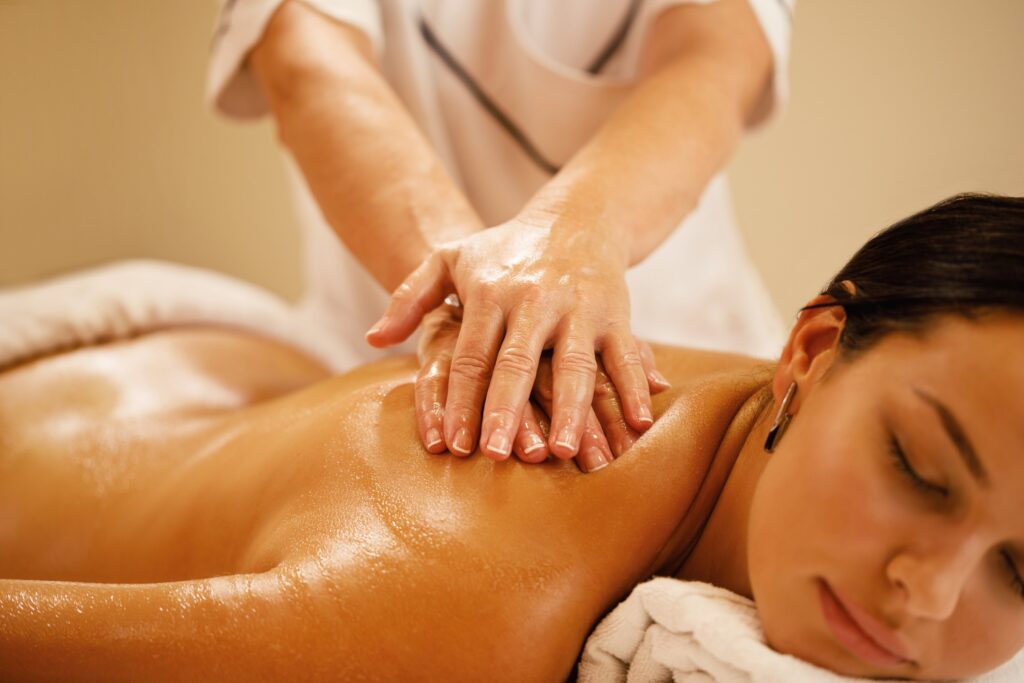
How Many Pressure Levels Are Used in Thai Massage?
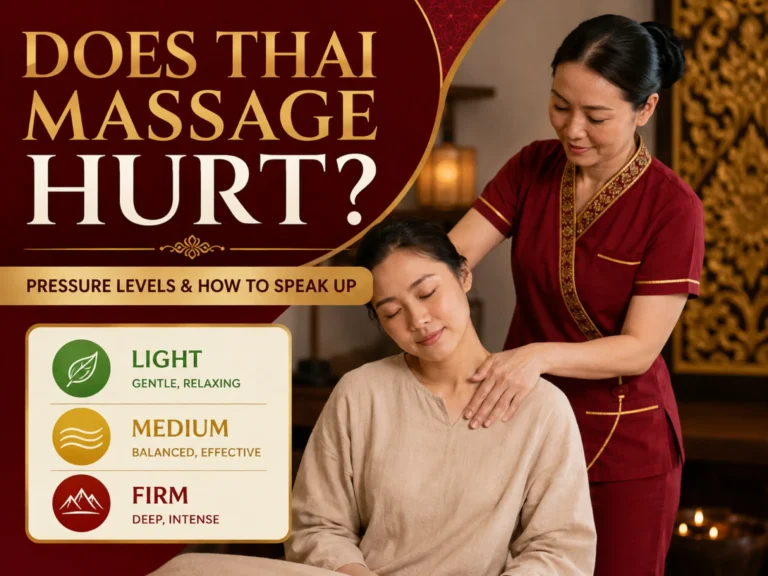
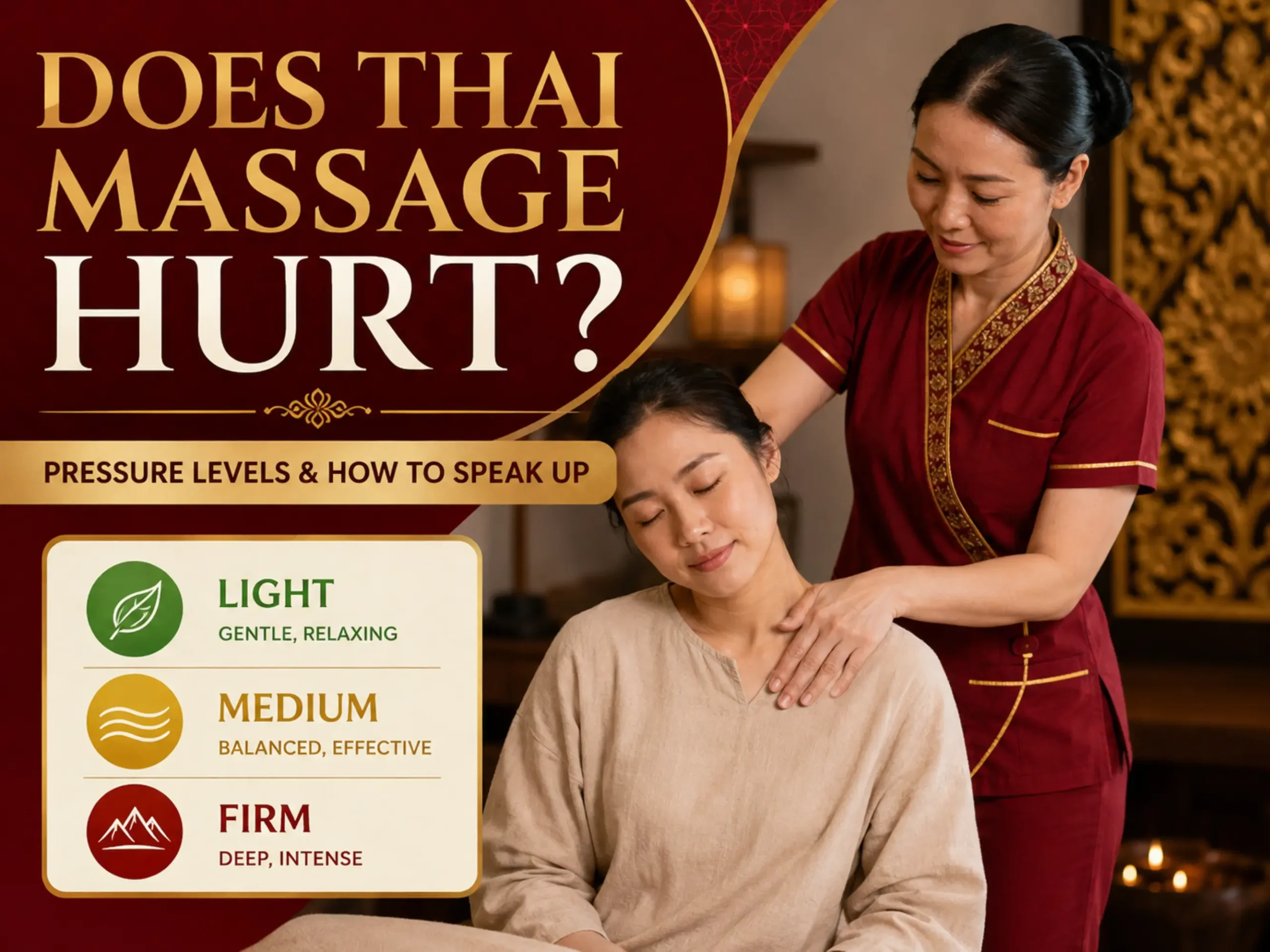
Massage providers may use different terms, but pressure can generally be divided into three levels and compared with a simple pain scale as follows:
| Pressure level | Approximate pain level | How it should feel | Suitable for |
|---|---|---|---|
| Light | 0–2/10 | You feel the touch but can remain fully relaxed | Beginners, pressure-sensitive clients, and people seeking relaxation |
| Medium | 3–5/10 | You feel some tightness or mild tenderness but can still breathe and relax the muscles | People familiar with massage and general muscle tightness |
| Strong | 6/10 or lower | Clearly strong pressure without sharp pain, numbness, or protective muscle tension | People familiar with Thai massage who have no contraindications |
In general, pressure should not be pushed much beyond about 6/10. Once pain is strong enough to make the body tense, hold the breath, or pull away from the pressure, the massage is no longer at a relaxing level. Pain level is subjective, so the therapist should continue checking and adjusting throughout the session.
How to Tell Whether the Pressure Is Appropriate
A simple 0–10 pain scale can help communication, where 0 means no pain and 10 means the worst pain imaginable.
| Pain level | Meaning during massage | What to do |
|---|---|---|
| 0–2/10 | Comfortable or only mild pressure | Continue if it matches the goal |
| 3–5/10 | Tight or mildly tender but still tolerable | Maintain the pressure and reassess periodically |
| 6/10 | Clearly strong and approaching your limit | Do not increase pressure and check again |
| 7–10/10 | Very painful, causing tension, breath-holding, or an urge to pull away | Reduce pressure or stop immediately |
Do not rely on the number alone. If you experience sharp pain, numbness, radiating pain, an electric-shock sensation, a joint being forced, or weakness in an arm or leg, stop work on that area immediately even if the pain score is not very high.
- Can you still breathe normally?
- Can you still relax your arms, legs, and muscles?
- When steady pressure is maintained, does the sensation improve or become more painful with repeated pressure?
- Is there any numbness, radiating pain, or sharp pain?
- Can you still speak up and ask for less pressure or for the therapist to stop immediately?
When Should You Tell the Therapist About Pressure?
Communicate from the beginning and repeat your preference whenever needed during the session. A therapist cannot always judge your pain level from facial expressions or body language, so use short phrases or a number, for example: “It is about 6/10 right now. Please make it a little softer.”
Before the Massage
Tell the therapist:
- Whether this is your first Thai massage
- Which pressure level you prefer
- Where you have pain or tightness
- Whether there are any areas you do not want massaged
- Whether you have an injury or have had surgery
- Whether you want less stretching
During the Massage
Do not wait until the session is over to say the pressure was too strong. The therapist can adjust it immediately.
You can use simple instructions such as:
- Light
- Medium
- A little stronger
- Too strong
- Stop on this area
- Please skip this stretch
After the Massage
Tell the therapist which areas felt good or uncomfortable so the information can be used for your next booking.
Thai and English Phrases for Adjusting Pressure
| Thai | English |
|---|---|
| ขอแรงเบาหน่อยครับ/ค่ะ | Please use light pressure. |
| ขอแรงปานกลางครับ/ค่ะ | Medium pressure, please. |
| เพิ่มแรงได้อีกเล็กน้อยครับ/ค่ะ | A little stronger, please. |
| เบาลงอีกหน่อยครับ/ค่ะ | A little softer, please. |
| ตรงนี้แรงเกินไปครับ/ค่ะ | The pressure is too strong here. |
| ตรงนี้เจ็บครับ/ค่ะ | This area hurts. |
| รู้สึกเจ็บแปลบครับ/ค่ะ | I feel a sharp pain. |
| กรุณาหลีกเลี่ยงบริเวณนี้ | Please avoid this area. |
| ขอไม่ยืดท่านี้ครับ/ค่ะ | Please skip this stretch. |
| ขอหยุดสักครู่ครับ/ค่ะ | Please stop for a moment. |
| รู้สึกชาบริเวณนี้ครับ/ค่ะ | I feel numbness here. |
| ปวดร้าวลงแขน/ขาครับ/ค่ะ | The pain is radiating down my arm/leg. |
| ฉันเคยบาดเจ็บบริเวณนี้ | I have an old injury here. |
| นี่เป็นครั้งแรกที่นวดไทย | This is my first Thai massage. |
Short phrases are enough; you do not need to explain your symptoms using medical terminology. The therapist should stop and ask questions if you report unusual pain.
How Long Should Beginners Book Thai Massage?
For beginners, a 60-minute session with light to medium pressure is often enough to try the pressure, stretching, and see how the body responds. If you want several areas covered, 90 minutes may be suitable, but a longer session does not mean the pressure needs to be stronger.
| Duration | Suitable for | Notes |
|---|---|---|
| 30–45 minutes | Focusing on selected areas | May be too short for a full-body Thai massage |
| 60 minutes | Beginners and people testing pressure levels | Start with light to medium pressure |
| 90 minutes | Several areas without rushing | Reassess the pain level periodically |
| 120 minutes | People familiar with Thai massage | Usually unnecessary for a first session |
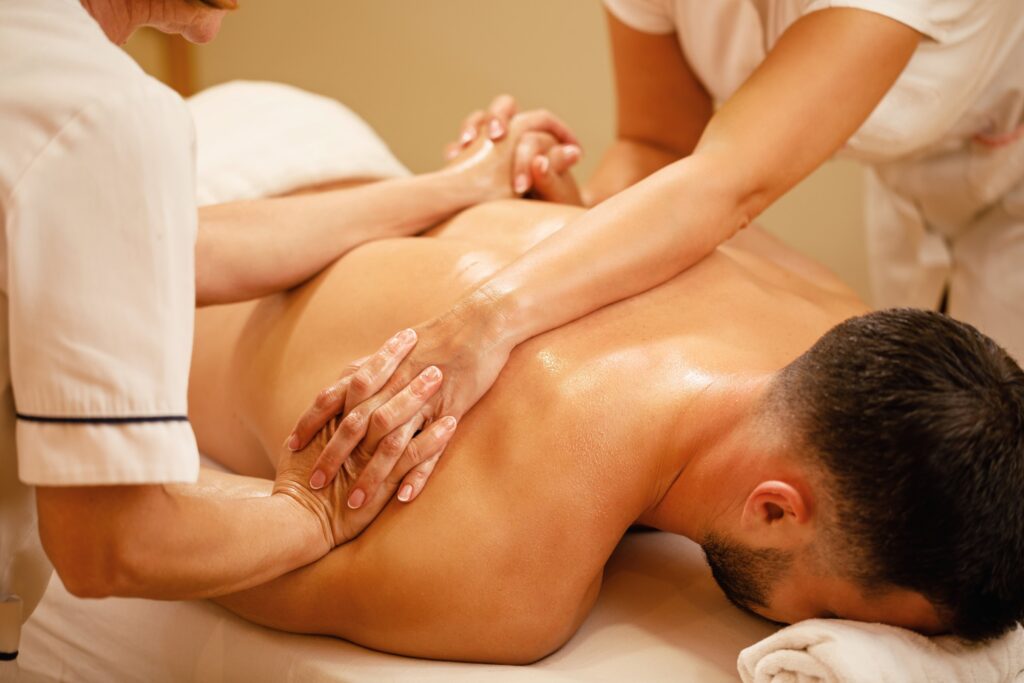
Should You Choose Thai Massage or a Gentler Program?
Thai massage may be suitable when you:
- Feel stiff from prolonged sitting
- Want pressure combined with stretching
- Do not want oil
- Do not have an acute injury
- Can change positions and move your body comfortably
You may prefer oil massage or aromatherapy massage when you:
- Feel very tired
- Have not slept enough
- Want to relax before bedtime
- Do not like stretching
- Have just completed a long journey
- Have muscle soreness after exercise
- Have never had a massage before and are worried about pain
A gentler program is not inferior; it simply suits a different goal and physical condition. If you are still deciding, compare the options in Types of Massage for Different Needs.
What Should You Tell the Therapist Before Thai Massage?
Tell the therapist before the massage if you have:
- Areas of pain or tightness
- Numbness, radiating pain, or weakness
- A recent accident or injury
- A history of surgery
- Pregnancy
- Osteoporosis
- A blood-clotting disorder
- Use of anticoagulant medication
- Wounds, rashes, or skin infections
- A history of blood clots
- A preferred pressure level
- Stretches or positions you want to avoid
People who bleed easily, have a low platelet count, or take anticoagulants should avoid very forceful massage and deep pressure.
Who Should Avoid Strong Thai Massage?
Consult a healthcare professional or choose lighter pressure first if you have:
- Osteoporosis or a high fracture risk
- Anticoagulant medication
- A tendency to bleed easily
- A low platelet count
- Recent surgery
- A recent injury
- Pregnancy or a high-risk pregnancy
- A history of blood clots
- Heart disease or an unstable circulation problem
- Joint or spinal limitations
- Open wounds, skin inflammation, or infection
Mayo Clinic advises that people with fragile bones or certain bone conditions may need gentler pressure instead of deep massage.
Which Areas Should Not Be Massaged Strongly?
Avoid strong pressure or forceful stretching over areas with:
- Open wounds
- Rashes or infections
- Heavy bruising
- Swelling, redness, or abnormal heat
- Abnormal or painful veins
- A recently sprained joint
- A suspected fracture or cracked bone
- A surgical wound that has not healed
- Numbness
- Acute pain
Massaging a surgical wound too early may cause it to reopen or increase infection risk. Wait until the wound has healed and follow guidance from the healthcare professional responsible for your care.
Which Symptoms Require Medical Assessment Instead of Massage?
Avoid massage and seek medical assessment if you have:
- Acute pain after a fall or accident
- Pain severe enough that you cannot walk or move
- Numbness and weakness in an arm or leg
- Severe radiating pain
- One leg that is swollen, red, or hot
- Chest pain
- Difficulty breathing
- Fever together with a painful swollen area
- A visibly deformed bone or joint
- Loss of normal bladder or bowel control together with back pain
- Pain that continues to worsen
- A wound or infection
Massage should not be used to delay assessment of symptoms that may involve an injury, nerves, or the circulatory system.
Is Soreness After Thai Massage Normal?
Mild soreness or tightness can occur, especially in people who:
- Are having massage for the first time
- Received stronger pressure than they are used to
- Had several stretching positions
- Had very tight muscles before the massage
- Recently did strenuous activity
The symptoms should remain mild and gradually improve.
What Should You Do After Massage?
- Get up slowly
- Drink according to your thirst
- Rest
- Move gently
- Avoid intense exercise immediately afterward
- Observe how you feel later that day and the next day
- Tell the provider if unusual symptoms occur
You do not need to drink a large amount of water to “flush out toxins” because massage does not create toxins that need to be washed out by drinking excessive water.
Which Symptoms After Massage Need Professional Advice?
Contact an appropriate healthcare professional if you have:
- Severe pain
- Pain that keeps worsening
- Significant swelling
- Large or unusual bruising
- Numbness or weakness
- Persistent dizziness
- Chest pain or difficulty breathing
- Symptoms that significantly interfere with walking or sleeping
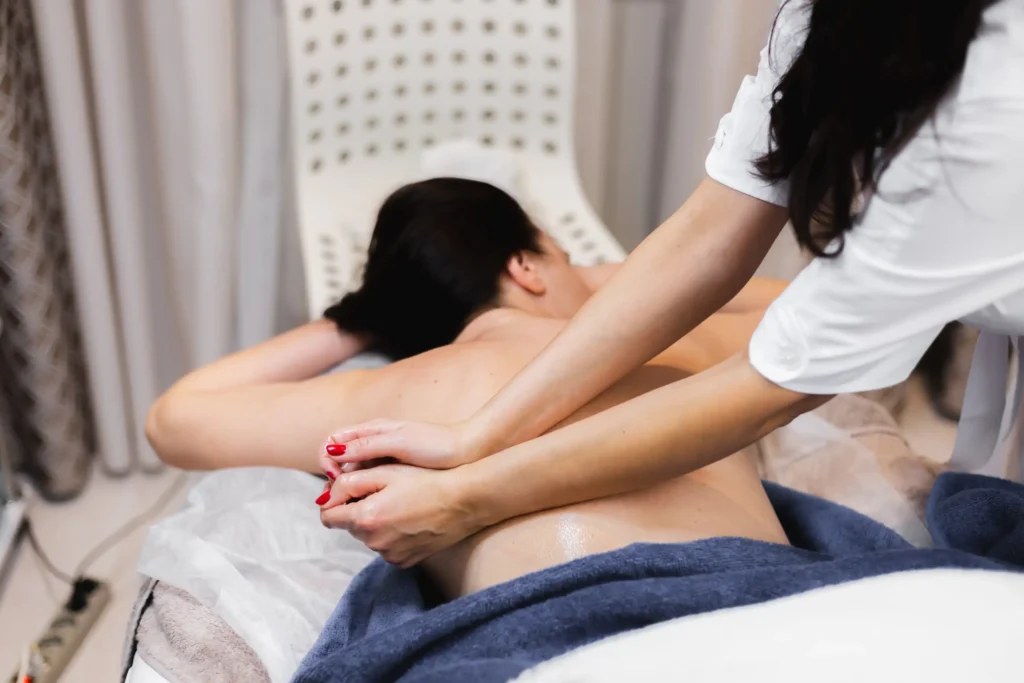
How to Prepare for Your First Thai Massage
Before your appointment, prepare as follows. If you want a session at home, a hotel, or a condominium, read Is Thai Massage at Home a Good Choice? How to Prepare the Space.
- Choose a 60-minute program
- Request light to medium pressure
- Tell the therapist that it is your first time
- Wear clothing that allows easy movement
- Avoid a large meal immediately before the massage
- Disclose injuries and underlying health conditions
- Tell the therapist which areas you do not want massaged
- Do not force yourself into a stretch that feels unsafe
- Speak up immediately if the pressure is too strong
- Allow some time to rest after the massage
A suitable provider should allow you to adjust the pressure and should not make you feel uncomfortable or guilty for asking for lighter pressure.
Summary: How Painful Should Thai Massage Be?
Thai massage may feel tight, heavy, or mildly tender under pressure, but it should not cause sharp pain, numbness, radiating pain, or so much tension that you cannot breathe normally.
An appropriate pressure level is one where you:
- Can still relax
- Can still breathe normally
- Do not have to force yourself to endure the pressure
- Do not experience numbness or radiating pain
- Can ask for the pressure to be adjusted at any time
- Do not develop severe pain after the session
For beginners, consider a 60-minute Thai massage with light to medium pressure and tell the therapist from the beginning that you have never had Thai massage before. For program details, see the Thai Massage Service.
Most importantly, do not follow the belief that “the more it hurts, the better.” A good massage should suit each client’s body, goals, and limitations. Before confirming the service, check the program type, duration, price, and clearly tell the provider about any limitations.
If you would like an outcall service, check the available space and building rules in advance. Then review the Professional Outcall Massage Service and How to Book an Outcall Massage before confirming the appointment time.
Frequently Asked Questions
Does Thai Massage Hurt the First Time?
Do You Have to Tolerate Pain During Thai Massage?
Does Stronger Massage Relieve Pain Faster?
How Long Should a Beginner Book Thai Massage?
Should I Choose Light or Medium Pressure?
How Long Can Soreness Last After Thai Massage?
Can I Ask the Therapist to Skip Certain Stretches?
Can I Have Thai Massage If I Take Blood Thinners?
Is Bruising After Massage Normal?
How Can I Ask for the Right Pressure If I Do Not Speak Thai?
Note: This article provides general information and is not a substitute for medical diagnosis or treatment. Anyone with an injury, underlying medical condition, pregnancy, recent surgery, medication that affects blood clotting, or unusual symptoms should consult an appropriate healthcare professional before receiving massage.
References
- National Center for Complementary and Integrative Health. Massage Therapy: What You Need To Know. NCCIH. https://www.nccih.nih.gov/health/massage-therapy-what-you-need-to-know
- National Center for Complementary and Integrative Health. 6 Things To Know About Massage Therapy for Health Purposes. NCCIH. https://www.nccih.nih.gov/health/tips/things-to-know-about-massage-therapy-for-health-purposes
- National Center for Complementary and Integrative Health. Massage Therapy for Health: What the Science Says. NCCIH. https://www.nccih.nih.gov/health/providers/digest/massage-therapy-for-health-science
- World Health Organization. Benchmarks for Training in Traditional / Complementary and Alternative Medicine: Benchmarks for Training in Nuad Thai. WHO. https://www.who.int/publications/i/item/9789241599672
- Mayo Clinic Staff. Massage Therapy. Mayo Clinic. https://www.mayoclinic.org/healthy-lifestyle/stress-management/in-depth/massage/art-20045743
- Mayo Clinic Staff. Anticoagulants: A Guide to Common Blood Thinners. Mayo Clinic. https://www.mayoclinic.org/diseases-conditions/heart-disease/in-depth/blood-thinners/art-20043930
- American Massage Therapy Association. Core Documents. AMTA. https://www.amtamassage.org/about/core-documents/
Contact Victoria Bangkok
We provide professional outcall massage services in Bangkok, delivered by a team of experienced massage therapists. Enjoy a relaxing experience that is private, convenient, and safe.
- Phone: 093-093-4663
- WhatsApp: Victoria Bangkok
- LINE Official Account: Victoria Bangkok
- Website: www.victoriabangkok.com
- Maps: The Victoria Outcall Bangkok
📌 We recommend booking in advance so we can arrange the most suitable massage therapist for your needs.
- Date
- View
- Comment