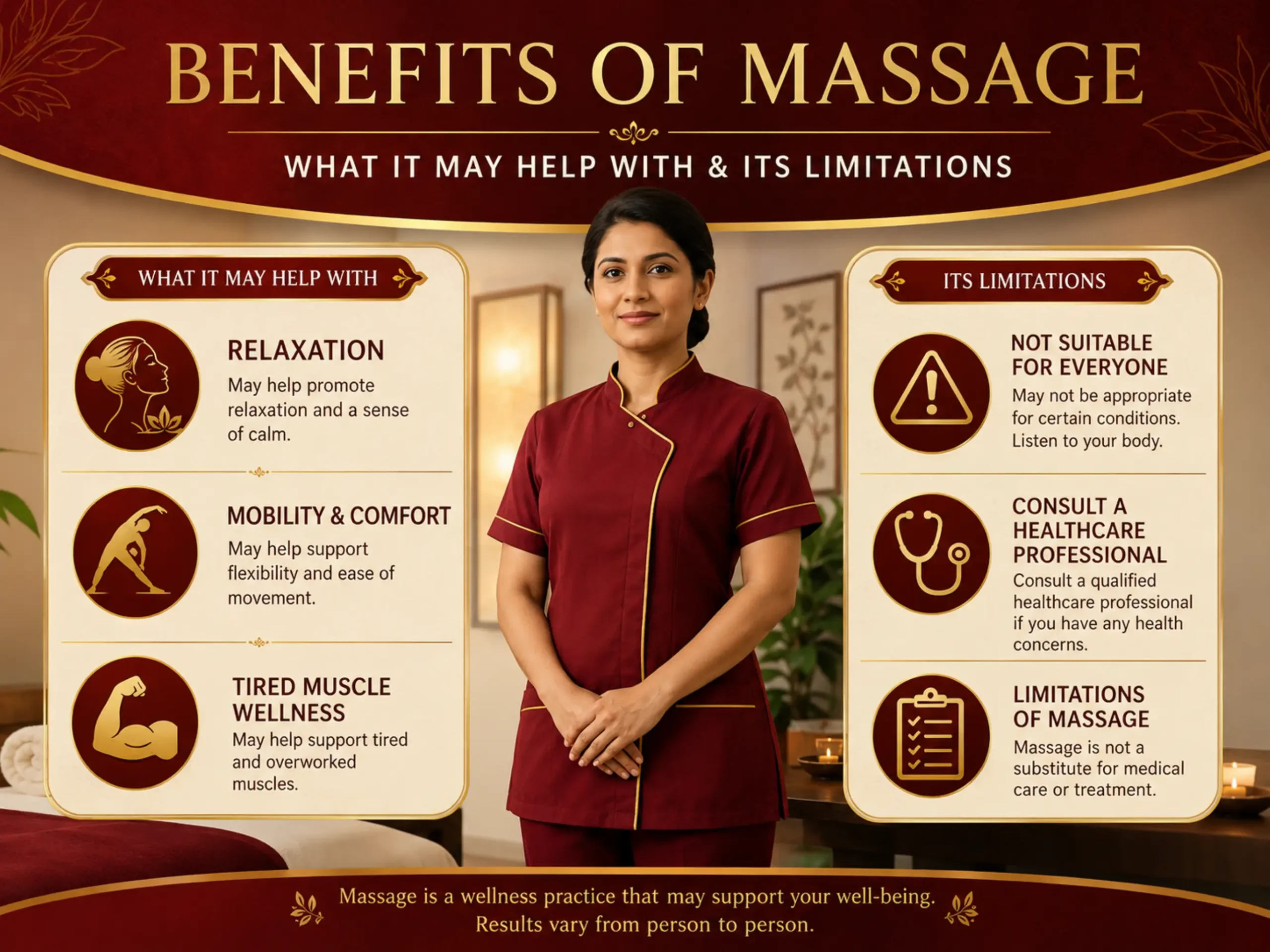
This article serves as the main guide to the benefits of massage, the limitations of the evidence, and situations in which massage should be avoided, without going too deeply into the techniques of each massage type. Readers who want to understand the meaning, scope, service types, and overall standards should also read What Is Health Massage?
In general, massage may help some people feel more relaxed, reduce feelings of tightness, move more comfortably, or provide short-term relief from certain types of pain. However, it should not be assumed that every type of massage produces the same effects, treats the underlying cause of symptoms, or provides permanent results.
A review of evidence on massage for pain published between 2018 and 2023 found that most studies were rated as having low or very low certainty, and no conclusion was supported by high-certainty evidence, even though some conditions showed positive findings. Massage should therefore be viewed as a complementary approach that may support comfort rather than a substitute for necessary diagnosis and treatment.
Table of Contents
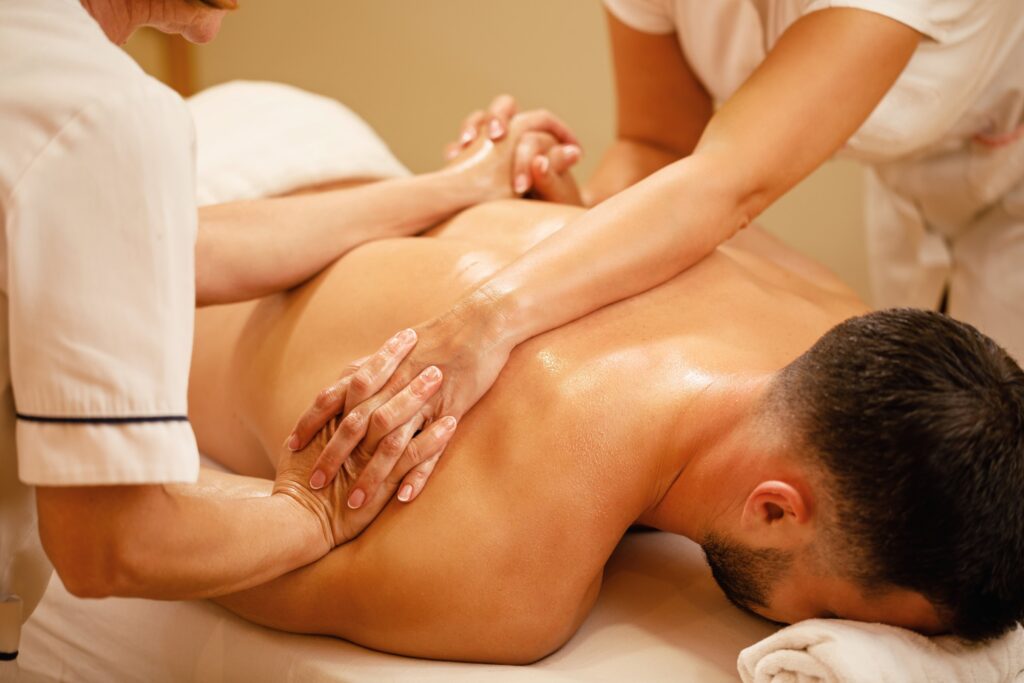
Explore Information by Massage Type
| What You Want to Learn More About | Related Article |
|---|---|
| Pressure combined with movement and assisted stretching | What Is Thai Massage? |
| Stroking, kneading, and pressure using oil | What Is Oil Massage? |
| Oil massage combined with fragrance | What Is Aromatherapy Massage? |
| Slow, deep pressure on areas of tightness | What Is Deep Tissue Massage? |
| Pressure applied to specific points | What Is Acupressure Massage? |
This table is intended only to guide readers to articles about specific massage types. It does not explain the techniques in detail because the current page should maintain its primary search intent around the benefits, limitations, and evidence related to massage. No single massage type provides every possible benefit or is suitable for everyone.
Summary of 10 Benefits of Massage
- May help reduce certain types of pain in the short term
- May help reduce feelings of muscle tightness
- Helps you feel more relaxed
- May make movement feel easier temporarily
- May reduce post-exercise soreness
- May help you feel calmer in some situations
- May help you feel more ready to rest or sleep
- May improve comfort for some people with health conditions
- Helps you notice how your body feels
- Creates a break from work and daily routines
1. May Help Reduce Certain Types of Pain in the Short Term
Pain relief is one of the most widely studied potential benefits of massage, particularly for musculoskeletal symptoms such as lower back pain, neck pain, and some types of chronic pain.
Evidence summarized by NCCIH indicates that massage may provide short-term benefits for some pain conditions, but study results vary depending on technique, frequency, participant group, and comparison method. Evidence showing that massage is clearly better than other active treatments remains limited.
It is therefore more appropriate to say “massage may help relieve the sensation of pain” rather than claim that it:
- Treats every type of pain
- Definitely fixes the underlying cause
- Realigns bones or joints
- Can replace physical therapy
- Makes symptoms disappear permanently
- Works faster when more pressure is used
What Kind of Pain Should Not Be Massaged Right Away?
Avoid massage and seek an assessment first if you have:
- Severe or sudden pain
- Pain after an accident or fall
- Swelling, redness, or heat in the painful area
- Numbness or weakness in an arm or leg
- Inability to move or bear weight
- Visible deformity of a bone or joint
- Fever together with pain
- Chest pain or difficulty breathing
You should not ask a therapist to apply very strong pressure just to test whether the symptoms improve.
2. May Help Reduce Feelings of Muscle Tightness
People who work at a desk, travel, exercise, or remain in the same position for long periods may feel tightness in the neck, shoulders, back, hips, thighs, or calves. Stroking, kneading, pressure, and tissue movement at an appropriate intensity may make these areas feel more comfortable temporarily.
If you want to learn which massage types may suit different patterns of tightness, you can continue with the following dedicated articles:
- Thai Massage for readers who want to understand pressure, movement, and assisted stretching
- Oil Massage for readers interested in stroking, kneading, and adjusting pressure through the use of oil
- Aromatherapy Massage for readers interested in oil massage combined with fragrance and a relaxing atmosphere
- Deep Tissue Massage for readers who want to understand slow, deeper pressure
- Acupressure Massage for readers who want to learn about applying pressure to specific points
The phrase “feels looser” does not mean that fascia has been proven to have been broken down, bones have been realigned, or a structural abnormality has been corrected.
If tightness returns regularly, other factors should also be considered, such as sitting posture, movement habits, strength, rest, and repetitive activities.
3. Helps You Feel More Relaxed
Relaxation is one of the main reasons people choose massage. A steady rhythm of touch, time without other responsibilities, and a calm environment may make it easier for some people to rest.
Experiences that some people may notice include:
- Feeling calmer
- Feeling heavier or softer in the body
- Feeling sleepy
- Thoughts slowing down
- Feeling that you have time to rest
- Feeling less tight after the session
Oil massage and aromatherapy massage may suit people who want to lie still and rest, while those who prefer pressure and body movement may also find Thai massage relaxing.
Relaxation is a personal experience. Massage should not be described as a treatment for chronic stress, anxiety disorders, or mental health conditions. NCCIH notes that evidence on massage for anxiety and related symptoms in some groups remains limited and inconsistent.
4. May Make Movement Feel Easier Temporarily
After a massage, some people may feel that:
- Shoulder rotation feels easier
- The hips feel less tight
- Leg extension feels more comfortable
- Standing up from a seated position feels easier
- The body feels less stiff
Techniques that include movement or assisted stretching, such as Thai massage, may create a more noticeable feeling of easier movement than some other styles, while oil massage may help reduce the sensation of tightness before movement.
These effects are often temporary and should not be interpreted as permanent improvements in flexibility or proof that the body’s structure has been realigned.
Long-term movement ability also depends on:
- Regular movement
- Strength training
- Exercise
- Injury rehabilitation
- Physical therapy when indicated
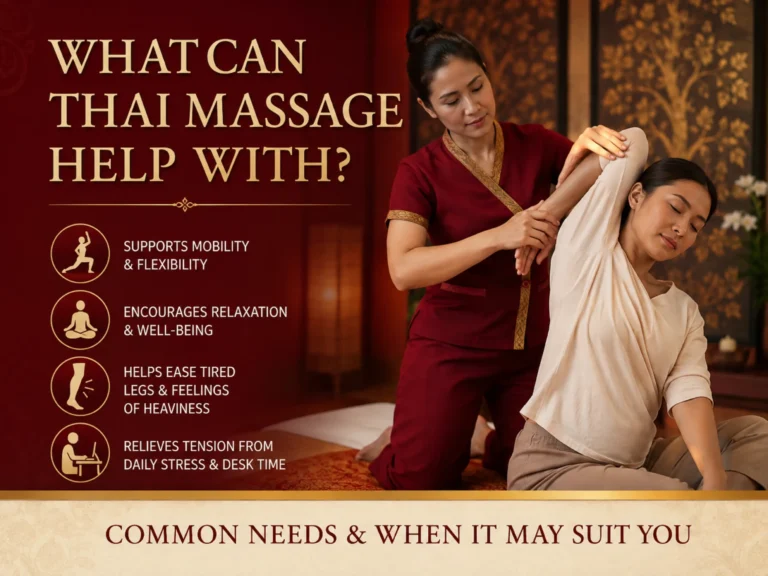
If you are interested in the specific features of pressure, movement, and stretching, read more at What Can Thai Massage Help With?
5. May Reduce Post-Exercise Soreness
Massage may help reduce the perception of soreness or aching after exercise in some people, but this does not mean that muscles repair faster, performance immediately returns to normal, or heavy training can continue without adequate rest.
Post-exercise massage may be suitable when the goal is to:
- Feel more comfortable
- Reduce feelings of tightness
- Rest after training
- Use light to moderate pressure
- Focus on tired muscles without signs of injury
Strong massage should be avoided over areas that are:
- Acute and painful
- Swollen
- Heavily bruised
- Unable to move normally
- Suspected of having a muscle or tendon injury
Sleep, food, normal hydration, and adequate recovery time remain important parts of recovery.
6. May Help You Feel Calmer in Some Situations
Receiving care in a safe, quiet environment where the pressure level can be controlled may help some people feel calmer or temporarily less anxious.
Factors that may contribute include:
- A predictable massage rhythm
- Reduced noise and distractions
- The feeling of having time to rest
- Communication with the therapist
- The ability to choose pressure and touch boundaries
- A private atmosphere
Massage has been studied in some patient groups, such as people recovering after surgery or receiving cancer care, with some positive findings for pain or anxiety. However, these results should not be generalized as guaranteed outcomes for everyone.
If anxiety interferes with daily life, massage should only be considered a complementary approach and not a replacement for appropriate care.
7. May Help You Feel More Ready to Rest or Sleep
Some people feel sleepy or more ready to rest after a massage, especially when they:
- Choose light to moderate pressure
- Get a massage in the evening
- Reduce distractions after the session
- Can continue resting afterward
- Do not need to travel home
- Avoid overly stimulating or intense techniques
Oil massage and aromatherapy massage may suit people who want to lie still, while those who prefer Thai massage can ask for fewer stretching techniques and lighter pressure when getting a massage before bed.
Massage should not be described as a treatment for insomnia. If sleep problems persist, or if there is loud snoring, gasping or pauses in breathing during sleep, or unusual daytime sleepiness, an evaluation is advisable.
8. May Improve Comfort for Some People With Health Conditions
Massage is sometimes used as supportive care for certain patient groups to improve comfort or reduce some symptoms, but the technique should be adapted appropriately and coordinated with the person’s healthcare team.
NCCIH notes that massage may be used as part of supportive care for some patient groups, but evidence regarding pain, anxiety, and quality of life is not strong or consistent enough to guarantee results.
Precautions may include:
- Do not apply pressure over wounds
- Avoid medical devices
- Adjust pressure when bones are fragile
- Use caution when platelet counts are low
- Check for medications that affect blood clotting
- Do not stop primary treatment just because you feel better after massage
- Use a therapist who understands the relevant condition
9. Helps You Notice How Your Body Feels
During a massage, the client needs to notice which areas feel tight, what level of pressure feels comfortable, and which positions feel unpleasant. This process may help people become more aware of habits that are associated with aches and fatigue.
For example:
- One shoulder feels tight after carrying a bag
- The back feels tired after prolonged sitting
- The calves ache after a lot of walking
- Moderate pressure feels better than strong pressure
- Certain lying positions feel uncomfortable
- Certain scents trigger headaches
However, a massage therapist cannot diagnose disease based on touch alone. Finding a tight area does not confirm blocked energy lines, displaced bones, or a blood clot.
10. Creates a Break From Work and Daily Routines
Another potential benefit of massage is that it creates dedicated time to step away from work, phones, travel, or activities that require concentration.
Massage may help you:
- Reduce distractions temporarily
- Rest after work
- Relax after a day of sightseeing
- Prepare for sleep
- Take a break from screens
- Rest immediately afterward when using an outcall service
This benefit depends on the overall experience, including pressure level, professionalism, privacy, temperature, noise, and the sense of safety.
A massage that is too intense, noisy, or unclear about service boundaries may not feel restful even if the program is marketed as a relaxation massage.
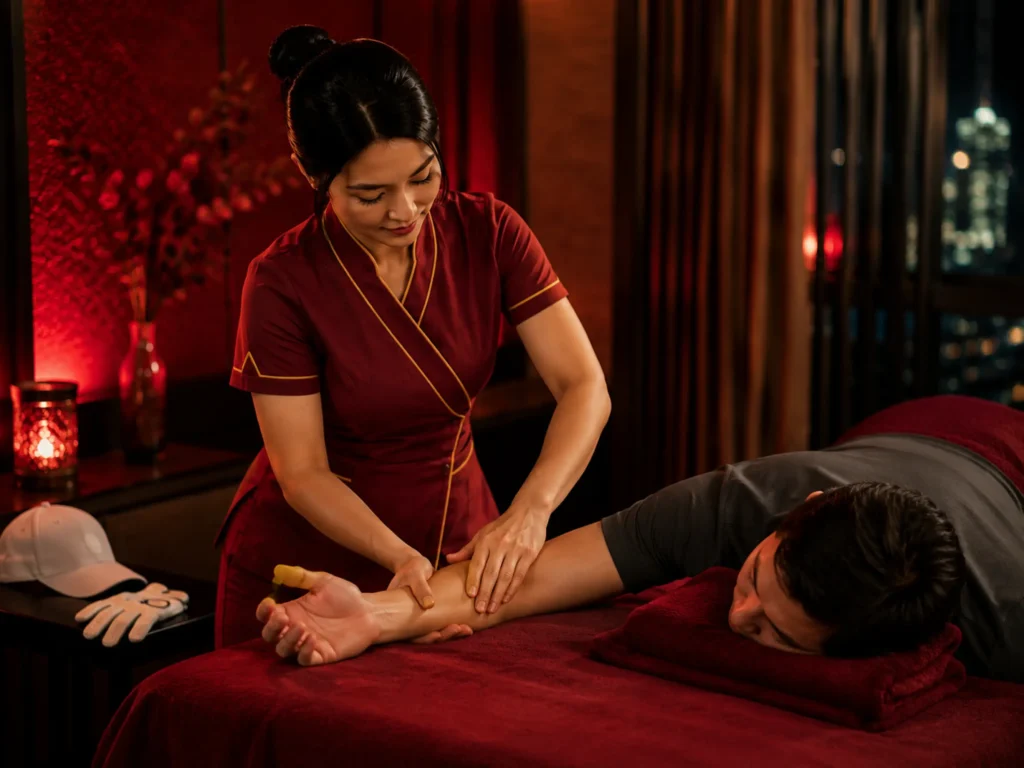
How Long Do the Benefits of Massage Last?
There is no fixed duration. Some people may feel better for only a few hours, while others may notice effects for several days, depending on:
- The cause of the symptoms
- The type of massage
- The pressure level
- The session duration
- How familiar the body is with massage
- Activities after the massage
- Rest and recovery
- Daily posture and movement
- Existing health conditions
If tightness is caused by sitting in the same position every day, the effect may not last long if the original contributing factors remain unchanged.
How Often Should You Get a Massage?
There is no single frequency that is right for everyone. People seeking relaxation may book massage as appropriate for their needs, while those using massage as part of symptom management should consider a plan together with a qualified professional.
A strong massage should not be repeated while you still have:
- Significant soreness
- Bruising
- Increased pain
- Swelling
- Numbness
- Weakness
- Reduced movement
Is a Stronger Massage Always More Beneficial?
No. The pressure level should match the goal and the person’s physical condition. More pain does not prove that muscles are relaxing or that the massage is more effective.
Ask for less pressure if you:
- Have to hold your breath
- Notice your body tensing up
- Feel sharp pain
- Feel radiating pain
- Feel numbness
- Feel dizzy
- Feel that a joint is being twisted
- Do not feel safe
NCCIH states that the risks of massage are generally fairly low when appropriate precautions are used, but rare serious adverse events have been reported, often in association with forceful techniques or people who already had risk factors.
Does Massage Improve Circulation or Detox the Body?
Pressure and movement may temporarily change circulation in the skin or tissues, but massage should not be described as being able to:
- Open blocked blood vessels
- Dissolve blood clots
- Treat high blood pressure
- Prevent heart disease
- Remove toxins from the body
- Replace exercise
The body already uses the liver, kidneys, lungs, and other systems to process waste. After a massage, you can drink water according to normal thirst, but there is no need to drink excessive amounts to “detox”.
When Should You Avoid Massage or Consult a Healthcare Professional First?
Tell the service provider and consult a healthcare professional when necessary if you:
- Are pregnant
- Recently had surgery
- Have fragile bones
- Take anticoagulant medication
- Have a bleeding disorder or low platelet count
- Have a history of blood clots
- Have cancer or are undergoing cancer treatment
- Have heart disease or another condition that is not well controlled
- Have wounds or a skin infection
- Have swollen and painful varicose veins
- Have numbness or weakness
- Have pain with an unknown cause
Note: Massage should not be used to delay seeing a healthcare professional when there is a medical problem.
For a more detailed list of contraindications and warning signs, read Massage Contraindications and When You Should Avoid Massage.
Summary: What Are the Benefits of Massage?
Massage may help some people feel less pain in certain conditions, reduce feelings of tightness, relax, move more comfortably, and take a break from daily routines. However, results depend on the type of massage, technique, pressure level, cause of symptoms, and each person’s health.
Overall research evidence remains limited, particularly for long-term outcomes and comparisons with other forms of care. Claims such as “guaranteed to treat the problem” or “works for everyone” should therefore be avoided.
Choose a massage type based on your goal, disclose relevant health information, use a pressure level at which you can still relax, and stop immediately if you experience sharp pain, numbness, radiating pain, dizziness, or discomfort.
Frequently Asked Questions About Massage Benefits
Does massage really have benefits?
Can massage help reduce pain?
Does massage really help relax muscles?
Can massage help reduce stress?
Can massage help you sleep better?
Does massage help detox the body?
Is a stronger massage always better?
Can you get a massage every day?
Can massage be dangerous?
Which is more beneficial, Thai massage or oil massage?
Want to relax without traveling? Victoria Bangkok provides outcall massage in Bangkok to homes, condos, and hotels. Clients can choose the massage type, duration, pressure level, and areas to focus on before confirming the booking. See what information to prepare on our How to Book an Outcall Massage page.
Note: This article provides general information and is not a substitute for diagnosis or treatment from a healthcare professional.
References
- National Center for Complementary and Integrative Health. Massage Therapy: What You Need To Know. NCCIH. https://www.nccih.nih.gov/health/massage-therapy-what-you-need-to-know
- National Center for Complementary and Integrative Health. Massage Therapy for Health: What the Science Says. NCCIH. https://www.nccih.nih.gov/health/providers/digest/massage-therapy-for-health-science
- Mayo Clinic Health System. Benefits of Massage Therapy. https://www.mayoclinichealthsystem.org/hometown-health/speaking-of-health/benefits-of-massage-therapy
- Arthritis Foundation. Benefits of Massage. https://www.arthritis.org/health-wellness/healthy-living/managing-pain/pain-relief-solutions/benefits-of-massage
Contact Victoria Bangkok
We provide professional outcall massage services in Bangkok, delivered by a team of experienced massage therapists. Enjoy a relaxing experience that is private, convenient, and safe.
- Phone: 093-093-4663
- WhatsApp: Victoria Bangkok
- LINE Official Account: Victoria Bangkok
- Website: www.victoriabangkok.com
- Maps: The Victoria Outcall Bangkok
📌 We recommend booking in advance so we can arrange the most suitable massage therapist for your needs.
- Date
- View
- Comment