Acupressure massage is a type of massage that applies pressure to specific points on the body. Therapists may use their thumbs, fingertips, palms, knuckles, or appropriate tools to apply pressure at a level that the client finds comfortable. The general goal is to promote relaxation, reduce tension, and care for areas that feel fatigued from daily use.
Many people confuse acupressure massage with Deep Tissue Massage because both may involve sustained pressure and focus on tense areas. However, they are actually different in concept, goals, and depth of pressure. Those who want to compare other types can see Popular Types of Massage.
Table of Contents
What is Acupressure Massage?
Acupressure massage involves applying pressure to specific points on the body. The traditional concept is rooted in traditional Chinese medicine, which explains that these points are connected to energy pathways within the body.
In a modern perspective, acupressure can be used as a method to help clients feel relaxed and more aware of their body’s tension. However, evidence regarding its effectiveness for various conditions varies, and it should not be used as a substitute for a medical examination or treatment.
Acupressure massage generally does not use needles, so it is different from acupuncture, even though both approaches refer to some similar point locations.
Principles of Acupressure Massage
Acupressure massage is usually performed in the following sequence:
- The therapist asks about symptoms, needs, and health limitations.
- Examines areas of tension or sensitivity to pressure.
- Selects points appropriate for the area needing care.
- Applies light, medium, or short sustained pressure.
- Adjusts the pressure according to the client’s feelings.
- Monitors symptoms during and after the massage.
The pressure should be at a level that feels firm or relaxing, but it should not cause sharp pain, numbness, or radiating pain. The client should inform the therapist immediately if they feel uncomfortable.
Popular Points for Acupressure Massage
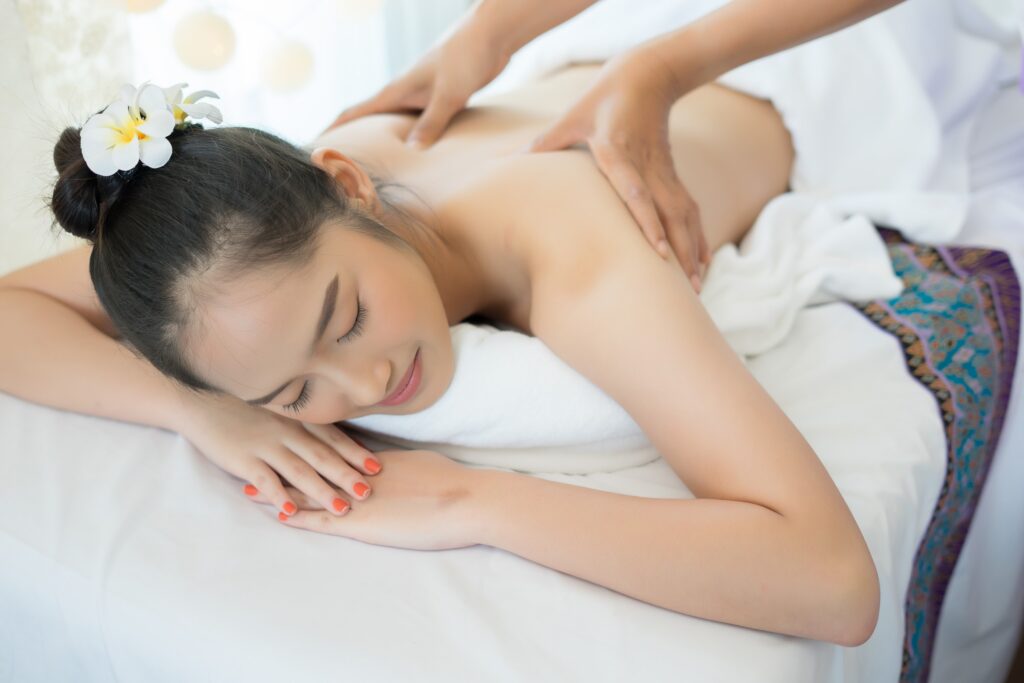
Popular locations depend on the client’s needs and the therapist’s approach. Common areas include:
Head and Face Area
Often focuses on the temples, forehead, around the jaw, or scalp. Suitable for those seeking relaxation after eyestrain or who have tension from frowning and clenching their teeth.
The area around the eyes and face requires particularly light pressure, and pressure should not be applied directly to the eyeballs.
Neck and Shoulder Area
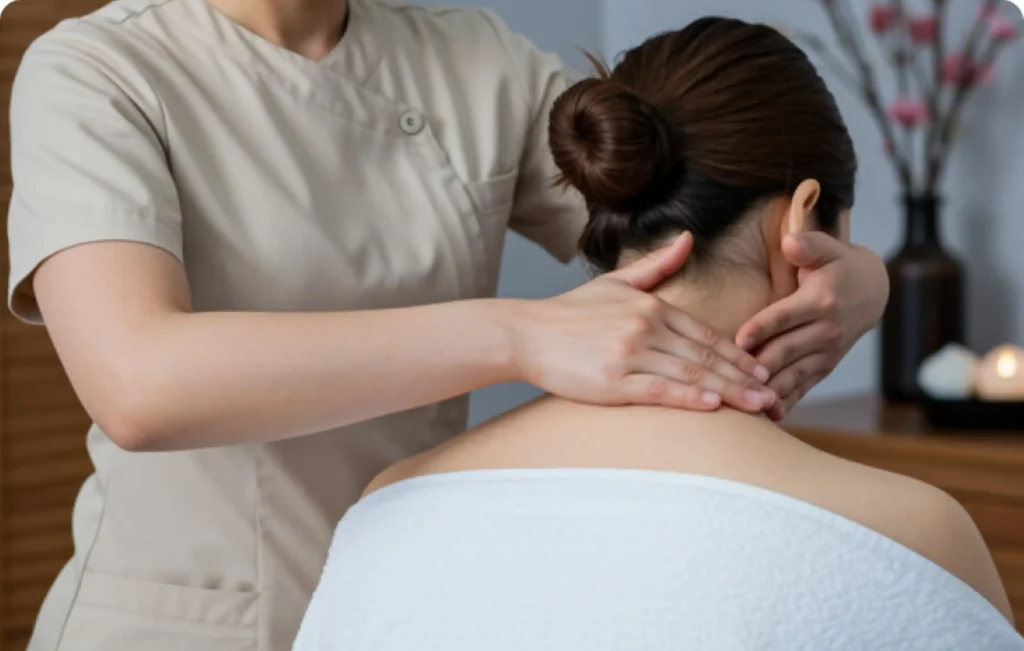
This is a common area for tension in people who sit at work, use computers, or look down at their phones for a long time. The therapist may focus on the muscles around the shoulders, shoulder blades, and the base of the skull.
Those with radiating pain down the arm, numbness, weakness, or pain after an accident should see a doctor before receiving service.
Back Area
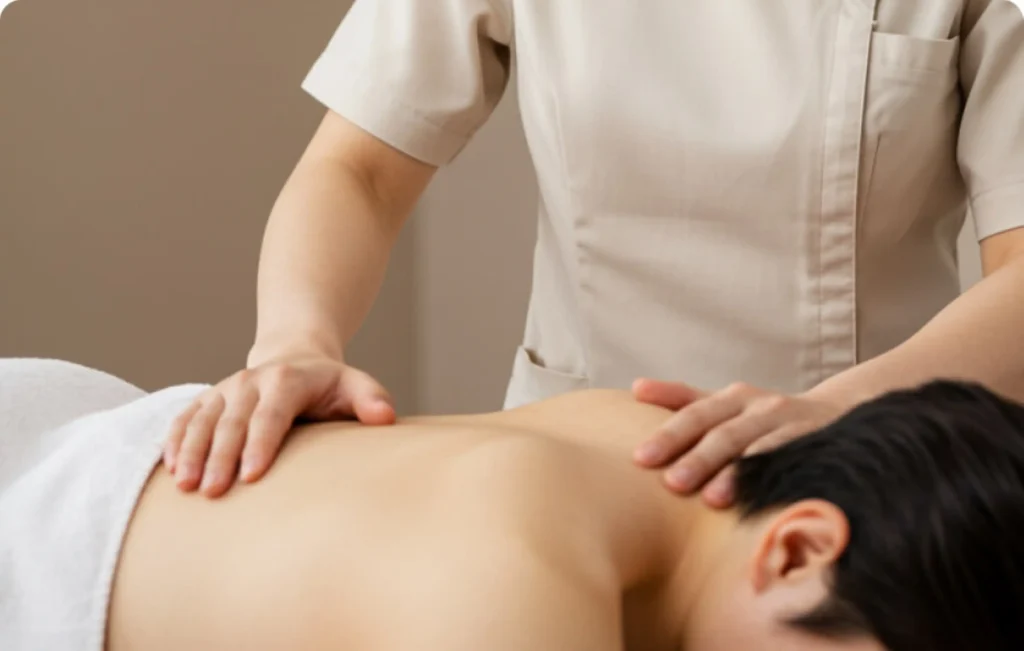
Pressure can be applied along the muscles next to the spine or around the shoulder blades. Direct, heavy pressure on the spine itself should be avoided.
If there is severe back pain, pain accompanied by fever, leg weakness, or problems controlling bowel movements, a medical evaluation should be sought immediately.
Hand and Wrist Area
May be used for those who do repetitive tasks such as typing, using a mouse, or holding a phone for a long time. However, pressure should not be applied to areas that are swollen, red, hot, or suspected of injury.
Hip and Leg Area
The therapist may focus on the hips, thighs, calves, or soles of the feet for those who walk, stand, or exercise for long periods.
Pressure should not be applied to a leg with unilateral swelling, redness, heat, or abnormal pain, as a medical cause may need to be investigated first.
Foot Area
Foot acupressure usually focuses on the soles, heels, and around the ankles, aiming for relaxation and reducing feelings of fatigue from walking or standing for a long time.
Foot acupressure is not the same as reflexology in all cases, as reflexology has its own specific conceptual system and point map.
Table of Popular Points and Suitable Needs
| Area | Common Needs | Precautions |
|---|---|---|
| Head and Temples | Wants relaxation from tension | Avoid severe pressure and injured areas |
| Neck and Shoulders | Tension from sitting at work or using a phone | Watch for numbness, radiating pain, or neck injury |
| Back and Shoulder Blades | Muscle fatigue or feeling stiff | Do not press heavily on the spine |
| Hands and Wrists | Fatigue from typing or using a mouse | Avoid swollen, red, or inflamed areas |
| Hips and Legs | Fatigue from walking, standing, or exercising | Avoid areas where blood clots or injuries are suspected |
| Soles of Feet | Feeling stiff or fatigued from standing | Watch for wounds, diabetes, or abnormal sensation |

Who is Acupressure Massage Suitable For?
Acupressure massage may be suitable for those who:
- Want to relax from daily stress.
- Feel tension in the neck, shoulders, back, hands, or feet.
- Work in the same position for a long time.
- Want to focus on specific areas rather than a full-body massage.
- Do not want to use a lot of oil.
- Like targeted pressure and can communicate their pressure preferences.
The Cleveland Clinic states that acupressure is used to promote calmness and relaxation, especially by pressing certain points on the wrists, forehead, and sternum, but results may vary from person to person.
Can Acupressure Massage Cure Diseases?
Acupressure massage should not be presented as a direct cure for diseases. Massage can be used as a complementary approach for relaxation or to help manage certain types of discomfort, but evidence regarding many types of pain is limited, and the results may only be short-term.
If symptoms are continuous, severe, or interfere with daily life, you should see a doctor or physical therapist to evaluate the cause first. You should not rely solely on massage.
Is Acupressure Massage Different from Trigger Point Massage?
These two terms may be used interchangeably, but they have different focuses.
Acupressure Massage references point locations based on traditional Chinese medicine concepts and may apply pressure to points that are not directly on the painful muscle.
Trigger Point Massage focuses on tense or pressure-sensitive areas of muscle fibers, often called “muscle knots,” applying pressure directly to the area where the tension is detected.
The Cleveland Clinic explains that Trigger Point Massage applies direct pressure to tight muscle locations to help those areas release.
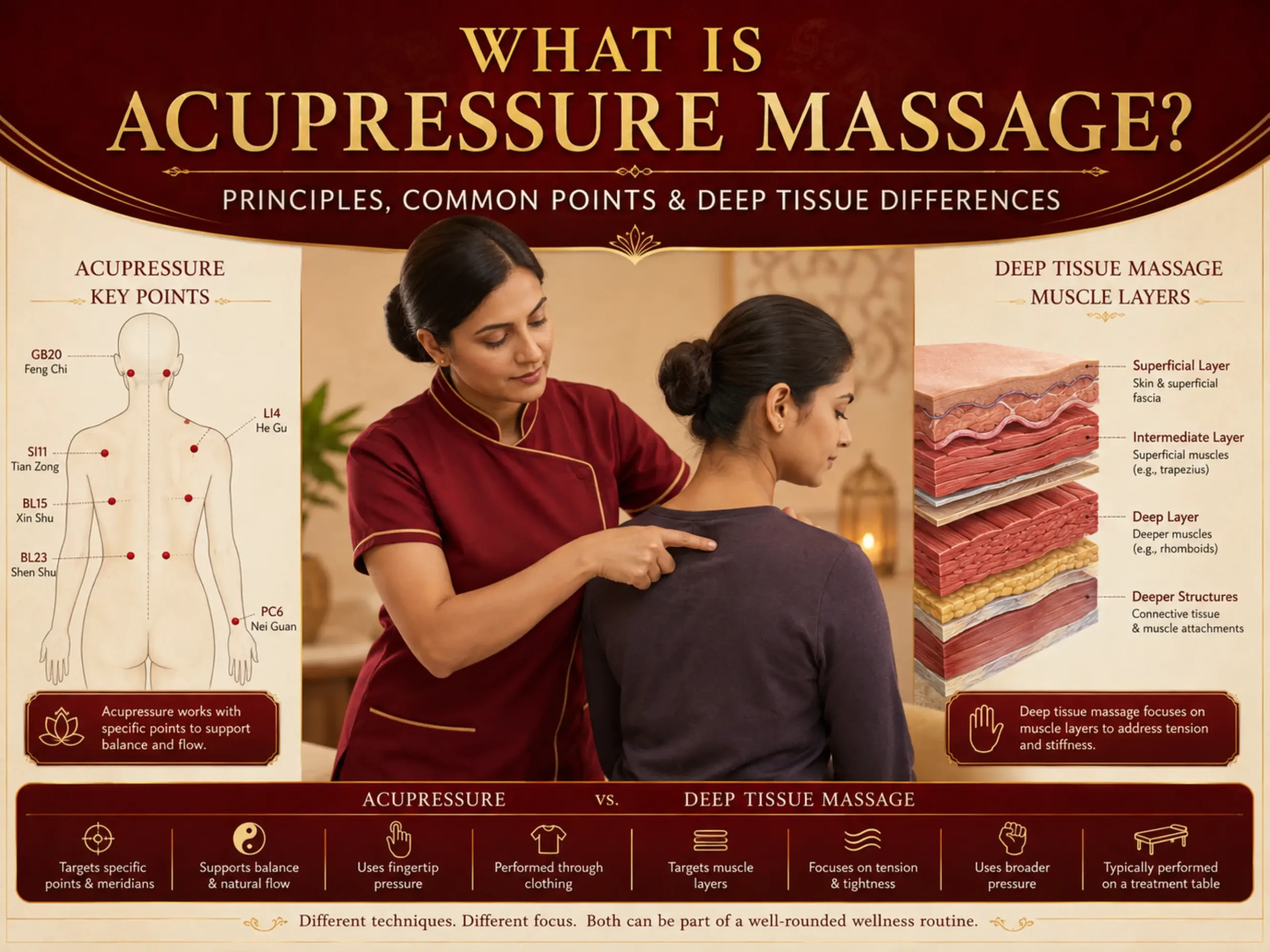
How is Acupressure Massage Different from Deep Tissue?
Acupressure and Deep Tissue massage may both use fairly distinct pressure, but they have different goals and working characteristics.
| Comparison Topic | Acupressure Massage | Deep Tissue |
|---|---|---|
| Focus | Specific points on the body | Deeper layers of muscle and connective tissue |
| Technique | Sustained pressure, rhythmic pressure, or pressure on specific locations | Stroking, pressing, kneading, and moving pressure along the muscles |
| Massage Area | May be multiple small points | Usually covers a broader area of muscles |
| Pressure Level | Light to fairly heavy depending on the point | Medium to heavy and goes deeper |
| Use of Oil | May or may not be used | Usually uses a small amount of oil or lotion |
| General Goal | Relaxation and targeted care | Reducing tension in deep muscle layers |
| Feeling After Massage | May feel light or sensitive at the pressure points | May feel slightly sore or tight |
| Suitable For | Those who want to focus on specific points | Those with widespread muscle tension |
| Precautions | Should not press on nerves, bones, or inflamed areas | Heavy pressure may not be suitable for people with certain risk conditions |
Deep Tissue Massage aims to work on muscles and connective tissues that are tense from repetitive use or staying in the same posture for a long time, using deeper pressure than a general relaxation massage.
Acupressure does not necessarily mean applying deep pressure. The key is the precision of the location and pressure control, not pressing as hard as possible.
Should I Choose Acupressure or Deep Tissue?
Choose Acupressure when you want
- To focus on specific locations such as the neck, shoulders, hands, or feet.
- Targeted or sustained pressure.
- A program that can perhaps be done through clothing.
- Relaxation without needing deep muscle massage over a wide area.
- Pressure that can be adjusted from light to medium.
Choose Deep Tissue when you want
- To focus on widespread muscle tension.
- Deep pressure applied along the muscles.
- Care for tension from repetitive use.
- A program that focuses on the back, shoulders, hips, or thighs.
- To handle medium to fairly heavy pressure.
If you are unsure, you should inform the therapist about where you feel tension, the amount of pressure you want, and whether you have had any previous pain or injuries.
Limitations of Acupressure Massage
Acupressure massage has limitations that should be understood, including:
Cannot diagnose the cause of pain
Some types of pain or numbness may be caused by bones, joints, nerves, inflammation, or other diseases. Acupressure cannot accurately identify these causes.
Results vary from person to person
Some people may feel relaxed immediately, while others may not feel much change. The results also depend on the body condition, technique, pressure level, and the cause of the discomfort.
Should not replace medical treatment
If symptoms are chronic or severe, massage should only be a complementary approach, not a replacement for medical treatment recommended by a doctor.
Do not believe that it must hurt to work
Excessive pressure can cause bruising, pain, or tissue irritation. The massage should be adjusted according to your feelings; you should not force yourself to endure pain.
Who should avoid or consult a doctor before massage?
Individuals with the following conditions should inform the therapist and consider consulting a doctor beforehand. More details can be found in the article Massage Contraindications and Precautions.
- Severe bone fractures or osteoporosis
- Open wounds, burns, or skin infections
- Abnormal swelling, redness, heat, or pain
- Bleeding disorders or taking anticoagulant medication
- Deep vein thrombosis (blood clots) or suspected blood clots
- Recent surgery or injuries that have not healed well
- Cancer or undergoing treatments that require caution with pressure
- Pregnancy with complications
- Abnormal sensation, such as numbness or nerve damage
The NCCIH states that massage by trained professionals generally has a relatively low risk, but serious side effects have been reported rarely, such as nerve damage, blood clots, or bone fractures. The risk may be higher when severe pressure is used or if the client has pre-existing risk factors.
Signs that you should stop the massage immediately
You should inform the therapist to stop or lighten the pressure immediately if you experience:
- Sharp or severe pain
- Numbness, tingling, or an electric shock-like sensation
- Pain radiating down the arm or leg
- Dizziness, nausea, or difficulty breathing
- Feeling that the muscles are tensing up more
- The massaged area becomes abnormally swollen, red, or hot
Massage should not cause severe pain. If the pressure is too much, you should ask the therapist to reduce it immediately.
How to prepare before an acupressure massage?
Before the service begins, you should provide the following information:
- Underlying medical conditions and current medications
- History of surgery or accidents
- Areas with pain, numbness, or injury
- The level of pressure that feels comfortable
- Areas you do not want touched
- Product allergies, if oil or balm will be used
- How long you’ve had symptoms and activities that make them worse
Communication during the massage is very important. Clients do not need to endure pressure just because they think more pressure yields better results.
Frequently Asked Questions about Acupressure Massage
Does acupressure massage hurt?
Does acupressure massage require oil?
How many minutes does an acupressure massage take?
Is acupressure massage the same as Thai massage?
Is acupressure massage the same as a foot massage?
Can acupressure massage help cure migraines?
Summary: What is Acupressure Massage?
Acupressure massage is the application of pressure to specific points on the body, generally aiming for relaxation and care of areas that feel tense. Techniques may use fingertips, thumbs, palms, or knuckles, and the pressure can be adjusted according to the client’s needs.
The key difference from Deep Tissue is that acupressure focuses on specific points, while Deep Tissue focuses on deeper layers of muscles and connective tissues over a broader area. No single style is suitable for everyone, so you should choose based on the area needing care, your pressure tolerance, and health limitations. If you want to explore other options, you can compare them on the All Types of Massage page.
Those who want to compare pressure techniques combined with stretching can read What is Thai Massage? For those with widespread muscle tension who can handle deeper pressure, you can see What is Deep Tissue Massage? or go back to All Types of Massage to choose a more suitable service.
References
- Cleveland Clinic. Acupressure Points: Can They Help With Pain, Nausea and More? https://health.clevelandclinic.org/acupressure-points
- Cleveland Clinic. Trigger Point Massage: What It Is and How It Works. https://health.clevelandclinic.org/trigger-point-massage
- Cleveland Clinic. Types of Massage Therapy to Try. https://health.clevelandclinic.org/types-of-massage-therapy-to-try
- National Center for Complementary and Integrative Health. Massage Therapy for Health: What the Science Says. NCCIH. https://www.nccih.nih.gov/health/providers/digest/massage-therapy-for-health-science
- National Center for Complementary and Integrative Health. Massage Therapy: What You Need To Know. NCCIH. https://www.nccih.nih.gov/health/massage-therapy-what-you-need-to-know
- National Center for Complementary and Integrative Health. 6 Things to Know About Massage Therapy for Health Purposes. NCCIH. https://www.nccih.nih.gov/health/tips/things-to-know-about-massage-therapy-for-health-purposes
- Mayo Clinic. Massage Therapy. https://www.mayoclinic.org/tests-procedures/massage-therapy/about/pac-20384595
- Mayo Clinic Press. What to Expect During a Massage Therapist Visit. https://mcpress.mayoclinic.org/living-well/what-to-expect-during-a-massage-therapist-visit/
Contact Victoria Bangkok
We provide professional outcall massage services in Bangkok, delivered by a team of experienced massage therapists. Enjoy a relaxing experience that is private, convenient, and safe.
- Phone: 093-093-4663
- WhatsApp: Victoria Bangkok
- LINE Official Account: Victoria Bangkok
- Website: www.victoriabangkok.com
- Maps: The Victoria Outcall Bangkok
📌 We recommend booking in advance so we can arrange the most suitable massage therapist for your needs.
- Date
- View
- Comment