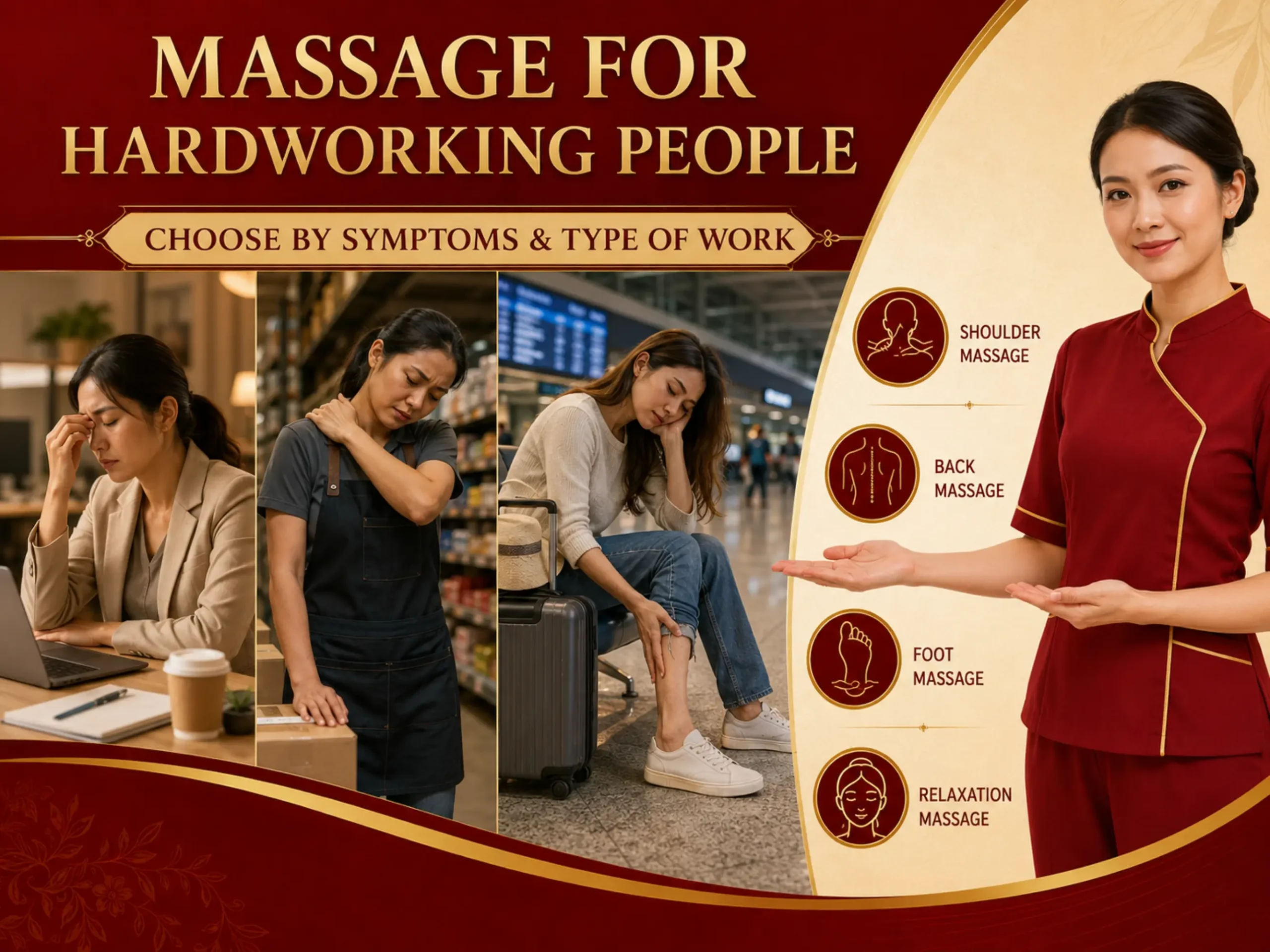
Neck, shoulder, back, lower back, leg, or foot pain is common among people in many occupations. This includes office workers who sit in front of a computer all day, sales staff who stand for long periods, people who walk or move throughout the day, and drivers who remain in the same position for several hours.
Although these symptoms may seem similar, the causes and areas under strain can differ. Choosing a massage should therefore not be based only on “which type uses the strongest pressure”. Instead, consider the nature of your work, where you feel discomfort, how long the symptoms have lasted, and your individual health limitations.
Massage may help you feel more relaxed, reduce muscle tension, and temporarily relieve certain types of pain, but it is not a method for diagnosing or treating every underlying cause. If symptoms are severe, persistent, or accompanied by neurological symptoms, you should receive an assessment from a healthcare professional before getting a massage.
Table of Contents

Why Do People with Physically Demanding Jobs Often Experience Aches and Pain?
The term “hard work” does not refer only to jobs that involve lifting heavy objects. Sitting still, standing in one place, repeatedly using your hands, or driving for long periods can also place strain on muscles and joints.
Common causes include:
- Remaining in the same position for long periods
- Desks, chairs, or work equipment that do not suit your body
- Looking down or raising the shoulders while using a phone or computer
- Standing or placing more weight on one side regularly
- Walking on hard surfaces or wearing unsuitable footwear
- Using incorrect posture when lifting
- Repeated use of the arms, wrists, or legs
- Insufficient rest
- Stress causing unconscious muscle tension
- Not changing positions throughout the day
Massage may help reduce feelings of tightness and promote relaxation, but symptoms may return if the same habits continue. Adjusting your work environment and taking regular movement breaks should therefore be done alongside massage.
Massage Selection Table Based on Type of Work
| Type of Work | Common Symptoms | Areas to Tell the Therapist About | Massage Types That May Be Suitable |
|---|---|---|---|
| Office work | Stiff neck, tight shoulders, upper-back pain, lower-back fatigue | Neck, shoulders, back, shoulder blades | Neck and shoulder massage, oil massage, or Thai massage with adjusted pressure |
| Standing for long periods | Heavy legs, tight calves, sore feet, lower-back fatigue | Lower back, hips, thighs, calves, feet | Foot massage, leg massage, oil massage, or Thai massage |
| Walking or moving all day | Tired feet, tight calves, sore thighs | Feet, calves, thighs, hips | Foot massage, oil massage, or gentle Thai massage |
| Driving for long periods | Neck tension, back fatigue, lower-back tightness, hip discomfort | Neck, shoulders, back, lower back, hips | Neck and shoulder massage, oil massage, or Thai massage |
| Lifting or physical work | Tension in the back, shoulders, arms, and legs | Heavily used areas and symptomatic areas | Oil massage, Thai massage, or Deep Tissue when there is no acute injury |
| Repeated use of the hands or arms | Forearm, wrist, finger, and shoulder fatigue | Shoulders, upper arms, forearms, hands | Localized oil massage or neck and shoulder massage |
| Stressful work and insufficient rest | Shoulder tension, tension-related headaches, poor sleep | Neck, shoulders, back | Aromatherapy massage, Swedish massage, or light-to-moderate oil massage |
This table is only a general guide. Clients should tell the therapist about their actual symptoms, injury history, and preferred pressure level before the massage begins.
1. Office Workers and People Who Sit at a Computer for Long Hours
Office workers often remain seated for several hours, especially those who look down at a screen, lean the head forward, raise the shoulders while typing, or sit without adequate back support.
Common Symptoms
- Neck and shoulder tension
- Raised or heavy-feeling shoulders
- Pain around the shoulder blades
- Upper-back fatigue
- Lower-back tightness after prolonged sitting
- Arm or forearm fatigue
- Headaches associated with neck and shoulder tension
Massage Types That May Be Suitable
Neck and Shoulder Massage
Suitable for people who want to focus on the neck, shoulders, and upper back, especially when time is limited. Pressure should begin light to moderate, and aggressive pressure around the neck should be avoided.
Oil Massage
Suitable for people who prefer continuous movements and full-body relaxation. Oil allows the hands to glide along the muscles, making it suitable for those who do not want strong pressure or extensive stretching.
Traditional Thai Massage
May be suitable for people who feel stiff and want a combination of pressure and stretching. The preferred pressure level should be communicated clearly, especially for those unfamiliar with massage or experiencing back pain.
What Should You Tell the Therapist?
Instead of simply saying “my shoulder hurts,” provide more detail, such as:
- Whether the pain is on the left or right side
- How many days you have had the symptoms
- Whether the pain occurs only while sitting or is present all the time
- Whether the pain radiates down the arm
- Whether you have had an accident or surgery
- Your preferred pressure level
If you have numbness, weakness, pain radiating down the arm, or reduced control of movement, you should not rush into a strong massage. An assessment by an appropriate professional should be considered first.
2. People Who Stand for Long Periods
Sales staff, service workers, hairdressers, chefs, hotel employees, and people who stand in one place for long periods may experience fatigue from the lower back down to the feet, even if they do not walk very much.
Common Symptoms
- Heavy or tired legs
- Tight calves
- Heel or foot pain
- Lower-back and hip fatigue
- Feeling more tired on one side than the other
- Swollen feet after standing all day
Massage Types That May Be Suitable
Foot Massage
Suitable for people with tired feet and calves. Pressure should be adjusted according to comfort and does not need to be painful.
Oil Massage for the Legs
Suitable for people who want light-to-moderate massage on the thighs, calves, and feet without extensive stretching.
Traditional Thai Massage
May be suitable for people with tension in the legs, hips, and back together, but areas that are swollen, red, warm, or unusually painful should not receive strong massage.
Precautions for Leg Swelling
If one leg suddenly becomes swollen and is accompanied by redness, warmth, severe pain, difficulty breathing, or chest pain, avoid massage and seek medical attention immediately because these symptoms are not typical muscle fatigue.
3. People Who Walk or Move Throughout the Day
Delivery workers, shopping mall staff, tour guides, nurses, warehouse employees, and people who spend long periods walking may develop accumulated strain in the feet, calves, knees, thighs, and hips. If the discomfort is related to prolonged walking or sightseeing, you can read more in our article What Is the Best Massage After Walking All Day?
Common Symptoms
- Tired feet
- Hard or tight calves
- Sore thighs
- Tired hips
- Heavy-feeling legs at the end of the day
- Joint pain after walking more than usual
Massage Types That May Be Suitable
Foot and Calf Massage
Suitable for general fatigue after extensive walking, but areas with wounds, blisters, inflammation, or injury should be avoided.
Oil Massage
Suitable for people who want to relax several areas of the legs using adjustable pressure.
Thai Massage with Adjusted Pressure
May suit people with tension in the legs and hips, but stretching should not be forced if there is joint pain or a recent injury.
If symptoms appear after unusually long walking or heavy physical activity, allow enough time to rest first. If you have swelling, localized pain, or cannot bear weight, the cause should be assessed before massage.
4. Drivers and People Who Sit During Long Journeys
Drivers often remain in the same position, hold the steering wheel, and look forward for long periods. Some people also sit unevenly or keep a wallet in a back pocket, which may cause uneven weight distribution. If you have just completed a long journey or arrived after a flight, distinguish sitting-related stiffness from general travel fatigue. See more guidance in our article Massage After a Flight and Jet Lag.
Common Symptoms
- Neck and shoulder tension
- Mid-back fatigue
- Lower-back pain
- Hip tightness
- Fatigue in the back of the thighs
- Feeling stiff after getting out of the vehicle
Massage Types That May Be Suitable
Neck and Shoulder Massage
Suitable for people who develop upper-body tension from driving and holding the steering wheel.
Oil Massage
Suitable for continuous relaxation of the neck, shoulders, back, hips, and legs.
Traditional Thai Massage
May help people who have remained in the same position for a long time feel more stretched and relaxed, but positions should be adjusted according to flexibility and should not exceed a comfortable range.
What Should You Do Before Massage?
After driving for a long time, rest, drink some water, and change positions first. If you feel dizzy, extremely fatigued, or have just been involved in an accident, you should not get a massage immediately.
5. People Who Lift, Perform Physical Work, or Work in the Field
Construction workers, technicians, warehouse staff, movers, and outdoor workers may experience muscle tension from repeated lifting, pulling, pushing, or physical activity. If the symptoms occur after exercise or strenuous activity, consider your body’s readiness first. You can read more in our article Which Massage Should You Choose After a Workout?
Common Symptoms
- Shoulder and back tension
- Arm or forearm fatigue
- Lower-back soreness
- Tight thighs and calves
- Pain in several areas after work
Massage Types That May Be Suitable
Oil Massage
Suitable for general muscle fatigue and allows pressure to be adjusted for different areas.
Traditional Thai Massage
May suit people with general body tension when there is no acute injury.
Deep Tissue Massage
May be suitable for people who are familiar with firm pressure and have localized muscle tension, but it should not be chosen simply because stronger pressure is assumed to be better. If deep pressure is not appropriate for your physical condition, it may increase pain or soreness.
If back pain occurs immediately after lifting and is accompanied by swelling, bruising, inability to move, or radiating pain, avoid massage on that area and seek an assessment first.
6. People Who Repeatedly Use Their Hands, Arms, or Wrists
Typing, handicrafts, assembly work, hairdressing, cooking, prolonged smartphone use, and repeatedly lifting equipment may cause fatigue in the fingers, hands, wrists, forearms, and shoulders.
Common Symptoms
- Forearm tightness
- Wrist fatigue
- Stiff fingers after use
- Shoulder tension
- Discomfort when making a fist or holding objects
Massage Types That May Be Suitable
Localized oil massage around the arms and shoulders, or neck and shoulder massage with adjusted pressure, may help you feel more relaxed. Strong direct pressure on the wrist should be avoided.
If you experience numb fingertips, weakness, frequently drop objects, wrist swelling, or persistent pain, consider seeing a doctor or physiotherapist because the problem may be more than ordinary muscle fatigue.
7. People Under Work Stress Who Do Not Get Enough Rest
Stress may cause some people to clench their jaw, raise their shoulders, breathe shallowly, or sleep poorly without realizing it. This may appear as tension in the neck, shoulders, and back. If you are considering a massage in the evening or before resting, see our article Which Massage Is Best Before Bed?
Massage Types That May Be Suitable
Aromatherapy Massage
Suitable for people who value atmosphere, fragrance, and light-to-moderate massage pressure. Tell the therapist about any allergies to oils or fragrances before receiving the service.
Swedish Massage
Uses flowing strokes and continuous massage movements and may suit people who prefer relaxation rather than deep pressure.
Oil Massage
A flexible option that allows both the target area and pressure level to be adjusted. It may suit people with tension in several areas who do not want Thai-style stretching.
Massage may help you feel relaxed, but it should not replace appropriate care for chronic stress, persistent insomnia, or other health problems. Travelers who are still deciding between Thai massage, oil massage, or aromatherapy massage can read our guide to choosing a massage for travelers.
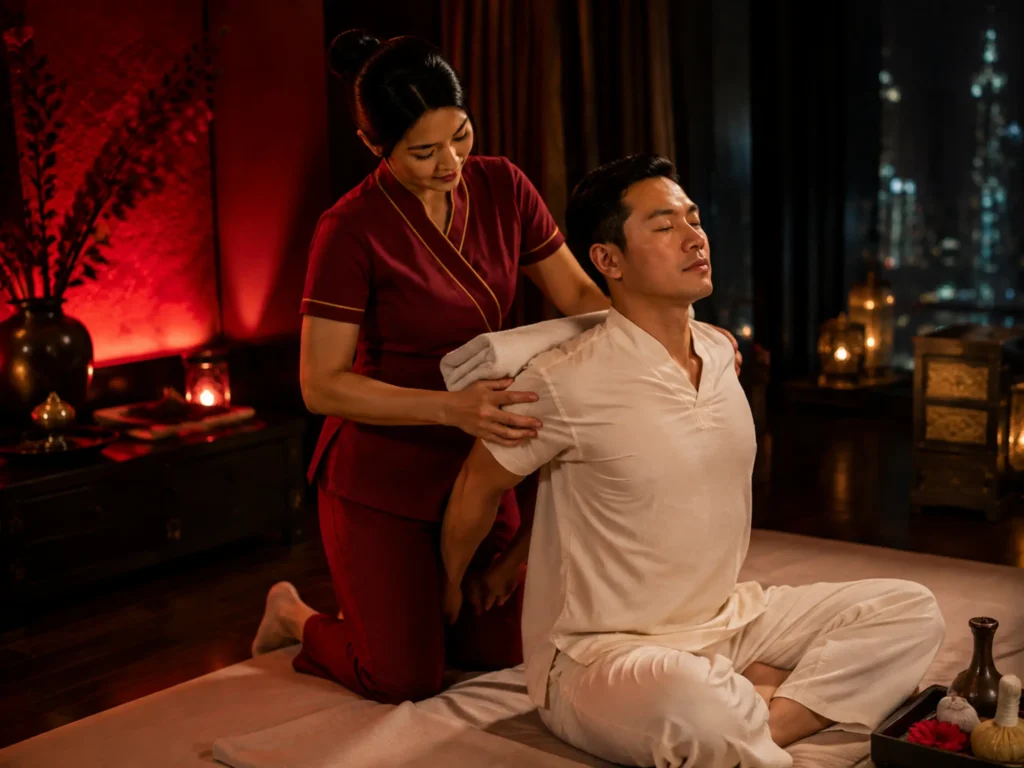
Comparing Massage Types for People with Physically Demanding Jobs
| Massage Type | Main Characteristics | Suitable For | Things to Consider |
|---|---|---|---|
| Neck and shoulder massage | Focuses on the neck, shoulders, and upper back | Screen-based workers and drivers | Avoid aggressive pressure or twisting of the neck |
| Foot massage | Focuses on the feet and calves | People who stand or walk for long periods | Avoid wounds, swelling, or inflamed areas |
| Oil massage | Continuous movements with adjustable pressure | People with fatigue in several areas | Inform the therapist about oil allergies |
| Aromatherapy massage | Focuses on relaxation together with fragrance | People experiencing stress who prefer light pressure | People sensitive to fragrance should ask about ingredients |
| Swedish massage | Uses stroking, kneading, and continuous movements | Beginners or people who dislike strong pressure | Not designed as localized deep-pressure massage |
| Traditional Thai massage | Combines pressure and stretching and usually does not require oil | People who feel stiff in several areas | Stretching positions and pressure should be adjusted |
| Deep Tissue | Targets deeper muscles and localized tension | People familiar with firm pressure | Not suitable for acute injuries or people who bruise easily |
How Long Should Your Massage Be?
The appropriate duration depends on how many areas you want to address and your level of fatigue.
60 Minutes
Suitable for people who want to focus on one or two areas, such as the neck and shoulders or the feet and calves, as well as people with limited time or those trying massage for the first time.
90 Minutes
Suitable for people with discomfort in several areas, such as the neck, shoulders, back, and legs. It gives the therapist enough time to work across the body without rushing.
120 Minutes
Suitable for people who want a full-body session with extra attention to certain areas. A longer session does not mean stronger pressure must be used. Clients should communicate their preferred pressure and may request a break at any time.
What Information Should You Tell Your Therapist Before a Massage?
Before the session begins, provide the following information honestly:
- The type of work you regularly do
- Areas that feel tired or painful
- How long you have had the symptoms
- History of accidents or surgery
- Medical conditions
- Pregnancy
- Osteoporosis or previous fractures
- Bleeding problems or medication that affects blood clotting
- Wounds, rashes, infections, or areas you do not want massaged
- Allergies to oils or products
- Your preferred pressure level
Massage performed by a trained practitioner is relatively low risk for most people, but people with certain health conditions should consult their healthcare provider first and provide complete health information to the therapist.

Which Symptoms Mean You Should Not Rush to Get a Massage?
Avoid massage and seek assessment from a healthcare professional if you have any of the following symptoms:
- Severe or sudden pain
- Symptoms after an accident or fall
- Numbness or weakness in an arm or leg, or inability to control movement
- Unusual one-sided leg swelling, redness, warmth, or pain
- Difficulty breathing or chest pain
- Fever or active infection
- Open wounds, inflamed skin, or infected areas
- A fracture or suspected fracture
- Pain severe enough that you cannot bear weight
- Symptoms that do not improve or persist for several weeks
During the massage, if you experience sharp pain, numbness, dizziness, nausea, difficulty breathing, or discomfort, ask the therapist to stop immediately.
How to Reduce Work-Related Aches Alongside Massage
Massage may provide relaxation, but adjusting your daily routine can do more to reduce recurring discomfort.
Change Positions Regularly
Avoid sitting or standing in the same position for long periods. Walk around or change position whenever possible.
Adjust Your Workspace
Position your screen at a height that does not require excessive neck bending, keep the keyboard and mouse close to your body, and use a chair that provides appropriate back support.
Alternate Sides During Repetitive Activities
Avoid always holding your phone, carrying a bag, or placing your weight on the same side.
Choose Footwear Suitable for Your Work
People who stand or walk for long periods should choose footwear with a size and shape that suits their feet and is neither too tight nor too loose.
Get Enough Rest and Hydration
Fatigue and inadequate rest may make the body feel tighter and more sensitive to pain.
Frequently Asked Questions About Choosing the Right Massage
Which Massage Is Suitable for Office Workers?
If You Stand All Day, Should You Choose Foot Massage or Thai Massage?
Which Areas Should You Focus on After Driving for a Long Time?
Does More Pain Mean You Should Use Stronger Massage Pressure?
Can You Get a Massage Every Week?
Can Massage Permanently Cure the Problem?
Summary: Which Massage Is Suitable for People with Physically Demanding Jobs?
Choosing a massage should begin by identifying which parts of your body are placed under the greatest strain by your work.
- Office workers may benefit from massage focused on the neck, shoulders, back, or an oil massage
- People who stand or walk for long periods may need more attention on the feet, calves, legs, and hips
- Drivers may want to focus on the neck, shoulders, back, lower back, and hips
- People who perform physical work or lift objects should distinguish between ordinary fatigue and an actual injury
- People experiencing stress and insufficient rest may prefer oil, aromatherapy, or Swedish massage using lighter pressure
Regardless of the type of massage you choose, always tell the therapist about your work, symptoms, health history, and preferred pressure level before the session begins. If you have severe symptoms, numbness, weakness, swelling, redness, warmth, or symptoms following an accident, the cause should be assessed before receiving massage.
For people who prefer not to travel, Victoria Bangkok offers outcall massage services. You can choose a massage type and duration that suits your needs and provide the location, date, time, and areas you would like the therapist to focus on before confirming the booking. Choosing a massage program based on your work and physical condition is more useful than choosing based only on pressure intensity.
References
- National Center for Complementary and Integrative Health. Massage Therapy: What You Need To Know. NCCIH. https://www.nccih.nih.gov/health/massage-therapy-what-you-need-to-know
- National Center for Complementary and Integrative Health. 6 Things to Know About Massage Therapy for Health Purposes. NCCIH. https://www.nccih.nih.gov/health/tips/things-to-know-about-massage-therapy-for-health-purposes
- National Center for Complementary and Integrative Health. Massage Therapy for Health: What the Science Says. NCCIH. https://www.nccih.nih.gov/health/providers/digest/massage-therapy-for-health-science
- Mayo Clinic. Massage Therapy. https://www.mayoclinic.org/tests-procedures/massage-therapy/about/pac-20384595
- Mayo Clinic. Medical-Based Massage Therapy. https://sharedfiles.mayoclinic.org/bedside/ope/GNT-20232852.html
Contact Victoria Bangkok
We provide professional outcall massage services in Bangkok, delivered by a team of experienced massage therapists. Enjoy a relaxing experience that is private, convenient, and safe.
- Phone: 093-093-4663
- WhatsApp: Victoria Bangkok
- LINE Official Account: Victoria Bangkok
- Website: www.victoriabangkok.com
- Maps: The Victoria Outcall Bangkok
📌 We recommend booking in advance so we can arrange the most suitable massage therapist for your needs.
- Date
- View
- Comment