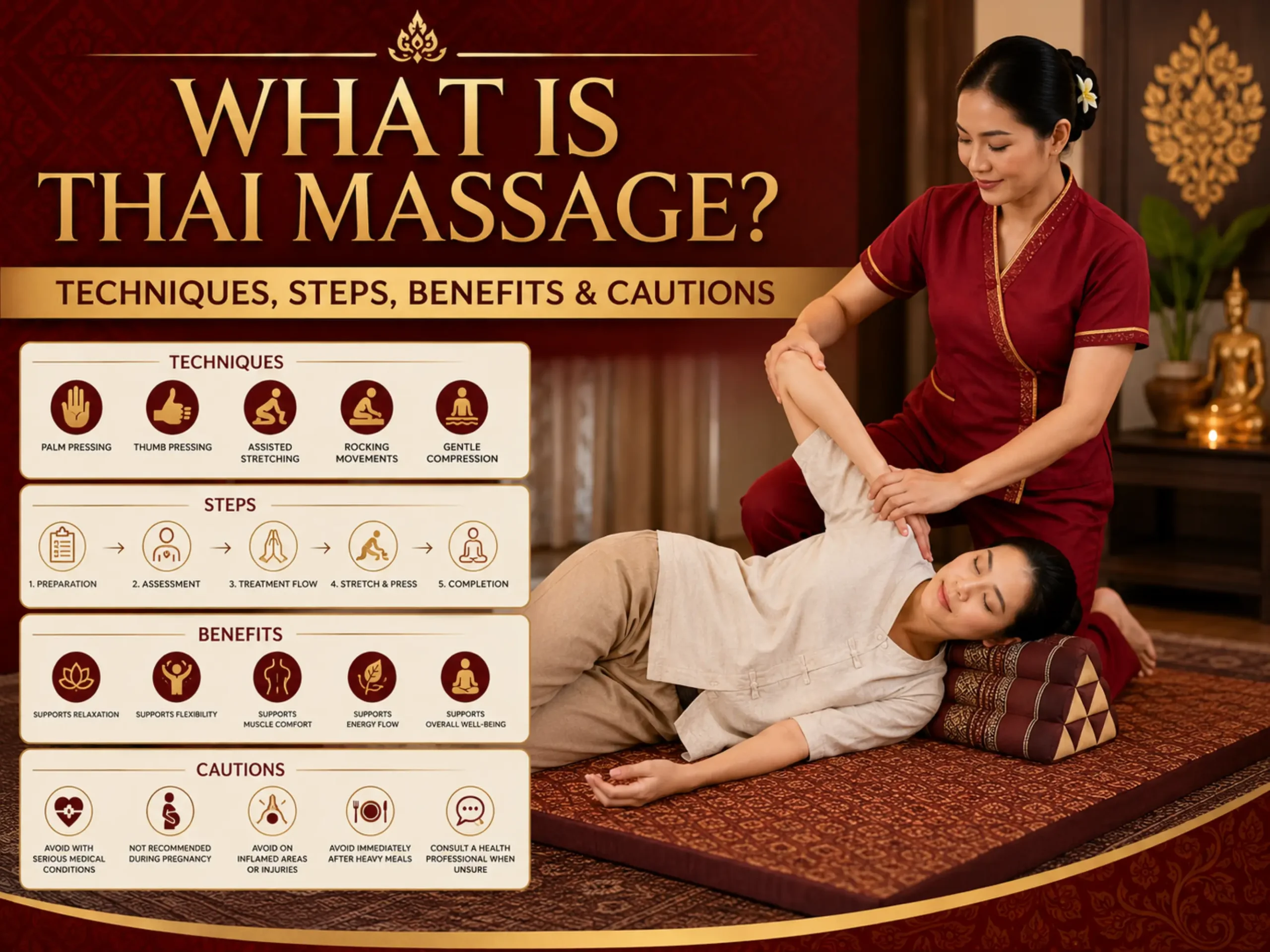
Traditional Thai Massage, also known as Thai Massage / Nuad Thai, is a traditional Thai bodywork practice that combines pressure, kneading, joint movements, and assisted stretching. In general, clients wear loose-fitting clothing and lie on a mat or another firm, supportive surface, so oil is usually not required.
A key characteristic of Thai massage is that it does not focus only on a single muscle or area. Instead, it often works continuously across multiple parts of the body, from the feet, legs, hips, back, and arms to the neck and shoulders. However, the techniques, sequence, pressure level, and stretching positions should be adjusted according to each client’s physical condition, experience, and limitations.
If you would like to view booking information directly, you can visit our Thai massage service page, which is separate from this informational article and focuses on service details, duration, and contact information.
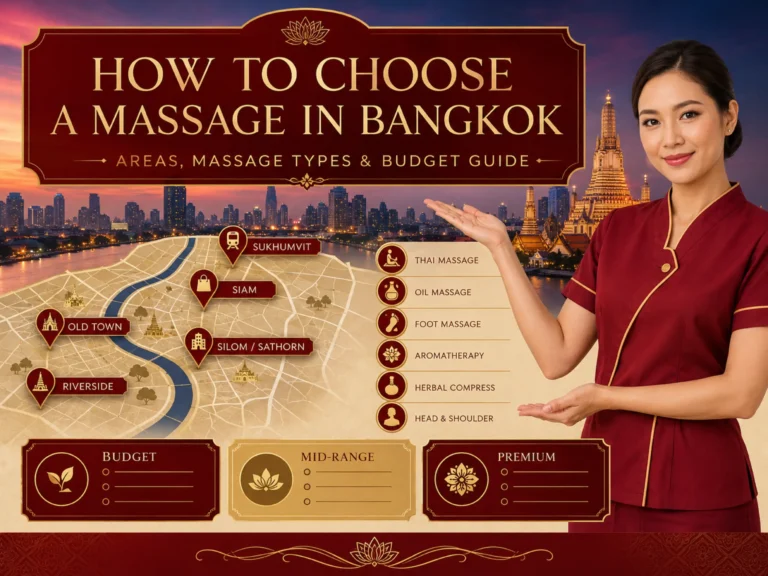
If you are deciding which type of massage to choose, the main characteristics of Thai massage can be summarized below. To compare it with other massage styles, see our overview of popular types of massage in Bangkok.
- Combines pressure with movement and assisted stretching
- Usually performed through clothing
- Generally does not use oil
- Pressure and stretching can be adjusted
- May suit people who feel stiff or tense after staying in the same position for a long time
- It does not need to be painful to be beneficial
- It should not replace medical assessment or treatment when unusual symptoms are present
Table of Contents
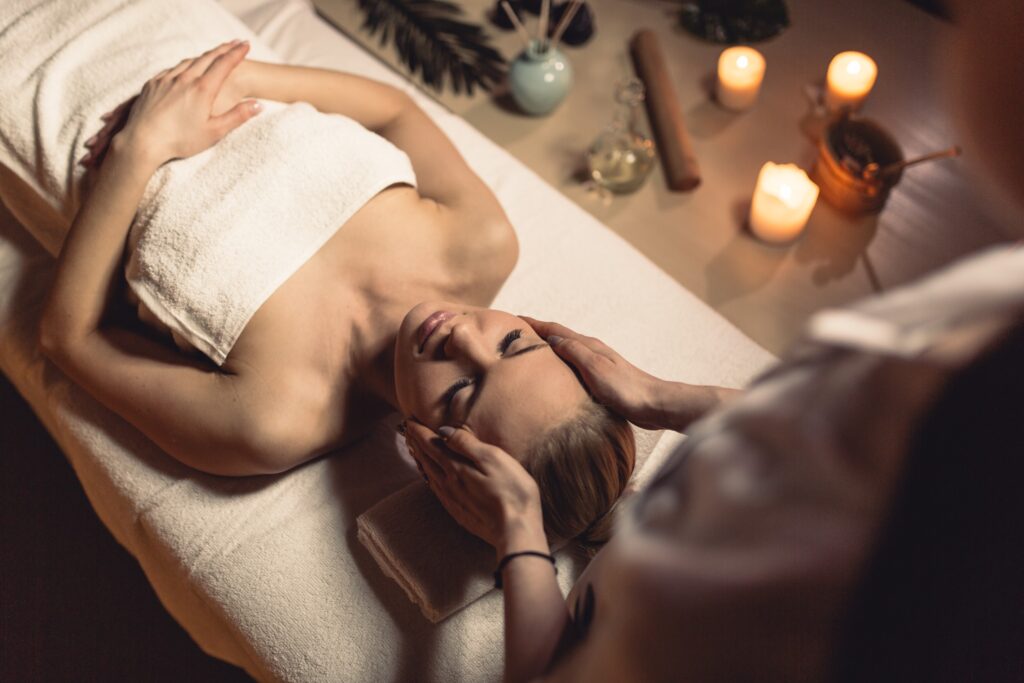
What Is Traditional Thai Massage and Why Is It Important?
Thai massage is a body of knowledge that has been passed down through families, communities, temples, educational institutions, and the Thai traditional medicine system for generations. This knowledge involves more than memorizing pressure points. It also includes positioning, pressure control, observing symptoms, ethics, and client safety.
In 2019, UNESCO inscribed “Nuad Thai, traditional Thai massage” on the Representative List of the Intangible Cultural Heritage of Humanity, describing Thai massage as part of the art, science, and culture of traditional Thai healthcare.
The World Health Organization has also developed reference benchmarks for training in Nuad Thai, covering fundamental knowledge, curriculum, student qualifications, contraindications, and safety considerations. This reflects the fact that Thai massage is a skill that should be learned and practiced systematically.
Are Traditional Thai Massage and Health Massage the Same?
The terms “traditional Thai massage” and “health massage” are often used together, but they do not have exactly the same meaning. If you would like to understand the overall scope of services, standards, and safety considerations, read our article on what health massage is.
Traditional Thai massage refers to a particular massage method or discipline, while health massage describes the purpose and scope of a service. Health massage generally focuses on relaxation, relieving everyday fatigue, and promoting comfort, without diagnosing conditions or guaranteeing treatment outcomes.
The Department of Thai Traditional and Alternative Medicine distinguishes relaxation or health massage from therapeutic massage because the training, knowledge, and scope of practice differ.
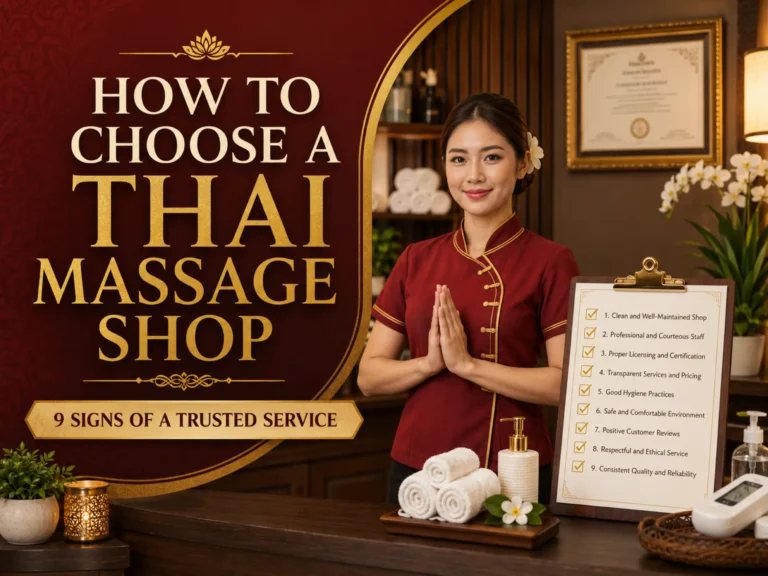
Therefore, a health massage establishment should not diagnose diseases, guarantee that massage will cure a condition, or advise clients to stop taking medication. If you have an illness, injury, or unusual symptoms, you should first receive an appropriate assessment from a healthcare professional. If you are comparing massage providers, you can also review the criteria in our article on how to choose a reputable Thai massage parlor.
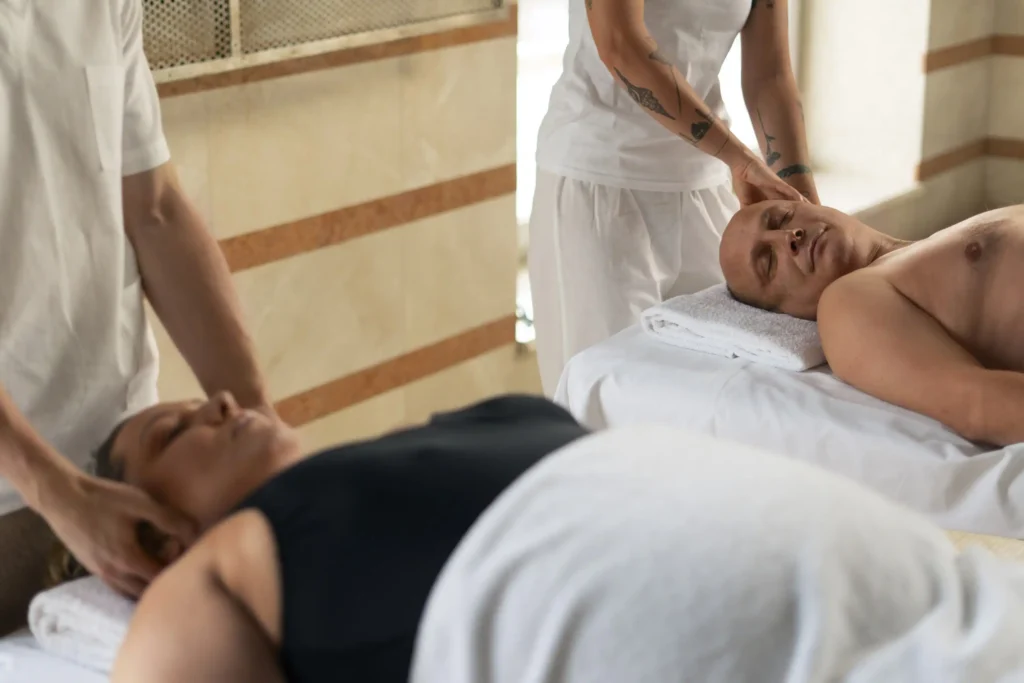
What Techniques Are Used in Traditional Thai Massage?
Traditional Thai massage does not consist of just one technique. A therapist may combine several techniques and adjust them according to the individual client.
1. Palm Pressure
This technique uses body weight through the palms to apply steady pressure to the muscles. It is often used on broader areas such as:
- Back
- Thighs
- Hips
- Calves
- Shoulders
The palms distribute pressure over a wider area than the fingertips, so they may be used to prepare the muscles before applying more focused pressure.
2. Thumb Pressure
This technique may be used where greater precision is needed, such as around the shoulders, shoulder blades, arms, or legs.
Pressure should be applied gradually and should not be directed onto bones, joints, injured areas, swollen or painful varicose veins, or any point that causes numbness, radiating pain, or sharp pain.
3. Kneading and Compressing the Muscles
A therapist may gently knead, compress, or lift the muscles to prepare an area before applying pressure or stretching. This may be used on the calves, thighs, arms, shoulders, and muscles around the shoulder blades.
4. Using the Forearm or Elbow
Some massage programs may use the forearm or elbow on larger muscle areas, but these techniques should be performed by a trained practitioner who can properly control the amount of pressure.
Using the elbow does not necessarily mean that heavy pressure must be applied. Clients should immediately tell the therapist if the pressure feels too strong.
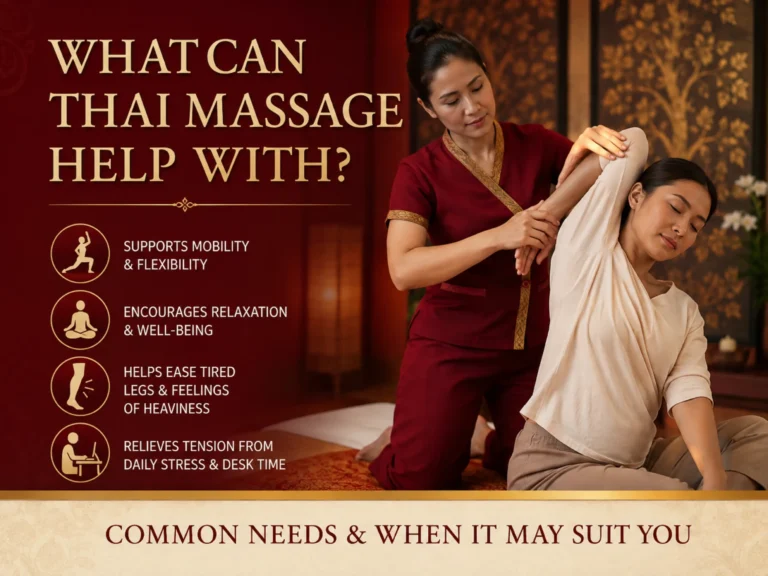
5. Movement and Assisted Stretching
Assisted stretching is one of the distinctive features of traditional Thai massage. A therapist may help move different areas, such as the:
- Ankles
- Knees
- Hips
- Back
- Shoulders
- Arms
- Wrists
Stretching should create a feeling of tension while still allowing you to breathe and relax comfortably. The body should not be pulled, pushed, or twisted to the point of unusual pain.
6. Changing and Positioning the Body
During the massage, clients may move between lying on the back, lying on the side, lying face down, or sitting.
The number of positions and range of movement depend on the duration, goals, age, flexibility, and limitations of each person. Anyone who is pregnant, dizzy, injured, or unable to lie comfortably in certain positions should inform the therapist in advance.
Typical Steps in a Traditional Thai Massage
The exact process may vary between providers, but a professional service should include asking for relevant information, explaining the procedure, adjusting pressure, and allowing the client to communicate throughout the session.
Step 1: Discuss Health and Preferences
Before starting, the therapist should ask at least:
- Where do you feel pain or tension?
- How long have you had the symptoms?
- Have you had any accidents or injuries?
- Have you recently had surgery?
- Do you have any medical conditions?
- Are you pregnant?
- Are you taking medication that affects blood clotting?
- Are you allergic to any products, balms, or oils?
- What pressure level do you prefer?
- Are there any areas you do not want to be massaged?
- Have you had traditional Thai massage before?
This information helps the therapist adjust or avoid techniques that may not be suitable.
Step 2: Prepare Comfortable Clothing
Traditional Thai massage is generally performed through clothing, so you should wear a loose-fitting top and soft trousers that allow your knees and hips to move comfortably.
Belts, watches, necklaces, or jewelry that may press against the body should be removed. If the provider supplies massage clothing, it should be clean and appropriately sized.
Step 3: Start with Broad Pressure and Gradually Increase
The therapist may begin at the feet, legs, or back depending on the program, using broad pressure before gradually adjusting the intensity according to how the body responds.
The session should not begin immediately with maximum pressure, especially for first-time clients, people who have recently traveled long distances, those who have not had enough rest, or anyone unfamiliar with firm pressure.
Step 4: Work on Different Areas According to the Program
A full-body program may include the:
- Feet and ankles
- Calves and thighs
- Hips
- Lower back
- Upper back and shoulder blades
- Arms and hands
- Neck and shoulders
Clients can ask the therapist to focus on or avoid certain areas as appropriate.
Step 5: Add Movement and Stretching
Stretching positions should be adjusted according to flexibility, age, experience, and individual limitations. The same positions should not automatically be used for every client.
If you feel tension or discomfort, you can tell the therapist immediately. For example:
- “Please use less pressure.”
- “Please stretch more gently.”
- “This position hurts.”
- “Can we skip this position?”
- “Please use less pressure.”
- “Please stretch more gently.”
- “Please skip this position.”
Step 6: Reduce Pressure and Reposition Before Finishing
Toward the end of the session, the therapist may reduce the pressure and use gentler movements. Once the massage is finished, you should move slowly from lying down to sitting and then standing, especially after a long session.
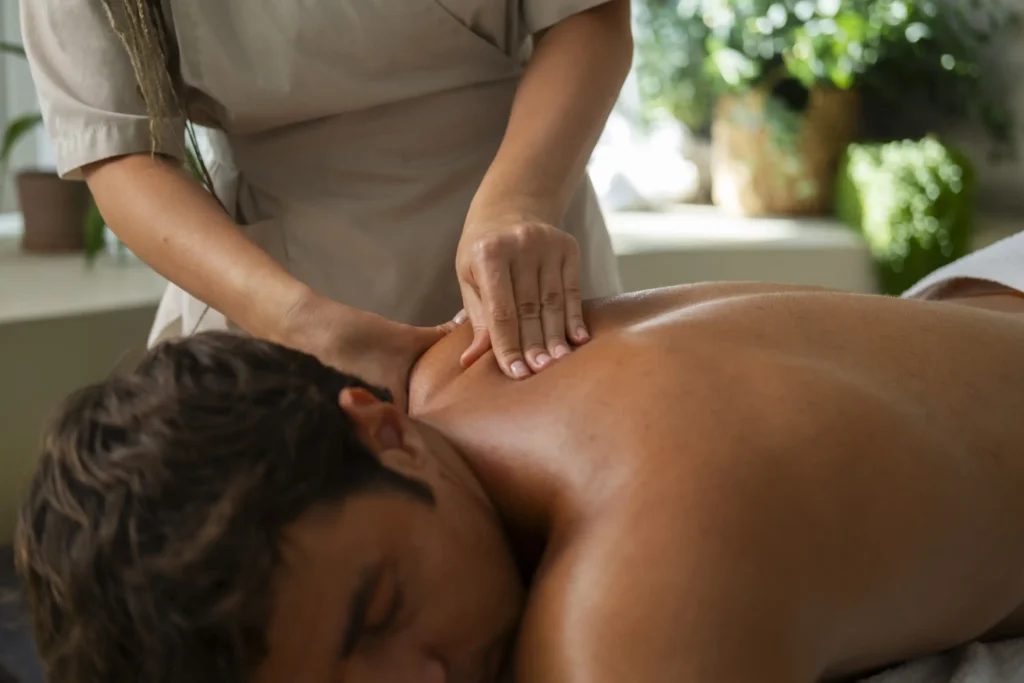
What Does Traditional Thai Massage Feel Like?
During traditional Thai massage, you may feel pressure, tension from stretching, or relaxation. The sensation depends on the pressure level, techniques, and your individual physical condition. You should still be able to breathe normally and should not need to tense your body to tolerate the massage.
Which Symptoms Should You Not Endure?
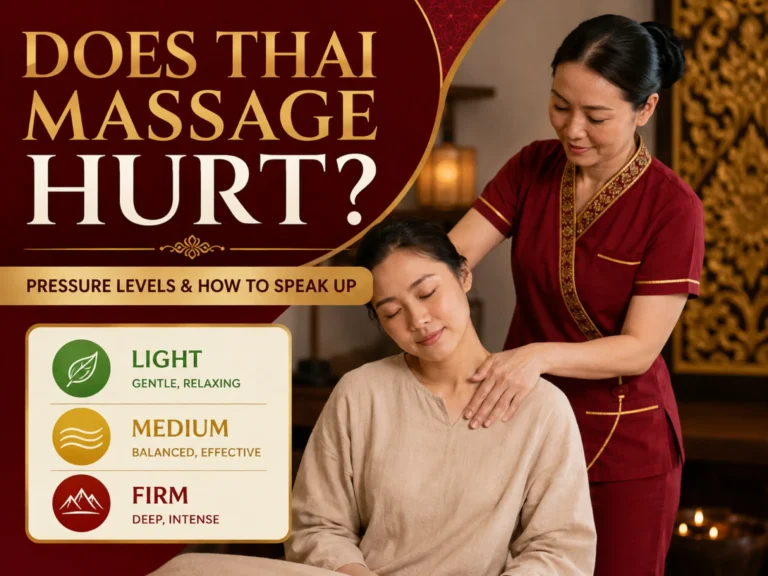
Ask the therapist to reduce pressure or stop if you experience sharp pain, radiating pain, numbness, weakness, dizziness, difficulty breathing, or feel unsafe in a particular position. Thai massage does not need to hurt to be effective. You can learn more about pressure levels, post-massage soreness, and how to communicate with your therapist in our article Does Thai Massage Hurt?
What Are the Benefits of Traditional Thai Massage?
Traditional Thai massage is commonly chosen for relaxation and to help the body feel more comfortable. Results may vary depending on physical condition, pressure level, techniques, and individual limitations.
Some general benefits that clients may experience include:
- Feeling more relaxed and comfortable
- Temporary reduction in tension around the neck, shoulders, back, hips, or legs
- Feeling more comfortable moving after pressure and assisted stretching
- Feeling rested after working at a desk, traveling, or remaining in the same position for a long time
- Becoming more aware of tense areas and better able to communicate an appropriate pressure level to the therapist
Results are not the same for everyone, and traditional Thai massage should not replace medical assessment, diagnosis, medication, physical therapy, or treatment from healthcare professionals.
Traditional Thai massage should not be claimed to cure diseases, realign bones, dissolve blood clots, remove toxins, or permanently cure chronic conditions. If you have severe pain, numbness, weakness, swelling, redness, warmth, or unexplained symptoms, you should receive an assessment from a healthcare professional first.
Read more about the benefits of traditional Thai massage and important limitations.
Who Should Take Precautions or Consult a Professional First?
Massage generally has a relatively low risk when performed appropriately by a trained practitioner, but it is not suitable for everyone. NCCIH notes that serious adverse events have been reported rarely, with some cases involving vigorous massage or clients who already had underlying risk factors.
You should inform the service provider and consult a healthcare professional when necessary if you have:
- Pregnancy
- Recent surgery
- Fragile bones or a high risk of fracture
- A blood-clotting disorder
- Low platelet count
- Use of anticoagulant medication
- A history of blood clots or deep vein thrombosis
- Heart disease or an uncontrolled medical condition
- Swollen and painful varicose veins
- Cancer or ongoing cancer treatment
- Joint replacements or medical devices
- Skin conditions, rashes, wounds, or infections
- Numbness, weakness, or radiating pain
- Sports injuries
- Undiagnosed pain
Which Symptoms Mean You Should Avoid Massage and Seek Assessment?
You should avoid massage and seek an appropriate assessment if you have:
- Acute pain after a fall or accident
- Visible deformity of a bone or joint
- Inability to move or bear weight
- Pain accompanied by swelling, redness, or warmth
- Unusual swelling in one leg
- An open wound or skin infection
- Fever
- Numbness or weakness in the arms or legs
- Chest pain
- Difficulty breathing
- Lightheadedness or loss of consciousness
- Back pain accompanied by abnormal bladder or bowel control
You should not ask a therapist to apply strong pressure simply to test whether the symptoms improve.
For more information, read our guide to massage contraindications and precautions.
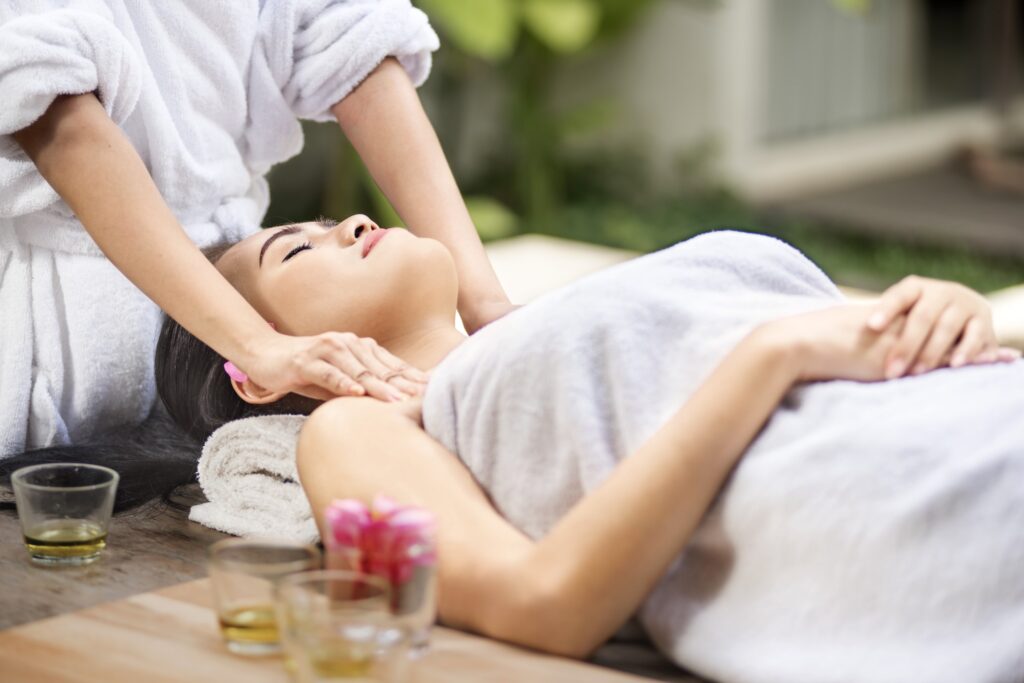
How Should You Prepare Before a Traditional Thai Massage?
Choose Suitable Clothing
Wear loose, comfortable clothing that allows easy movement, such as a T-shirt with soft trousers. Avoid jeans or clothing that tightly restricts the hips and knees.
Avoid Large Meals Before Massage
Lying face down or stretching after a very large meal may cause abdominal discomfort. Wait until you feel comfortable before beginning the massage.
Provide Accurate Health Information
Do not conceal injuries, recent surgery, pregnancy, medical conditions, or medications you are taking because this information can affect the choice of positions and pressure level.
Clean Your Body
Taking a shower or changing into clean clothing is recommended, especially after traveling, exercising, or spending time outdoors.
Use the Restroom Before Starting
A session may last 60–120 minutes. Using the restroom beforehand can reduce interruptions during the massage.
Clearly Explain Your Goals
Examples of information you may want to tell the therapist include:
- You want to relax
- You want to focus on the neck or shoulders
- You feel stiff after sitting for a long time
- You do not want your knees stretched
- You prefer light pressure
- You have experienced soreness after massage before
- You do not want certain areas to be massaged
What Should You Do After a Traditional Thai Massage?
Get Up Slowly
Move slowly from lying down to sitting and then standing, especially after a long massage or if you feel sleepy.
Drink Water According to Thirst
You can drink water normally according to your thirst. There is no need to consume excessive amounts of water to “flush out toxins,” as there is no evidence that massage creates toxins that must be removed by drinking large quantities of water.
Rest as Needed
If you feel very relaxed or sleepy, rest before driving or doing activities that require concentration.
Monitor How You Feel After Massage
Some people may experience mild tightness or soreness, especially if they are not accustomed to massage. However, you should not experience:
- Severe pain
- Swelling
- Numbness
- Weakness
- Unusually severe bruising
- Inability to move
- Continuously worsening pain
If unusual symptoms occur, avoid further massage and seek an appropriate assessment.
Summary: What Is Traditional Thai Massage?
Traditional Thai massage is a traditional Thai bodywork practice that uses pressure, kneading, movement, and assisted stretching. It is generally performed through clothing without oil. Nuad Thai was inscribed by UNESCO in 2019, and the World Health Organization has published reference benchmarks relating to training and safety.
Thai massage may suit people who feel stiff, want a combination of pressure and stretching, and prefer not to use oil. Beginners may want to start with light-to-moderate pressure, choose approximately 60 minutes, and ask the therapist to reduce stretching according to their comfort level.
Although massage may help some people feel more relaxed, temporarily reduce tension, or provide short-term relief for certain types of discomfort, it should not replace medical assessment when there is an injury, swelling, redness, numbness, weakness, or severe pain.
The important points are to choose a verifiable service provider, provide accurate health information, and communicate immediately if you experience pain or discomfort. If you decide to book a session, you can view more information on our Thai massage service page.
Frequently Asked Questions
Do You Need to Remove Your Clothes for Thai Massage?
Does Thai Massage Use Oil?
Is Thai Massage Painful?
What Are the Benefits of Thai Massage?
Who Should Consult a Professional Before Thai Massage?
When Should You Avoid Thai Massage?
Note: This article provides general information and is not a substitute for diagnosis or treatment from a healthcare professional. Anyone who is pregnant, has a medical condition, has recently had surgery, takes medication that affects blood clotting, or has unusual symptoms should consult an appropriate professional before receiving massage.
References
- UNESCO. Nuad Thai, Traditional Thai Massage. Intangible Cultural Heritage. https://ich.unesco.org/en/RL/nuad-thai-traditional-thai-massage-01384
- World Health Organization. Benchmarks for Training in Traditional/Complementary and Alternative Medicine: Benchmarks for Training in Nuad Thai. WHO. https://iris.who.int/bitstream/handle/10665/44357/9789241599672_eng.pdf
- National Center for Complementary and Integrative Health. Massage Therapy: What You Need To Know. NCCIH. https://www.nccih.nih.gov/health/massage-therapy-what-you-need-to-know
- National Center for Complementary and Integrative Health. 6 Things to Know About Massage Therapy for Health Purposes. NCCIH. https://www.nccih.nih.gov/health/tips/things-to-know-about-massage-therapy-for-health-purposes
- National Center for Complementary and Integrative Health. Massage Therapy for Health: What the Science Says. NCCIH. https://www.nccih.nih.gov/health/providers/digest/massage-therapy-for-health-science
- Department of Thai Traditional and Alternative Medicine. Information on Thai Massage and the Scope of Health Massage. https://www.dtam.moph.go.th/info-p/26483/
Contact Victoria Bangkok
We provide professional outcall massage services in Bangkok, delivered by a team of experienced massage therapists. Enjoy a relaxing experience that is private, convenient, and safe.
- Phone: 093-093-4663
- WhatsApp: Victoria Bangkok
- LINE Official Account: Victoria Bangkok
- Website: www.victoriabangkok.com
- Maps: The Victoria Outcall Bangkok
📌 We recommend booking in advance so we can arrange the most suitable massage therapist for your needs.
- Date
- View
- Comment