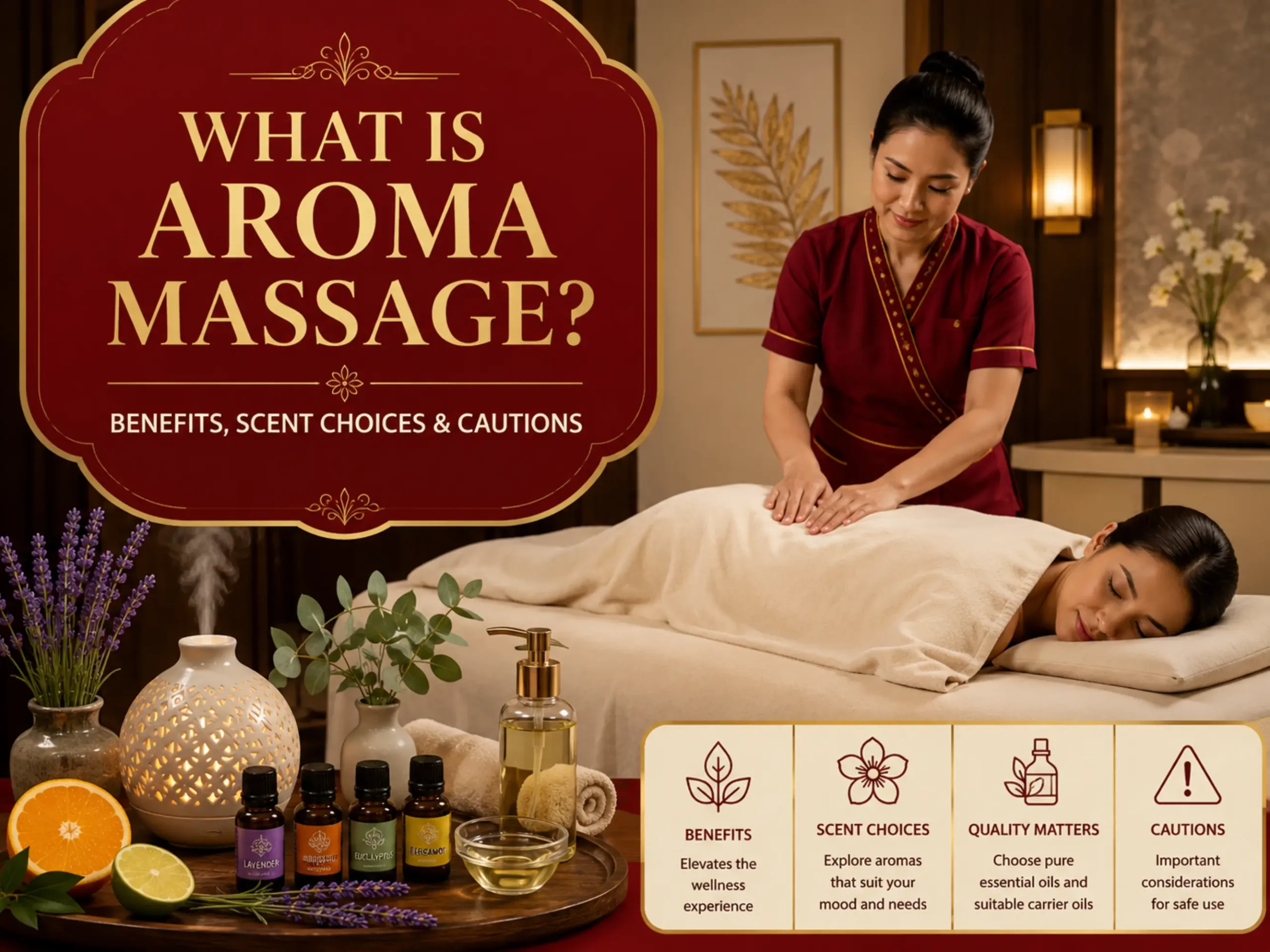
Aromatherapy Massage is a massage that uses a carrier oil blended with essential oils at an appropriate dilution. Its defining feature is not simply the use of oil, but also the scent, atmosphere, and massage rhythm, which usually emphasizes gentle, continuous movements.
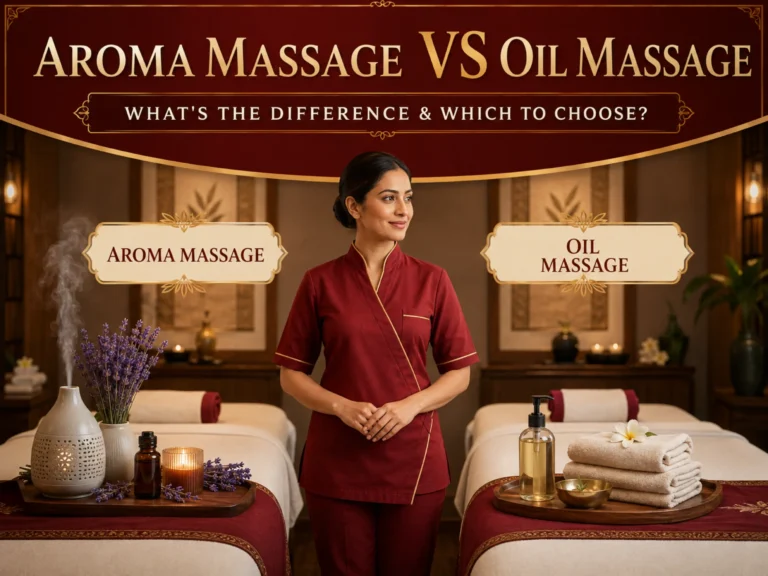
Aromatherapy massage differs from a standard oil massage because the choice of scent and essential oils is an important part of the experience, while an oil massage may simply use an unscented base oil to reduce friction. For a detailed comparison, read Aromatherapy Massage vs Oil Massage: What Is the Difference?
Before choosing a service, check the scent used, carrier oil, ingredients, concentration, and your allergy history. Do not choose a scent based on claims that it can treat a disease or produce the same effect for everyone, because each person’s experience depends on scent preference, skin condition, pressure level, and the massage environment.
Table of Contents
What Is Aromatherapy Massage?
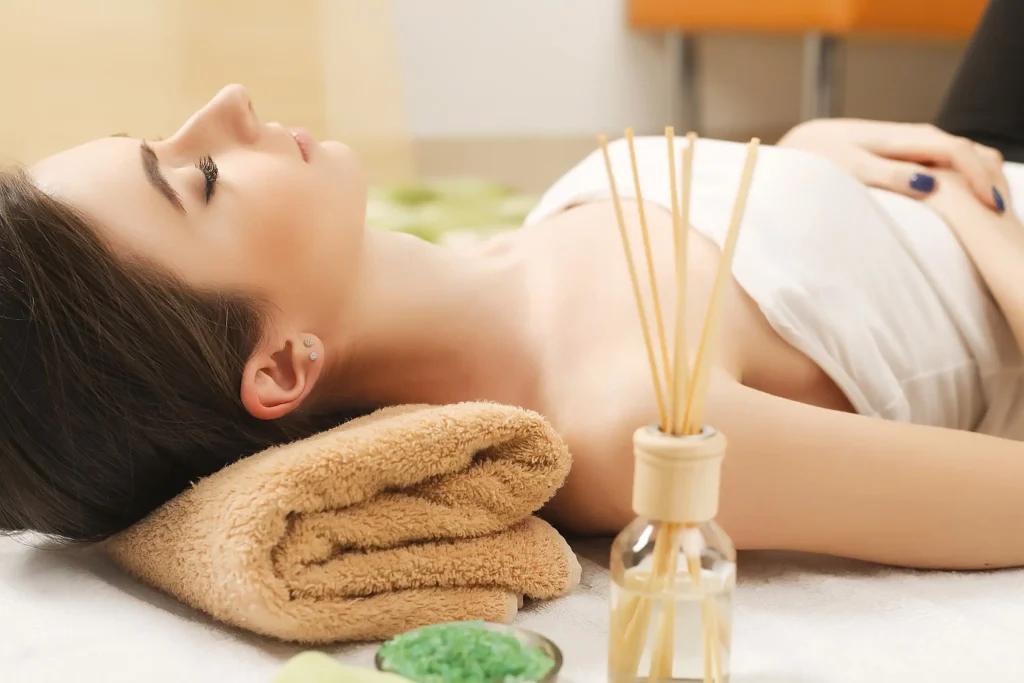
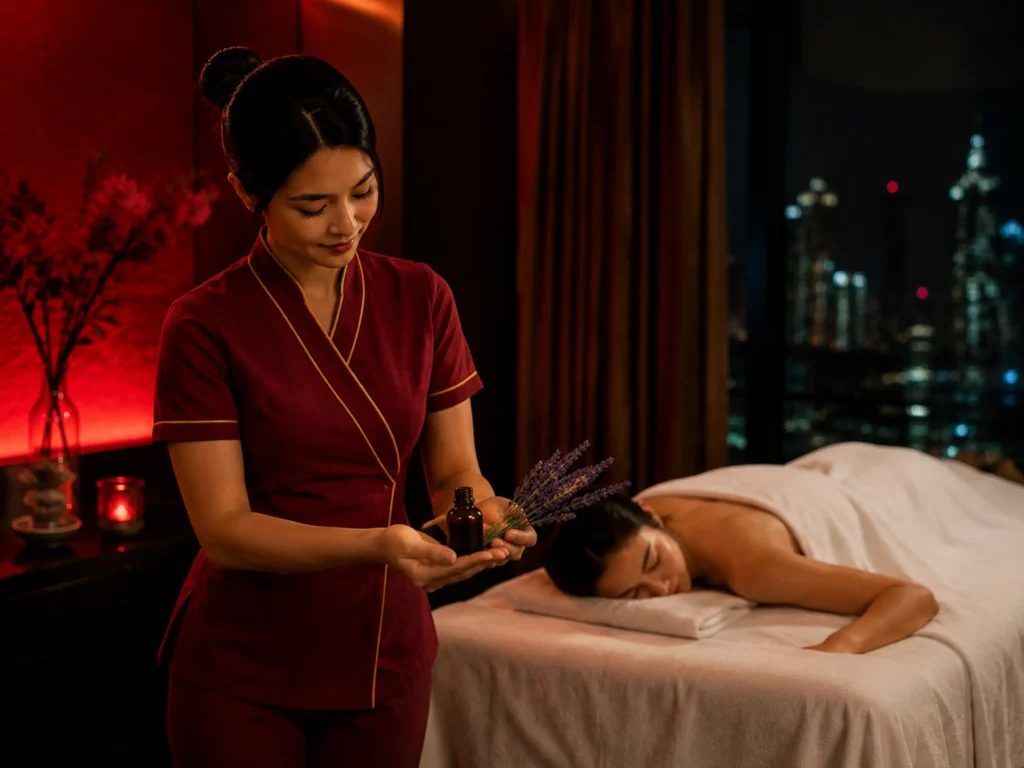
Aromatherapy Massage uses a carrier oil, such as coconut, jojoba, or grapeseed oil, blended with properly diluted essential oils. The oil helps the therapist’s hands glide smoothly over the skin, while the scent contributes to the atmosphere and overall massage experience.
The massage commonly uses stroking, kneading, and light-to-moderate pressure with an emphasis on continuous movements rather than deep pressure or the stretching used in Thai Massage. However, the actual techniques depend on the provider and the selected program.
There is no single standard aromatherapy massage formula used by every provider. Different providers may use different oils, concentrations, blends, and pressure levels, so it is important to ask for details before the massage begins, especially if you are sensitive to scents or have sensitive skin.
How Is Aromatherapy Massage Different from Oil Massage?
| Topic | Aromatherapy Massage | Oil Massage |
|---|---|---|
| Oil used | Carrier oil blended with essential oils | Base oil, which may be scented or unscented |
| Main feature | Massage combined with scent and atmosphere | Stroking and kneading with oil to reduce friction |
| Pressure level | Usually light to moderate | Can be adjusted depending on the program and therapist |
| What to check | Essential oils, concentration, and scent | Type of base oil and added ingredients |
| Suitable for | People who enjoy fragrance and a relaxing atmosphere | People who want an oil massage without necessarily wanting fragrance |
If you do not enjoy fragrances, are sensitive to perfumes, or do not know the product ingredients, an unscented oil massage may be a better choice.
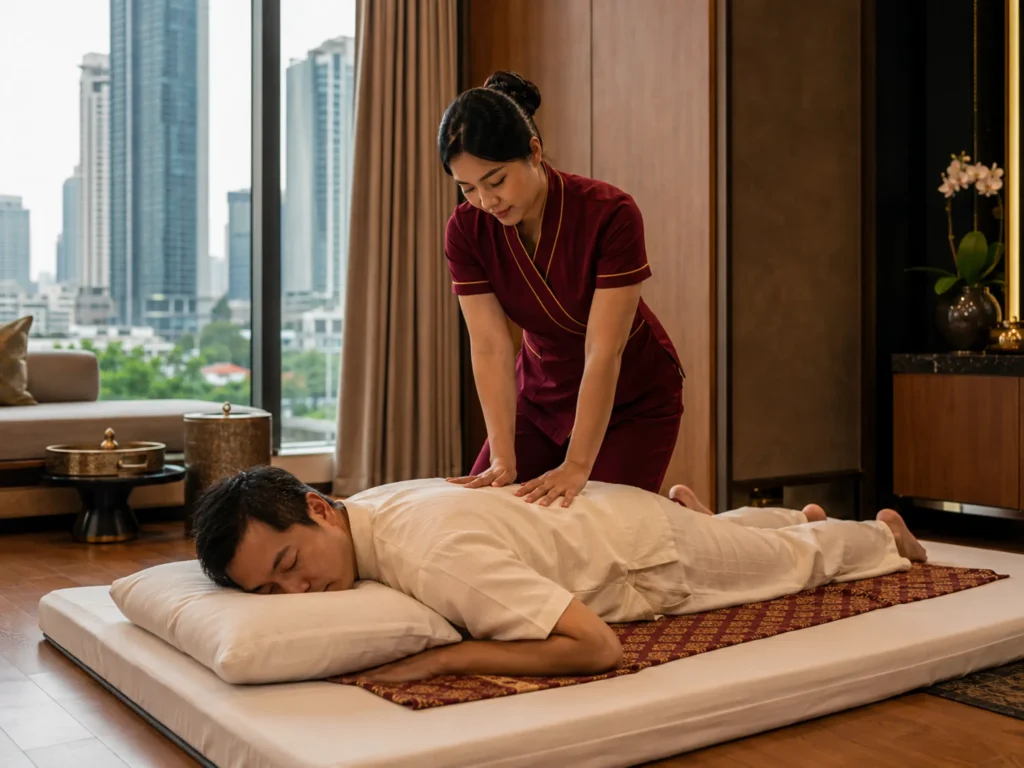
What Happens During an Aromatherapy Massage?
- Discuss preferences and allergy history: Tell the therapist which areas you want to focus on, your preferred pressure level, scents you dislike, and any history of allergies to oils or fragrances.
- Choose a scent: Smell a light sample first rather than choosing only by the name of the scent or advertising claims.
- Check the oil: Ask which carrier oil is used and confirm that the essential oil product has been properly diluted.
- Begin the massage: The therapist applies the oil to the skin and starts with light pressure before adjusting it according to your comfort.
- Monitor how you feel: If the scent feels too strong or you experience burning, itching, dizziness, or discomfort, tell the therapist immediately.
- Remove excess oil after the massage: You may wipe away excess oil or shower according to your comfort. There is no need to force yourself to leave the oil on your skin.
What Is the Difference Between Carrier Oils and Essential Oils?
| Type | Purpose | Examples | What to check |
|---|---|---|---|
| Carrier oil | Reduces friction and dilutes essential oils | Coconut, jojoba, almond, grapeseed | History of allergies to nuts, coconut, or additives |
| Essential oil | Adds fragrance and forms part of aromatherapy | Lavender, peppermint, eucalyptus, orange | Concentration, dilution, and sensitivity to scents |
Essential oils are highly concentrated and should not be applied directly to the skin without proper dilution. Anyone with a history of allergies should ask to see the product label or ingredient list before the service begins.
What Are Popular Aromatherapy Scents?
| Scent | General scent profile | Considerations |
|---|---|---|
| Lavender | A relatively soft floral scent | May not be suitable for people sensitive or allergic to floral products |
| Eucalyptus | A fresh, fairly distinct herbal scent | People who are sensitive to fragrance may find it strong or develop a headache |
| Peppermint | A cooling, distinctive scent | Should be used in a properly diluted product |
| Orange and citrus | Fresh and light | Some citrus oils may be photosensitizing or irritating to the skin |
| Lemongrass | A fresh herbal scent | May be too strong for people with sensitive skin or a sensitive sense of smell |
| Chamomile | A relatively mild floral scent | Check for a history of plant or flower allergies |
For more detail specifically about scents, read Popular Aromatherapy Scents for Relaxation. This keeps this page from overlapping too much with the dedicated article about scents.
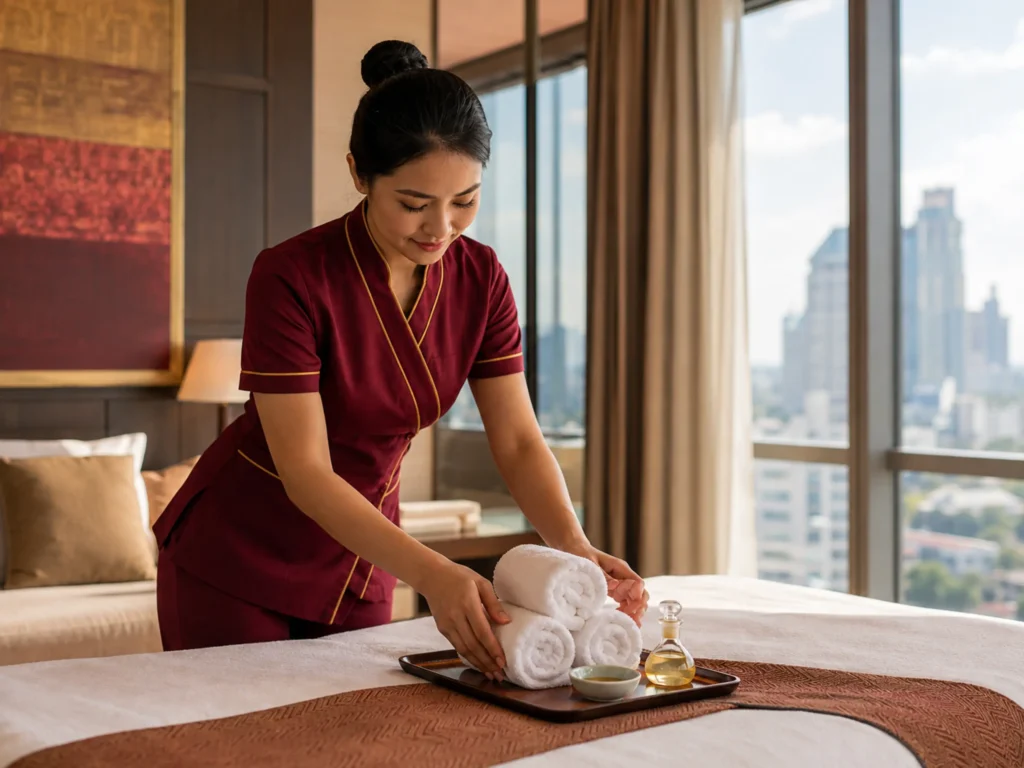
How to Choose an Aromatherapy Scent That Suits You
- Choose a scent that genuinely feels comfortable to you rather than relying on advertising claims about which scent is “best.”
- Start with a mild scent, especially in an enclosed room or small space.
- Choose a simple formula with fewer ingredients if you have never used essential oils before.
- Check the carrier oil, preservatives, colorants, and any additional fragrance.
- Avoid scents that have previously caused headaches, nausea, or breathing discomfort.
- Choose an unscented oil massage if you are sensitive to fragrance or unsure about possible allergies.
Who Is Aromatherapy Massage Suitable For?
Aromatherapy massage may suit people who want a gentle massage experience, value scent and atmosphere, and do not want very deep pressure. However, suitability depends on more than the service name; the type of oil, scent, pressure level, and skin sensitivity should also be considered.
| Client profile | Why it may be suitable | What to mention before starting |
|---|---|---|
| People who prefer mild scents and a calm atmosphere | Scent and massage rhythm are important parts of the experience | Scents you like or dislike and the intensity you can tolerate |
| People who prefer light to moderate pressure | The massage generally emphasizes continuous stroking and kneading rather than deep pressure | Your comfortable pressure level and areas to avoid |
| People receiving a massage at a hotel or accommodation | You can continue resting immediately after the program | Massage space, room temperature, and building access rules |
| People who want to start with a simple program | You can try a mild scent and a 60-minute session first | Any history of allergies to oils, fragrances, or topical products |
People who dislike fragrances, are sensitive to perfume, easily develop scent-related headaches, or do not know the product ingredients may be better suited to an unscented oil massage. If you want deep pressure or targeted muscle work, ask in advance whether the pressure level of the aromatherapy program will meet your needs.
How Long Does an Aromatherapy Massage Take?
| Duration | Typical use |
|---|---|
| 60 minutes | Suitable for people with limited time or those who want to try the scent and products first |
| 90 minutes | Suitable for a full-body massage with extra time for areas that need more attention |
| 120 minutes | Suitable for people who want an unhurried service and have several areas they want to focus on |
When choosing a duration, consider your budget, familiarity with massage, response to fragrances, and the number of areas you want to focus on. First-time clients may start with 60 minutes to see whether they like the scent, oil, and pressure level, while 90–120 minutes may suit people who are familiar with the service and prefer a more unhurried pace.
Precautions Before an Aromatherapy Massage
Tell the provider before the massage if you have a history of allergies to oils, fragrances, nuts, coconut, or topical products, or if you are pregnant, have an underlying medical condition, have open wounds or inflamed skin, or have recently had surgery.
- Concentrated essential oils should not be applied directly to the skin.
- Do not choose a scent based on claims that it can treat diseases.
- Stop the service if you develop a rash, itching, burning, dizziness, or nausea.
- If you have difficulty breathing, facial swelling, or a severe allergic reaction, seek medical help immediately.
- People who are highly sensitive to scents should consider an unscented oil massage instead.
For general massage precautions, read Massage Contraindications and Precautions. This page therefore does not repeat every medical consideration in detail.
How to Prepare for an Aromatherapy Massage
- Tell the provider about any history of allergies to oils, fragrances, nuts, or coconut.
- Ask for the name and ingredients of the oil being used.
- Smell the scent before starting, and choose a mild fragrance if you have never used it before.
- Specify your preferred pressure level and any areas you do not want massaged.
- Prepare loose, comfortable clothing to wear after the massage.
- Tell the therapist immediately if the scent or oil causes discomfort.
If you are receiving the service at home, in a hotel, or in a condominium, see the additional checklist in How to Prepare Before Your Massage Therapist Arrives.
How Should You Take Care of Yourself After an Aromatherapy Massage?
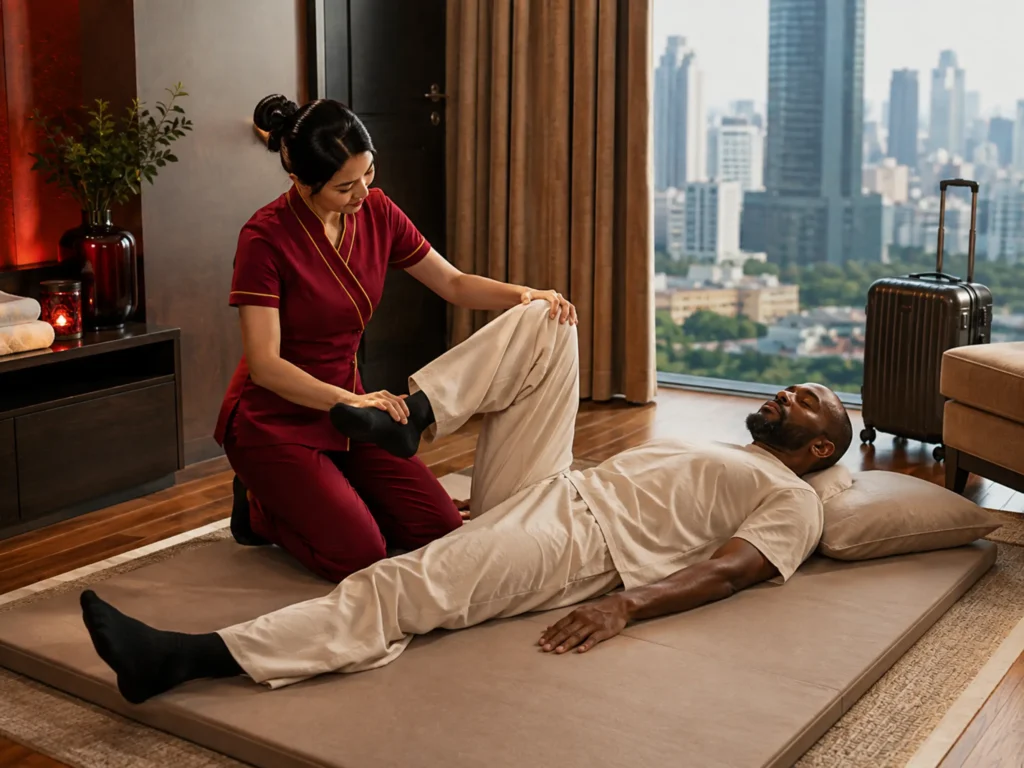
There is no strict rule you must follow after the service. The important thing is to pay attention to how your skin feels, any lingering fragrance, and your overall comfort. If you feel normal, you can continue resting. If your skin feels sticky, itchy, irritated, or the scent feels too strong, you can wipe away excess oil or shower as appropriate.
- Get up slowly: After lying down for a long massage, sit for a moment before standing, especially if there is oil on your feet or the floor may be slippery.
- Wipe away excess oil: Use a clean towel to blot areas that feel sticky. There is no need to rub the skin vigorously.
- Shower when comfortable: There is no need to force yourself to leave the oil on for several hours. Read more in When Should You Shower After an Oil Massage?
- Watch for skin reactions: If you develop a rash, itching, burning, or swelling, stop using the same product and inform the provider.
- Rest in a comfortable environment: Avoid additional strong fragrances immediately afterward if you are sensitive to scents or begin to develop a headache.
For outcall services, check the draping, clothing, and private-space arrangements before the massage begins. Read Victoria Bangkok Privacy Standards to understand the service boundaries and privacy practices.
Frequently Asked Questions About Aromatherapy Massage
Does Aromatherapy Massage Require Essential Oils?
Can Essential Oils Be Applied Directly to the Skin?
Can People with Sensitive Skin Have an Aromatherapy Massage?
Is Aromatherapy Massage Painful?
When Can You Shower After an Aromatherapy Massage?
Can I Choose Aromatherapy Massage If I Do Not Like Fragrances?
Summary
Aromatherapy massage uses a carrier oil blended with essential oils and emphasizes fragrance, atmosphere, and a gentle massage rhythm. Its main difference from a standard oil massage is that essential oils and the scent experience are central parts of the service.
Before choosing a service, ask about the type of oil, ingredients, concentration, and scent, and disclose any allergy history or fragrance sensitivity. If you dislike scents or are unsure about allergies, choose an unscented oil massage instead.
Those who want to book a service can check the details, session durations, and service areas on the Outcall Aromatherapy Massage Service page.
References
- National Center for Complementary and Integrative Health. Aromatherapy. NCCIH. https://www.nccih.nih.gov/health/aromatherapy
- National Center for Complementary and Integrative Health. Massage Therapy: What You Need To Know. NCCIH. https://www.nccih.nih.gov/health/massage-therapy-what-you-need-to-know
- National Center for Complementary and Integrative Health. Peppermint Oil. NCCIH. https://www.nccih.nih.gov/health/peppermint-oil
Contact Victoria Bangkok
We provide professional outcall massage services in Bangkok, delivered by a team of experienced massage therapists. Enjoy a relaxing experience that is private, convenient, and safe.
- Phone: 093-093-4663
- WhatsApp: Victoria Bangkok
- LINE Official Account: Victoria Bangkok
- Website: www.victoriabangkok.com
- Maps: The Victoria Outcall Bangkok
📌 We recommend booking in advance so we can arrange the most suitable massage therapist for your needs.
- Date
- View
- Comment