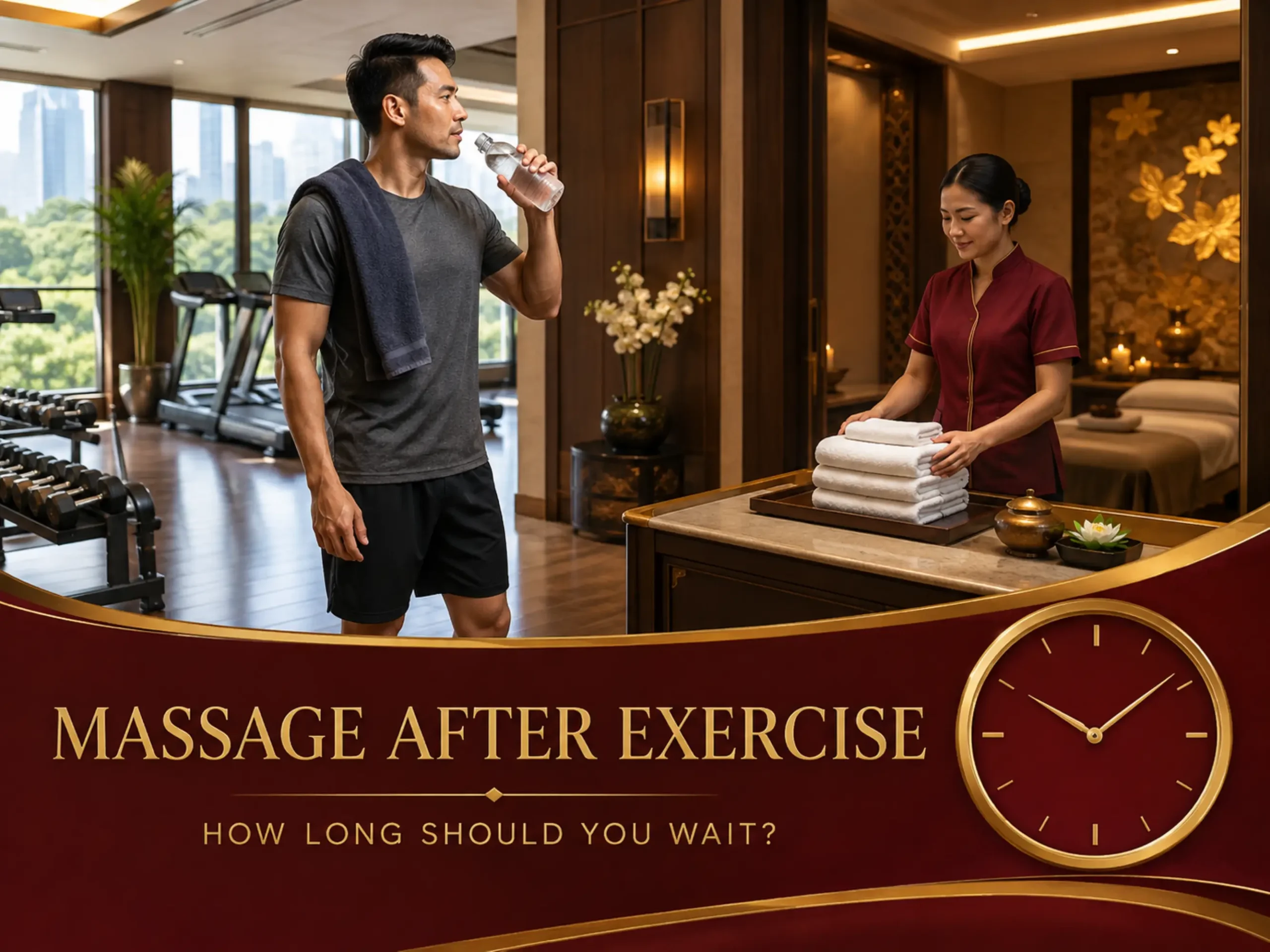
After exercising, many people feel that their muscles are tight, legs feel heavy, shoulders ache, or they want a massage to help their body relax. But should you get a massage immediately after exercising, or should you wait for your body to rest first?
The answer is that there is no fixed number of hours suitable for everyone. The time you should wait depends on the intensity of the activity, body condition, injuries, and the type of massage you want. Academic reviews have not clearly found the best time for a post-exercise massage for all outcomes, so a single number should not be applied as a rule for everyone.
Easy-to-use guidelines can be categorized as follows. However, if the fatigue is not directly caused by exercise, but after traveling or touring, you can read more at Massage After a Flight and Jet Lag and What Massage to Get After Walking All Day.
| Body Condition After Exercise | Potentially Suitable Timing |
|---|---|
| Light exercise and want a relaxing massage | Rest until pulse and body temperature decrease |
| Moderate intensity exercise | Rest, drink water, and eat appropriately first |
| Weight training or heavy exercise | May wait several hours and choose light to medium pressure |
| Sore muscles or DOMS | Assess symptoms within 24-48 hours |
| Want Deep Tissue or deep pressure | Should wait until the body recovers from fatigue and has no injuries |
| Acute pain, swelling, or inability to move | Avoid massage and get evaluated by an expert |
More important than counting hours is that the body should return to a calm state, not overly hot, dizzy, dehydrated, and show no signs of injury before starting the massage.
Table of Contents
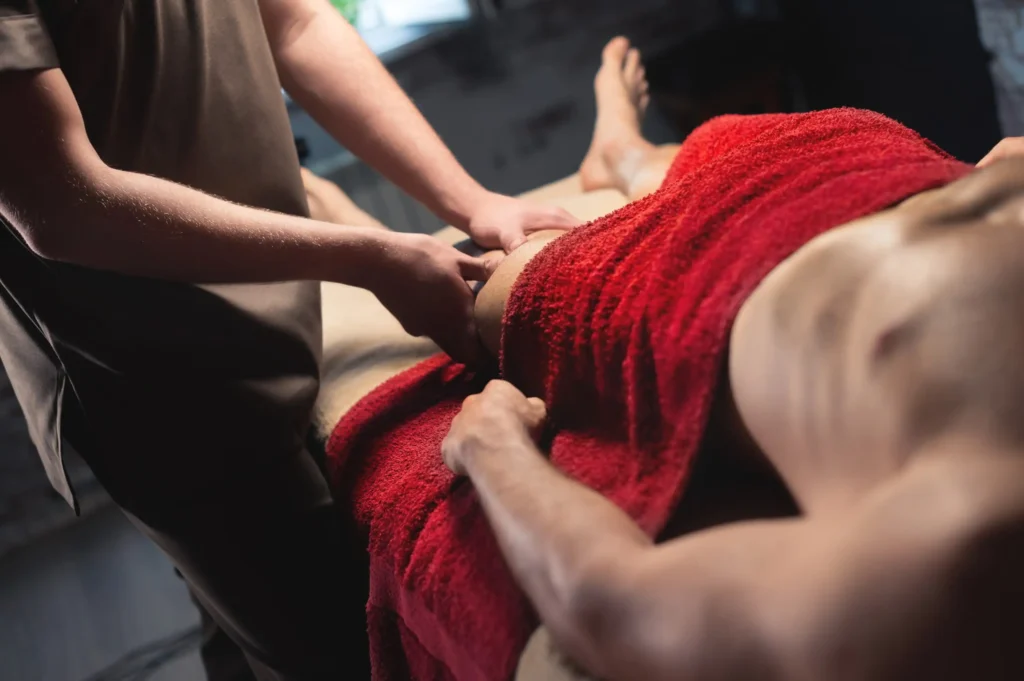
Can I get a massage immediately after exercising?
For individuals in good general health, a light massage or a short muscle relaxation session can be done after exercising, once the body has gone through the cool-down phase. However, you should not rush to get a massage while still panting, having a fast heart rate, feeling extremely hot, or feeling dizzy.
Before starting a massage, you should:
- Walk or move lightly to cool down.
- Wait for your breathing and pulse to gradually return to normal.
- Drink an appropriate amount of water.
- Change out of sweaty clothes.
- Check for any injuries.
- Inform the therapist that you just exercised.
A post-exercise massage may help reduce the perception of muscle soreness in some people. However, evidence does not consistently show that massage clearly improves muscle recovery, enhances performance, or accelerates recovery in all aspects.
How long should I wait based on exercise intensity?
After light exercise
Light activities such as:
- Brisk walking
- Light yoga
- Leisurely cycling
- Light swimming
- Light weight training
You can have a relaxing massage after resting until your body has cooled down, your breathing is normal, and there are no abnormal symptoms. There’s no need to wait several hours just because you exercised.
An oil massage or aroma massage with light to medium pressure might be more suitable than a deep massage, especially when the goal is relaxation rather than deep, painful point pressure. For travelers unsure whether to choose Thai, oil, or aroma massage, you can find guidance at Which Massage Should Travelers Choose?.
After moderate intensity exercise
After a short run, playing sports, or exercise that makes you tired and sweat heavily, you should give your body time to rest, drink water, and eat appropriately first.
You may choose to get a massage on the same day if:
- Not dizzy
- No nausea
- No continuous cramps
- No hot, swollen spots
- No acute muscle pain
- The body is not unusually exhausted
You should start with light to medium pressure and avoid applying strong pressure repeatedly on heavily used muscles.
After weight training or heavy exercise
After heavy weight training, long-distance running, HIIT training, or competition, the body may have accumulated fatigue and tissue irritation from use.
In this case, you should wait until:
- You’re no longer panting and your body isn’t hot.
- You have drunk water and eaten.
- There’s no dizziness or weakness.
- You can distinguish between fatigue and injury.
- You can identify painful spots and the desired pressure level.
A massage on the same day can be done, but it should focus on relaxation; deep pressure is not immediately necessary. Recovery care should include rest, sleep, food, and water. You shouldn’t rely solely on a massage.
After competition or exercising until exhaustion
Those who have just finished a competition, a long-distance run, or exercised to exhaustion should prioritize cooling down, hydrating, eating, and resting first.
Do not get a massage immediately if you have:
- Dizziness
- Nausea or vomiting
- Abnormal body heat
- Confusion or poor balance
- Severe cramps
- Abnormally dark urine
- Chest pain or difficulty breathing
These symptoms should not be viewed as normal muscle soreness and may require medical attention.
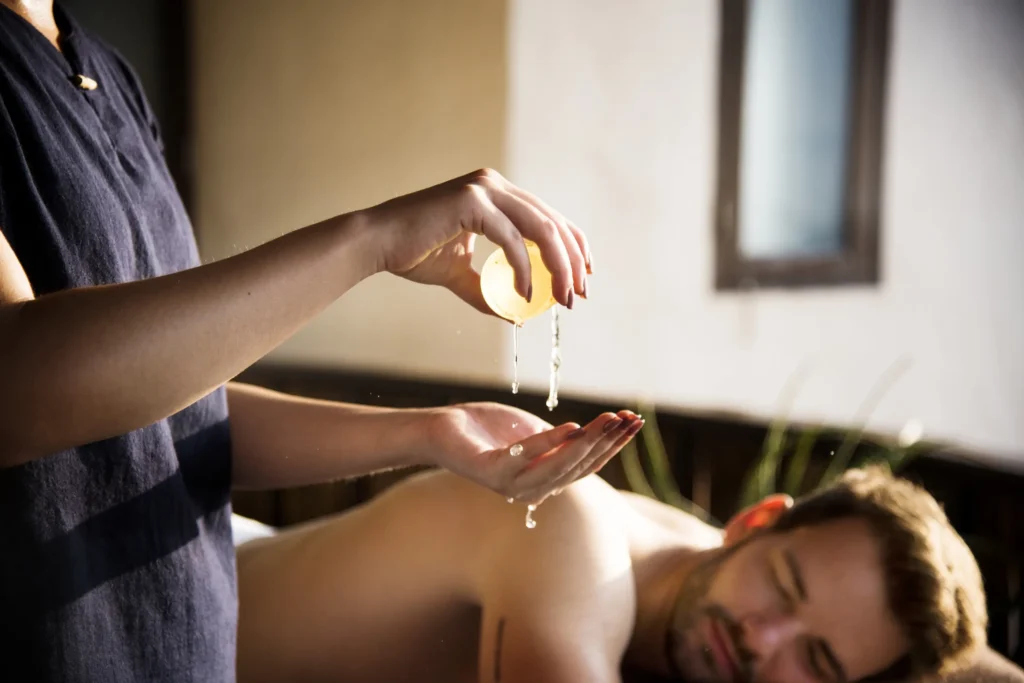
How many hours should I wait for a massage after weight training?
After weight training, there’s no need to wait the same number of hours every time. If it was light to moderate training with no injuries, you might get a relaxing massage the same day after resting until your body returns to normal.
If you trained heavily or worked specific muscles to extreme fatigue, you should avoid deep pressure on those muscles immediately. For example:
- Heavy leg day followed by strong pressure on thighs or calves.
- Back training followed immediately by a heavy massage around the shoulder blades.
- Chest and shoulder training followed by pulling arms or forceful shoulder stretches.
- Arm training followed by pressing on areas with acute pain.
You can choose to massage other parts or have a full-body massage with light pressure first. For Deep Tissue, you should wait until the muscles are past severe fatigue and ensure there are no injuries.
How many hours should I wait before a massage after running?
After a light or short run, you may get a massage after cooling down and resting. Choose light to medium pressure on calves, thighs, hips, and back.
After a long-distance run or high-intensity running, be especially careful if you have:
- Localized pain
- Swollen ankles
- Knee pain when bearing weight
- Distinct shin pain
- One calf that is swollen, red, or hot
- A feeling like a muscle tore while running
You should not use a strong massage to test whether the symptom will go away, as it could be an injury that needs to be evaluated first.
What is DOMS and when should I get a massage?
DOMS, or Delayed Onset Muscle Soreness, usually doesn’t hurt immediately after training but may start to be felt within about 8–24 hours, and often peaks 24–48 hours after an unaccustomed exercise.
Example symptoms include:
- Tight muscles and tender to the touch.
- Feeling pain when moving.
- Moving less smoothly than normal.
- Symptoms become distinct the following day.
- Gradually improves with rest.
Some reviews found that a post-exercise massage might help reduce the perception of pain from DOMS, but results regarding muscle strength and performance are inconsistent, and each study used different timeframes and techniques.
If it is mild to moderate DOMS, you can choose a light or medium pressure massage. However, you shouldn’t press so deeply that the client tenses up or the pain increases.
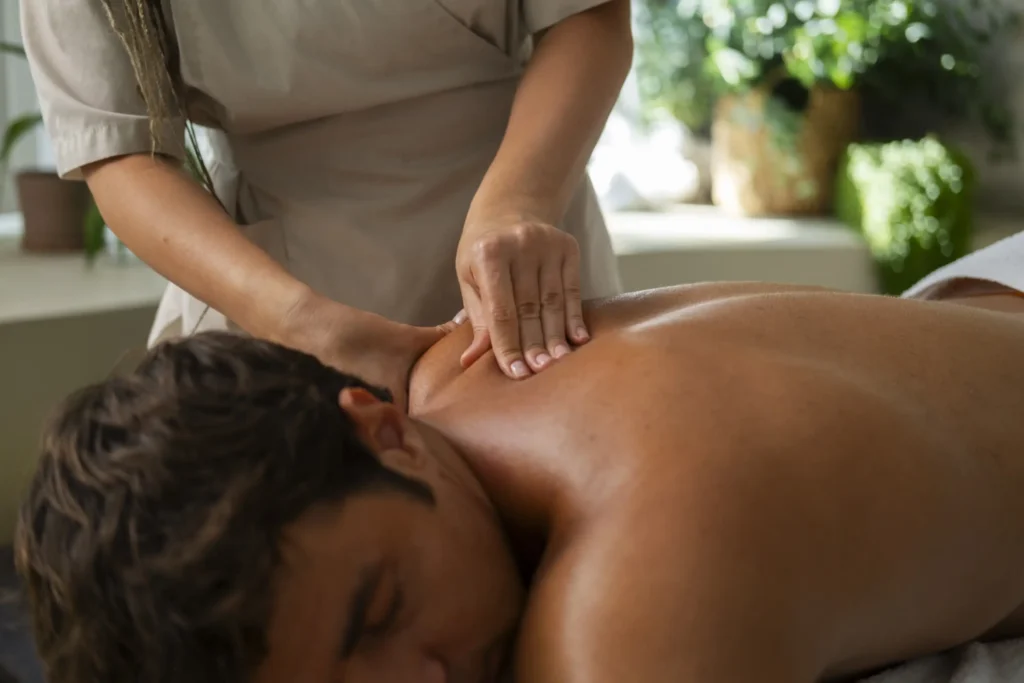
What kind of pain might not be DOMS?
You should be cautious if you have symptoms such as:
- Sharp pain during exercise.
- Pain localized clearly in a specific spot.
- Swelling, redness, or heat.
- Severe bruising.
- Inability to move a joint.
- Inability to bear weight.
- A popping sound or feeling like tissue tearing.
- Numbness or weakness.
- Pain that gets progressively worse.
These symptoms may be related to an injury rather than general muscle soreness. Therefore, you should avoid massaging that area and get evaluated first.
What type of massage should I choose after exercising?
Oil Massage
Suitable for those who want to relax after exercise and feel tightness in several areas. Pressure can be adjusted from light to medium, and it doesn’t involve heavy body stretching.
May be suitable when:
- Experiencing general body fatigue.
- Aching in the neck, back, hips, or legs.
- Wanting to rest before bed.
- No acute injuries.
- Desiring easily adjustable pressure.
Aroma Massage
Suitable for those seeking gentleness and relaxation rather than deep pressure, especially after evening exercise. If planning a massage close to bedtime, read more about the duration and suitable service types in the article Which Massage is Best Before Bed?.
Those with allergies to scents, essential oils, or sensitive skin should inform in advance and inquire about the products used.
Thai Massage
Thai massage includes both pressure and assisted stretching, making it potentially suitable for those feeling stiff. However, strong stretching should not be applied to recently heavily used or injured muscles.
You should inform the therapist about:
- What type of exercise you did.
- Which muscles were trained the hardest.
- Any positions or areas you do not want stretched.
- The level of pressure you desire.
Sports Massage
Sports massage may be used before, during, or after training depending on the goal, but techniques or timings are not the same for every program. Clients should ask if the massage is for post-training relaxation or focusing on specific tissues.
Overall research indicates that sports massage may partially help with flexibility and reducing the perception of soreness, but direct effects on strength, speed, and performance are small or inconsistent.
Deep Tissue
Deep Tissue should not be the first choice immediately after heavy training because it applies deep pressure to tissues that may already be fatigued.
NCCIH notes that massage is generally low-risk when performed by a trained professional. However, rare reports of severe side effects exist, sometimes related to massages using intense pressure, such as Deep Tissue, or clients with risk factors for injury.
You should wait until the body has rested sufficiently, there’s no swelling, acute pain, or severe soreness, and start with medium pressure instead of requesting maximum pressure.
Table for Choosing a Massage After Exercise
| Symptoms or Goals | Potentially Suitable Massage |
|---|---|
| Want to rest after light exercise | Oil massage or aroma massage |
| Aching all over the body | Oil massage with light to medium pressure |
| Stiff body but no injuries | Thai massage with reduced pressure and stretching |
| Muscle pain like DOMS | Light to medium massage based on comfort |
| Clear tight spots after resting | Targeted massage with adjusted pressure |
| Want Deep Tissue | Wait until fatigue subsides and assess symptoms first |
| Acute pain, swelling, or unable to move | Avoid massage and get evaluated |
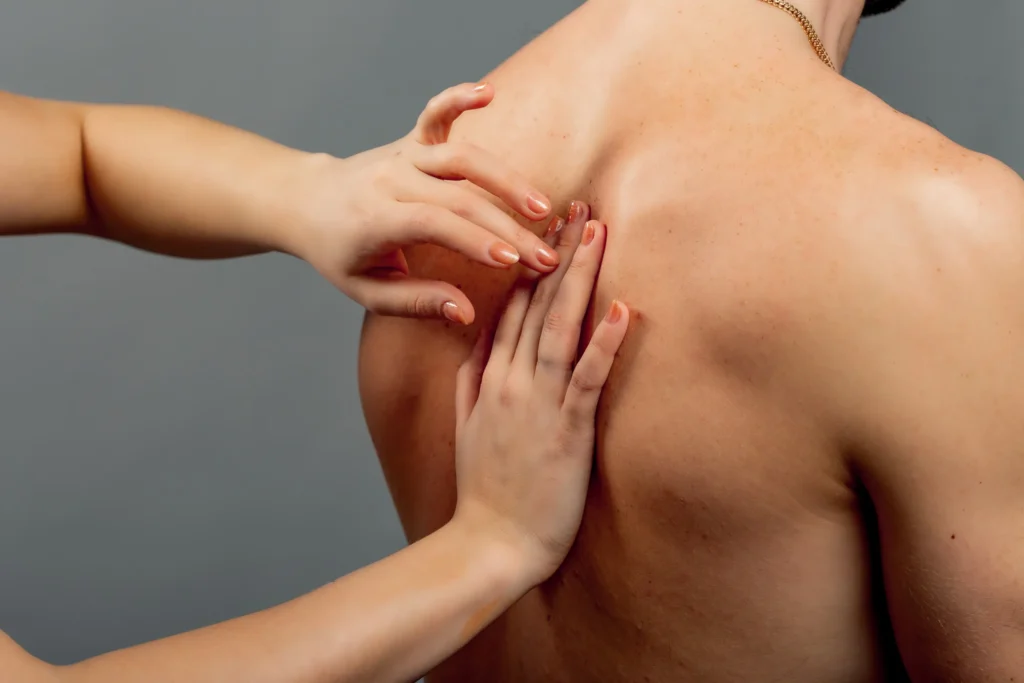
How many minutes of massage is suitable after exercise?
30-45 minutes
Suitable for focusing on specific areas such as:
- Calves and legs
- Neck, shoulders
- Upper back
- Hips
- Arms and forearms
Ideal for those who have just exercised and do not want a long, full-body massage yet.
60 minutes
Suitable for those who want a light to medium pressure massage on multiple areas, or are trying a post-exercise massage for the first time.
90 minutes
Suitable for those whose bodies have returned to normal, have no injuries, and want a full-body massage with extra time on fatigued muscles.
120 minutes
Not necessary for everyone, especially after heavy exercise. A longer duration doesn’t always mean better recovery. One analysis found that a shorter massage might provide some performance recovery benefits more than a longer one, but overall results depend on study methods and massage goals.
For a general client, 60 minutes with appropriate pressure is often a safer starting point than choosing a long, strong program right away.
Massage before or after eating?
After exercising, the body may need food and water to support recovery, but you shouldn’t start a massage while very hungry or completely full right after a large meal.
Practical guidelines include:
- Drink water according to thirst and exercise conditions.
- Eat meals or snacks according to your nutrition plan.
- Rest until your stomach feels comfortable before a massage.
- There is no need to drink a large amount of water quickly just because you’re getting a massage.
- Avoid massage when nauseous or unwell.
Rest, food, water, and sleep are the fundamental components of recovery. Massage should be a supplement, not a substitute.
What should I inform the therapist before a massage?
Before the service begins, you should provide the following information:
- What type of exercise you did.
- How long ago you finished exercising.
- The intensity of your training.
- Which muscles were used the most.
- Whether there is any acute pain.
- Whether there is any swelling, redness, heat, numbness, or weakness.
- Any history of injury or surgery.
- Any underlying diseases.
- If you use blood-thinning medications.
- The desired pressure level.
- Areas you do not want massaged or stretched.
- Any allergies to oils or products.
During the massage, you should inform the therapist immediately if you feel sharp pain, numbness, radiating pain, or feel that the pressure is too strong. There is no need to endure pain to make the massage “effective.”
What symptoms indicate I shouldn’t get a massage after exercise?
You should skip the massage and seek advice from a medical professional if you have:
- Acute pain during or after exercise.
- Noticeable swelling, redness, or heat.
- Joint deformity or inability to move.
- Inability to walk or bear weight.
- Numbness or muscle weakness.
- Open wounds or skin infections.
- Unusually severe bruising.
- One leg swelling and pain with an unknown cause.
- Chest pain or difficulty breathing.
- Dizziness, fainting, or confusion.
- Dark urine accompanied by severe muscle pain.
- Symptoms that do not improve or continuously worsen.
You should not use massage to postpone seeking medical treatment when you suspect an injury or abnormal condition. NCCIH advises that individuals with health issues or those unsure about massage safety should consult a healthcare provider first.
Self-care methods along with massage after exercise
Cool down properly
After exercising, you should gradually reduce intensity instead of stopping suddenly, especially for activities that elevate the heart rate.
Eat and drink water
Your body needs energy, nutrients, and water to recover. The appropriate amount depends on the type and duration of the exercise.
Rest and get enough sleep
Sleep plays a crucial role in recovery. A massage should not be used as a substitute for the sleep your body needs.
Move lightly
Walking or moving your body lightly may help reduce stiffness. One study found that light resistance movement and massage had similar short-term effects on reducing the perception of DOMS, but these effects are temporary.
Reduce training intensity when the body is still very sore
If the muscles are still sore enough to interfere with movement, you should adjust your activities appropriately instead of repeating heavy training and trying to mask the symptoms with a massage.
Summary: How many hours should I wait before a massage after exercising?
There is no evidence specifying that everyone must wait the exact same 1 hour, 2 hours, or 24 hours before a massage. The appropriate time should be considered based on the exercise intensity, massage type, and bodily symptoms.
After light exercise, you can get a relaxing massage once the body has cooled down and returned to normal. If you exercised heavily, you should rest, hydrate, eat, and choose light to medium pressure first.
If muscles are very sore, you might assess the symptoms over 24–48 hours before choosing a deep massage. For those with acute pain, swelling, redness, heat, numbness, or immobility, massage should be avoided and medical evaluation sought.
The key is not waiting a specific number of hours, but massaging when the body is ready, choosing appropriate pressure, and not substituting massage for rest or injury treatment. If tension is caused more by sitting, computer use, or work fatigue than exercise, you can read more at Which Massage Should Hardworking People Choose?.
Frequently Asked Questions
Can I get a massage right after exercising?
How many hours should I wait before a massage after weight training?
Can a massage after exercise help reduce pain?
Should I get a massage for DOMS?
Should I choose Thai massage or oil massage after running?
Can I get a Deep Tissue massage after exercising?
Can I get a massage before exercising?
Note: This article provides general information and is not a substitute for diagnosis or treatment by a medical professional. Individuals with injuries, underlying diseases, recent surgeries, pregnant women, or those taking blood-thinning medications should consult an expert before receiving massage services.
References
- National Center for Complementary and Integrative Health. Massage Therapy: What You Need To Know. NCCIH. https://www.nccih.nih.gov/health/massage-therapy-what-you-need-to-know
- Davis, H. L., Alabed, S., & Chico, T. J. A. Effect of Sports Massage on Performance and Recovery: A Systematic Review and Meta-analysis. BMJ Open Sport & Exercise Medicine / PubMed. https://pubmed.ncbi.nlm.nih.gov/32426160/
- Guo, J., Li, L., Gong, Y., Zhu, R., Xu, J., Zou, J., & Chen, X. Massage Alleviates Delayed Onset Muscle Soreness after Strenuous Exercise: A Systematic Review and Meta-analysis. Frontiers in Physiology / PubMed. https://pubmed.ncbi.nlm.nih.gov/29021762/
- Nahon, R. L., Lopes, J. S. S., & Magalhães Neto, A. M. Physical Therapy Interventions for the Treatment of Delayed Onset Muscle Soreness (DOMS): Systematic Review and Meta-analysis. Physical Therapy in Sport / PubMed. https://pubmed.ncbi.nlm.nih.gov/34365084/
- Poppendieck, W., Wegmann, M., Ferrauti, A., Kellmann, M., Pfeiffer, M., & Meyer, T. Massage and Performance Recovery: A Meta-analytical Review. Sports Medicine / PubMed. https://pubmed.ncbi.nlm.nih.gov/26744335/
- Konrad, A., Glashüttner, C., Reiner, M. M., Bernsteiner, D., & Tilp, M. The Effects of Massage Therapy on Sport and Exercise Performance: A Systematic Review. Sports / PubMed. https://pubmed.ncbi.nlm.nih.gov/37368560/
- Wiecha, S., et al. Physical Therapies for Delayed-Onset Muscle Soreness: An Umbrella and Mapping Systematic Review with Meta-meta-analysis. Sports Medicine / PubMed. https://pubmed.ncbi.nlm.nih.gov/40120073/
- National Center for Complementary and Integrative Health. Massage Therapy for Health: What the Science Says. NCCIH. https://www.nccih.nih.gov/health/providers/digest/massage-therapy-for-health-science
Contact Victoria Bangkok
We provide professional outcall massage services in Bangkok, delivered by a team of experienced massage therapists. Enjoy a relaxing experience that is private, convenient, and safe.
- Phone: 093-093-4663
- WhatsApp: Victoria Bangkok
- LINE Official Account: Victoria Bangkok
- Website: www.victoriabangkok.com
- Maps: The Victoria Outcall Bangkok
📌 We recommend booking in advance so we can arrange the most suitable massage therapist for your needs.
- Date
- View
- Comment