Thai massage is a traditional healing practice with a history spanning hundreds of years and is internationally recognized. Today, Thai massage is not only for relaxation but is also part of traditional Thai medicine, requiring specialized knowledge and skills.
Behind a high-quality massage lies proper training and professional standards, ensuring that practitioners can safely care for clients.
Many people may wonder: How are Thai massage therapists trained? How long does it take? And what standards are involved? This article provides a clear overview of the Thai massage training process.
Table of Contents
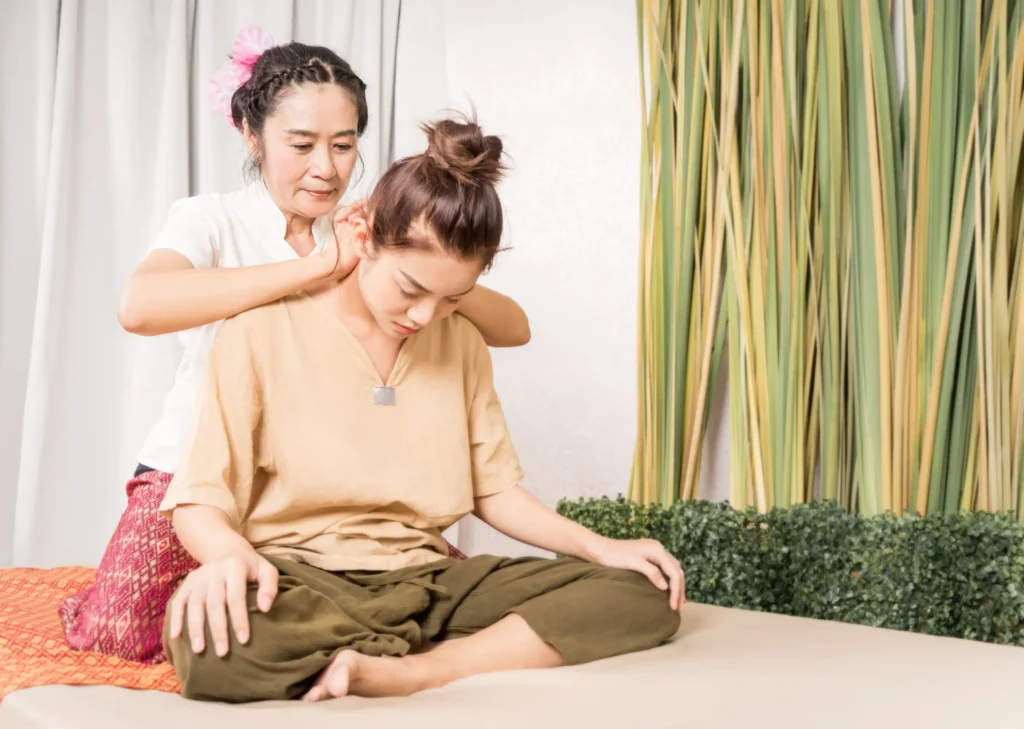
Who Is a Thai Massage Instructor?
A Thai massage instructor is someone who has systematic knowledge and skills in Thai massage, having completed training from a recognized institution or course, along with practical experience in providing services or teaching.
A qualified Thai massage instructor should have knowledge in areas such as:
- Basic understanding of traditional Thai medicine
- Basic anatomy
- Techniques of pressing, kneading, and stretching muscles
- Ability to assess clients’ conditions at a basic level
Note: These skills help ensure effective massage and reduce potential risks to clients.
Standard Thai Massage Training Process
Training in Thai massage generally includes both theoretical and practical components to ensure a full understanding of concepts and real-world application.
1. Theoretical Study
At the beginning, students learn the fundamentals of Thai massage, such as:
- History and principles of Thai massage
- Energy lines in the body (Sen Sib)
- Basic anatomy
- Contraindications and precautions
- Basic client assessment
Note: Theory helps students understand body structure and choose appropriate techniques.
2. Practical Training
Practical training is the most important part, as it develops hands-on skills.
Students practice:
- Pressure techniques along energy lines
- Muscle relaxation techniques
- Safe positioning of clients
- Controlling pressure levels
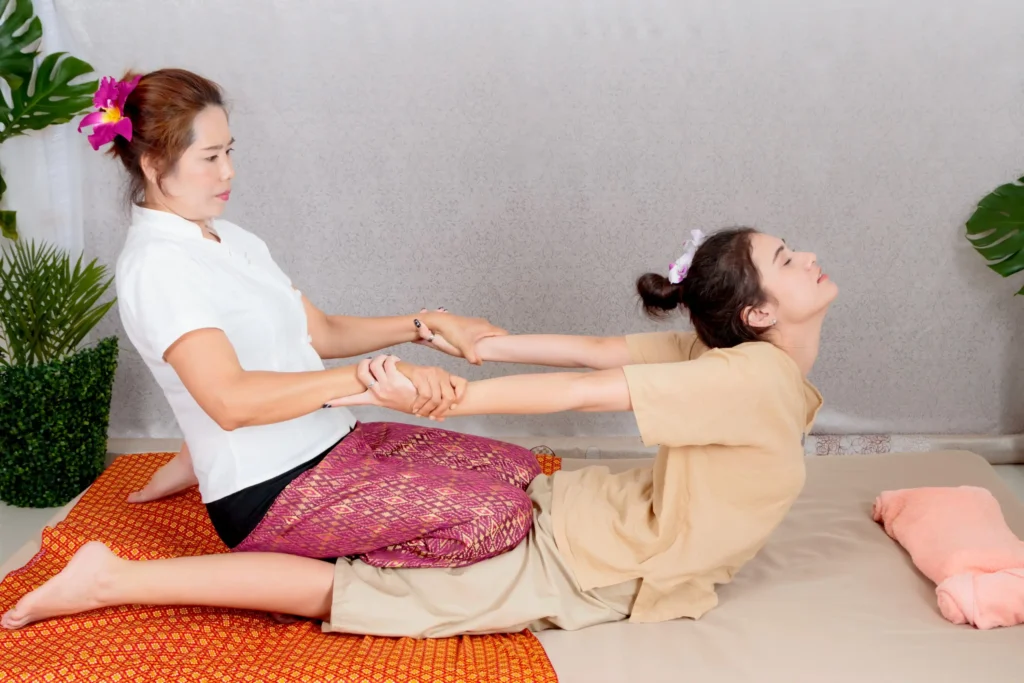
- Thai-style stretching techniques
Note: Practice must be repeated multiple times to build proficiency.
3. Assessment
Before completing the course, students are evaluated in both theory and practice, such as:
- Written or knowledge exams
- Demonstration of massage procedures
- Safety assessment
Note: After passing, students receive a certificate from the training institution.
4. Licensing or Registration
In Thailand, those who wish to work professionally as Thai massage therapists may need to:
- Complete an accredited course
- Obtain a certificate
- Register according to relevant regulations
Note: These steps help maintain professional standards and build client trust.ช้บริการ
Training Duration
Thai massage courses vary in length depending on the level:
- Short basic courses (ประมาณ 30–60 hours)
- Standard courses (ประมาณ 100–150+ hours)
- Advanced or specialized courses
Generally, the more hours of training, the higher the level of skill and expertise.
Why Are Training Standards Important?
Massage involves direct physical care. Without proper knowledge and skills, problems may occur, such as:
- Applying pressure to incorrect points
- Using inappropriate force
- Ignoring contraindications in clients with health conditions
Professionally trained therapists can:
- Adjust pressure appropriately
- Choose techniques suitable for each condition
- Communicate and care for clients safely
Continuous Skill Development
Even after completing training, many Thai massage therapists continue to improve by:
- Attending additional courses
- Learning new techniques
- Updating knowledge in health and anatomy
Ongoing development helps maintain long-term service quality.
How to Identify a Properly Trained Therapist
Before choosing a service, you can observe professionalism through:
- Certificates or training documents
- Clear explanation of procedures
- Asking about your health history before massage
- Adjusting pressure based on your needs
Note: These reflect professionalism and attention to client care.
Conclusion
A qualified Thai massage therapist must undergo both theoretical and practical training, pass evaluations, and may need certification according to regulatory requirements.
Systematic training ensures that practitioners can safely and effectively care for clients.
Therefore, choosing a properly trained therapist not only builds confidence but also allows you to fully benefit from the art of Thai massage.
ติดต่อ Victoria Bangkok
บริการนวดนอกสถานที่ในกรุงเทพฯ ดูแลโดยทีมหมอนวดมืออาชีพ พร้อมให้คุณผ่อนคลายอย่างเป็นส่วนตัว สะดวก และปลอดภัย
- Phone: 093-093-4663
- WhatsApp: Victoria Bangkok
- LINE Official Account: Victoria Bangkok
- Website: www.victoriabangkok.com
- Maps: The Victoria Outcall Bangkok
📌 แนะนำให้จองล่วงหน้า เพื่อให้เราเตรียมหมอนวดที่เหมาะกับคุณที่สุด

- Date
- View
- Comment