
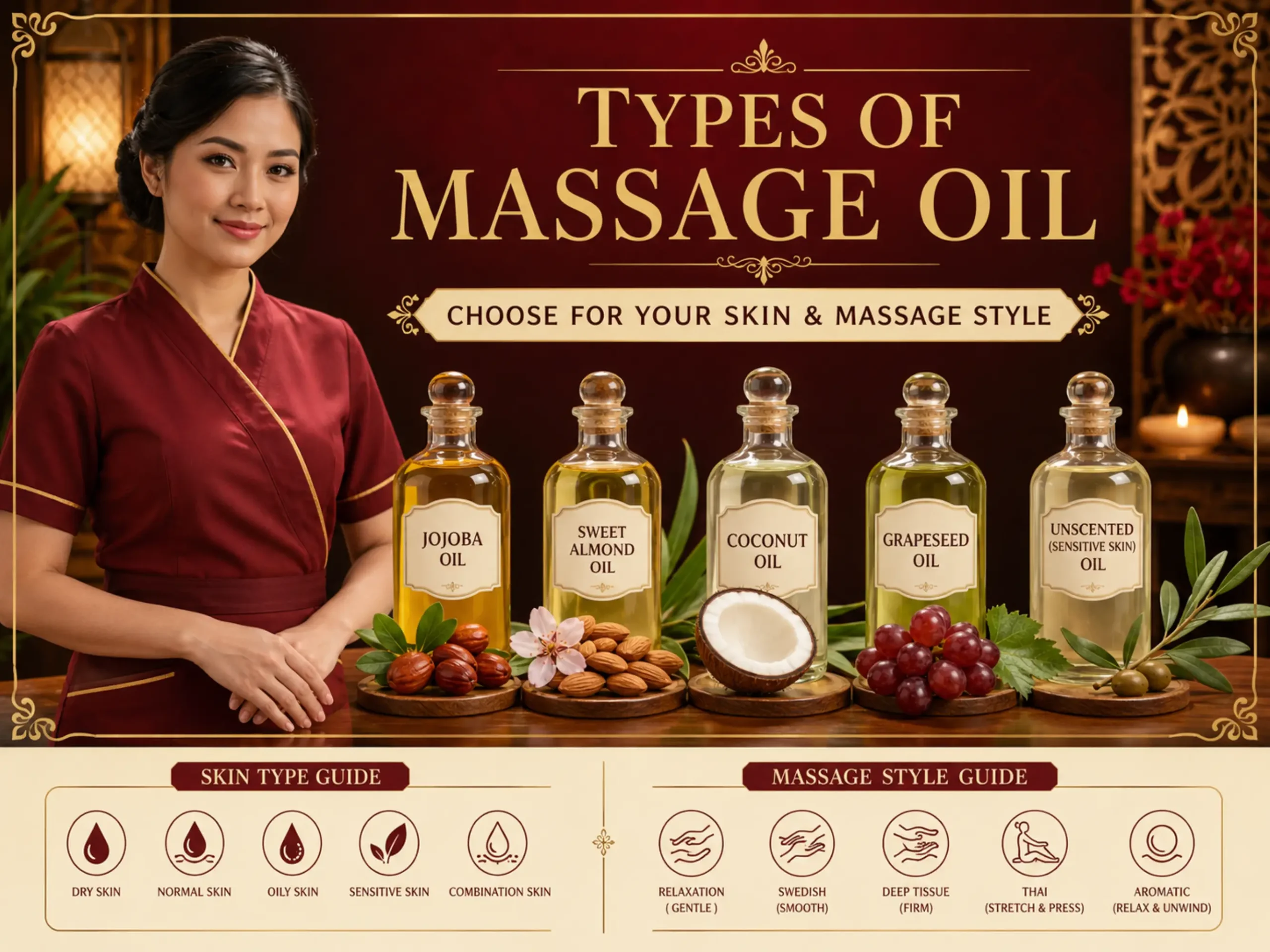
Each type of massage oil differs in texture, glide, scent, after-feel, and risk of irritation. Those who dislike stickiness might prefer lightweight oils, while those with dry skin may prefer oils that provide a longer-lasting glide on the skin.
This article focuses specifically on 8 types of massage oils and how to choose the right one for your skin, without repeating techniques, steps, benefits, or service formats covered on the What is Oil Massage? and What is Aromatherapy Massage? pages.
The word “natural” does not mean it is safe for everyone. Oils from nuts, sesame, coconut, fragrances, and essential oils can cause allergic reactions or irritation. Those with sensitive skin, skin conditions, or a history of food allergies should check the ingredients before use.
Table of Contents

Comparison of 8 Types of Massage Oils
| Type of Oil | Texture | Glide | Suitable For | Precautions |
|---|---|---|---|---|
| Coconut | Medium | Fairly long | Normal to dry skin | Check for coconut allergy and added fragrances |
| Sweet Almond | Soft, not too heavy | Long | Normal and dry skin | Nut allergy sufferers should avoid |
| Jojoba | Light to medium | Medium | Those who dislike stickiness | Usually expensive and may be a blended formula |
| Grapeseed | Light | Short to medium | Normal or oily skin | May need reapplication during massage |
| Sunflower | Light to medium | Medium | Normal and slightly dry skin | Check for fragrances and additives |
| Avocado | Fairly heavy | Long | Dry skin or rough patches | May be too greasy in hot weather |
| Olive | Heavy | Very long | Those who prefer rich oils | Strong scent and can be sticky |
| Sesame | Medium to heavy | Long | Normal to dry skin | Sesame allergy sufferers should avoid |
Note: The actual texture may vary depending on the manufacturing process, purity, blended formula, and the amount used. Therefore, you should consider the actual product label and not judge solely by the oil’s name.
1. Coconut Oil
Coconut oil provides a good glide and spreads easily, making it suitable for full-body massages. Different formulas may be pure oil, cold-pressed, or fractionated, which provide different scents and weights on the skin.
- Suitable for: Normal to dry skin, and those who prefer a fairly long-lasting glide.
- Feel: May leave some oily residue after the massage.
- Caution: Allergies to coconut, fragrances, or additional ingredients.
2. Sweet Almond Oil
Sweet almond oil provides a soft, smooth feel and is not as heavy as olive or avocado oil, making it popular as a base oil and carrier for essential oils.
- Suitable for: Normal and dry skin.
- Feel: Continuous glide with medium absorption.
- Caution: Those with a history of nut allergies should avoid it and inform the shop before use.
3. Jojoba Oil
Jojoba is like a liquid wax, offering a light feel, easy spreading, and usually leaving less stickiness than heavy oils.
- Suitable for: Those who dislike greasiness, normal skin, or relatively oily skin.
- Feel: Light to medium, mild natural scent.
- Check: Whether it is pure jojoba or a blend, as other ingredients affect the texture and potential allergies.
4. Grapeseed Oil
Grapeseed oil is lightweight, has a mild scent, and absorbs relatively quickly, making it suitable for those who do not want a lingering oily feel on their skin.
- Suitable for: Normal skin, relatively oily skin, and hot weather.
- Feel: Light and comfortable on the skin.
- Limitation: Absorbs quickly, so it may need reapplication during long massages.
5. Sunflower Oil
Sunflower oil has a light to medium texture, a subtle scent, and is popular in blended formulas because it spreads easily.
- Suitable for: Normal and slightly dry skin.
- Feel: Not too heavy with a mild scent.
- Check: Fragrances, dyes, preservatives, and essential oils in the formula.
6. Avocado Oil
Avocado oil is rich and maintains its glide for a long time, so it is often used for dry skin or blended with lighter oils to reduce heaviness.
- Suitable for: Dry skin and rough patches.
- Feel: Rich and more coating on the skin.
- Limitation: May feel too heavy for oily skin or in hot weather.
7. Olive Oil
Olive oil has a relatively thick texture, a distinct scent, and provides a very long-lasting continuous glide, suitable for those who like rich oils.
- Suitable for: Dry skin and massages requiring prolonged glide.
- Feel: Thick and may need to be wiped off after the massage.
- Limitation: Distinct scent and can be sticky for those with oily skin.
8. Sesame Oil
Sesame oil has a medium to fairly heavy texture, the characteristic scent of sesame seeds, and maintains glide well.
- Suitable for: Normal to dry skin.
- Feel: Long-lasting glide and may leave an oily residue on the skin.
- Caution: Those with a sesame allergy should avoid it and check all blended formulas.

How to Choose Massage Oil by Skin Type?
| Skin Type or Need | Potentially Suitable Oils | What to Check |
|---|---|---|
| Dry skin | Coconut, sweet almond, avocado, olive | Start with a small amount to reduce stickiness |
| Oily skin or dislike greasiness | Jojoba, grapeseed, sunflower | A light texture does not guarantee it won’t clog pores or irritate |
| Sensitive skin | Formulas with minimal ingredients and fragrance-free | Choose Fragrance-Free and avoid essential oils if previously allergic |
| Nut allergy | Avoid almond and formulas without listed ingredients | Clearly inform the shop before starting |
| Sesame allergy | Avoid sesame oil | Check ingredient names and blended formulas |
| Dislike strong scents | Jojoba, grapeseed, sunflower | Check for added fragrances and essential oils |
What is the Difference Between Carrier and Essential Oils?
| Topic | Carrier Oils | Essential Oils |
|---|---|---|
| Function | Reduces friction and serves as the main base of the product | Adds scent or is used in aromatherapy |
| Amount used | Used in larger amounts | Used in small amounts because they are highly concentrated |
| Use on skin | Some can be used alone | Most should be diluted before use |
| Risks | Allergies based on plant type or ingredients | Irritation, allergies, or photosensitivity in some types |
| Examples | Coconut, jojoba, almond | Lavender, peppermint, orange |
Most essential oils should not be applied directly to the skin and should not be mixed yourself without knowing the proper ratios. Those wanting specific information about scents should read What is the difference between aroma scents?.
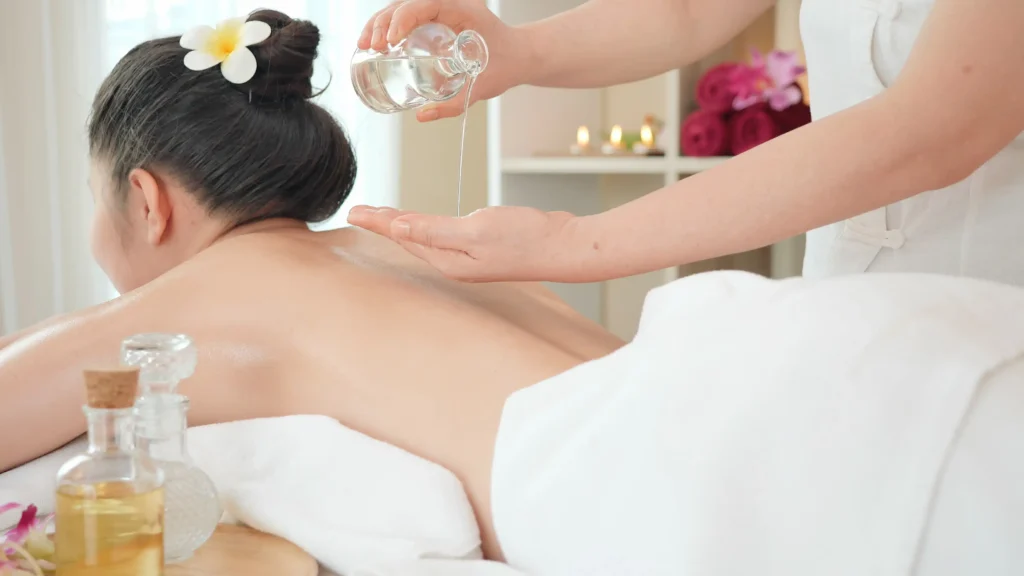
Allergy and Irritation Precautions
- Stop using if you experience stinging, itching, burning, redness, or skin swelling.
- Nut allergy sufferers should avoid almond oil and unlisted formulas.
- Sesame allergy sufferers should avoid sesame oil.
- Those allergic to fragrances or essential oils should choose Fragrance-Free formulas.
- Do not use on open wounds, infected skin, or inflamed areas.
- If experiencing difficulty breathing or facial/neck swelling, seek medical help immediately.
A patch test for a few minutes does not guarantee you won’t have a reaction later. Those with a history of multiple allergies or skin conditions should consult a dermatologist before trying new products.
What to Check on the Label Before Use?
- Full list of ingredients
- Main carrier oil used
- Fragrances and essential oils
- Ingredients from nuts, sesame, or coconut
- Manufacturing date, expiration date, and batch number
- Warnings and storage instructions
- Manufacturer or importer name
Do not use products without labels, missing ingredient lists, or if the smell, color, and texture have changed.

Summary: Which Massage Oil to Choose?
- Dislike stickiness: Jojoba, grapeseed, or sunflower
- Dry skin: Coconut, sweet almond, avocado, or olive
- Need long-lasting glide: Almond, olive, or sesame
- Sensitive skin: Formulas with minimal ingredients, fragrance-free, and essential oil-free
- History of food allergies: Check for nut, sesame, and coconut ingredients before use
No single oil is best for everyone. The choice should depend on skin type, scent preference, after-feel, and allergy history. Those wishing to receive a service can see details at Outcall Oil Massage Service.
Frequently Asked Questions About Massage Oils
Which massage oil is not sticky?
What oil should sensitive skin choose?
Can someone with a nut allergy use almond oil?
Can essential oils be applied directly to the skin?
Are massage oils and aroma oils the same?
Which oil is suitable for dry skin?
References
- Anaphylaxis UK. Plant-based Oils. Anaphylaxis UK. https://www.anaphylaxis.org.uk/fact-sheet/plant-based-oils/
- Anaphylaxis UK. Cosmetics, Personal Care Products and Medicines. Anaphylaxis UK. https://www.anaphylaxis.org.uk/fact-sheet/cosmetics-personal-care-products-and-medicines/
- NHS Borders. Aromatherapy Guideline for Midwifery Practice. Right Decisions Scotland. https://www.rightdecisions.scot.nhs.uk/nhs-borders-clinical-guidelines/obstetrics-gynaecology/maternity/antenatal/aromatherapy-guideline-for-midwifery-practice/
- U.S. Food and Drug Administration. Fragrances in Cosmetics. FDA. https://www.fda.gov/cosmetics/cosmetic-ingredients/fragrances-cosmetics
- U.S. Food and Drug Administration. Allergens in Cosmetics. FDA. https://www.fda.gov/cosmetics/cosmetic-ingredients/allergens-cosmetics
- U.S. Food and Drug Administration. Cosmetics Labeling Guide. FDA. https://www.fda.gov/cosmetics/cosmetics-labeling-regulations/cosmetics-labeling-guide
- National Health Service. Anaphylaxis. NHS. https://www.nhs.uk/conditions/anaphylaxis/
- DermNet New Zealand. Allergic Contact Dermatitis to Essential Oils. DermNet. https://dermnetnz.org/topics/allergic-contact-dermatitis-to-essential-oils
- National Center for Complementary and Integrative Health. Tea Tree Oil: Usefulness and Safety. NCCIH. https://www.nccih.nih.gov/health/tea-tree-oil
Contact Victoria Bangkok
We provide professional outcall massage services in Bangkok, delivered by a team of experienced massage therapists. Enjoy a relaxing experience that is private, convenient, and safe.
- Phone: 093-093-4663
- WhatsApp: Victoria Bangkok
- LINE Official Account: Victoria Bangkok
- Website: www.victoriabangkok.com
- Maps: The Victoria Outcall Bangkok
📌 We recommend booking in advance so we can arrange the most suitable massage therapist for your needs.
- Date
- View
- Comment