Traditional Thai massage is a natural healing practice that has been part of Thai culture for centuries. Many people know Thai massage as a way to relieve muscle pain or relax the body, but in reality, it is much more than that. It is an ancient therapeutic system that combines knowledge of the body, energy lines, and movement in a structured way.
With its unique identity and effectiveness in restoring health, Thai massage has gained recognition both in Thailand and internationally, becoming one of Thailand’s most distinctive wellness practices.
This article will help you fully understand Thai massage—from its meaning and principles to its benefits, suitability, and how it differs from other types of massage.
Table of Contents

What Is Thai Massage?
Traditional Thai massage is a therapeutic practice that uses various techniques, including:
- Pressing
- Squeezing
- Kneading
- Stretching and body manipulation
These techniques are applied along the body’s energy pathways, known as the Ten Sen Lines, which are believed to connect different systems within the body.
Therapists use their hands, elbows, knees, feet, and body weight to apply pressure and perform stretches in order to:
- Relieve muscle tension
- Stimulate blood circulation
- Restore balance in the body
One of the key characteristics of Thai massage is that it does not use oil, and the recipient remains fully clothed in comfortable attire. The focus is on stretching and body movement.
History of Thai Massage
Thai massage originates from traditional Thai medicine and has a history spanning hundreds of years. It has been influenced by both Indian and Chinese medical traditions.
Knowledge of Thai massage has been passed down through:
- Traditional healers and practitioners
- Temples and Thai medical schools
- Community-based teaching across generations
Over time, Thai massage has been standardized and developed into a recognized form of wellness practice worldwide.
Key Principles of Thai Massage
The core of Thai massage is holistic health, focusing on balancing the body through several key principles:
1. Working Along Energy Lines (Ten Sen Lines)
It is believed that energy flows through pathways in the body. When blocked, it can cause pain or imbalance.
2. Acupressure
Applying pressure along these lines helps release tension and improve circulation.
3. Stretching
Stretching techniques improve flexibility of muscles and joints.
4. Balancing the Body’s Elements
According to Thai medicine, maintaining balance among the four elements is essential for good health.
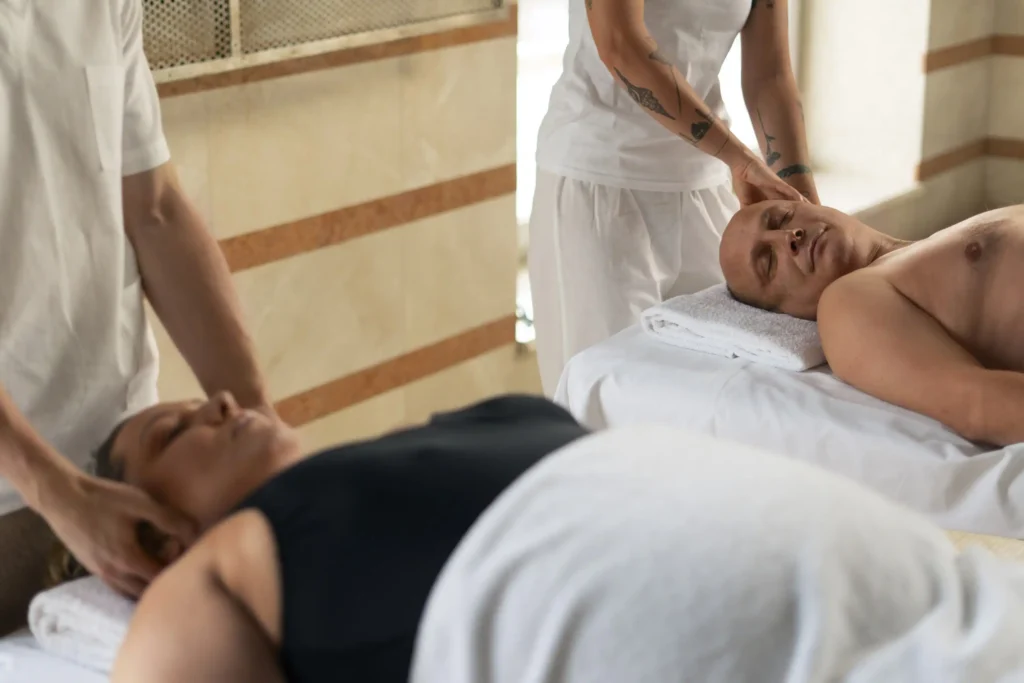
Characteristics of Thai Massage
Thai massage has unique features that distinguish it from other types:
- Performed on a mat or mattress on the floor
- The recipient wears comfortable clothing
- Slow, rhythmic pressure is applied
- Includes stretching, pulling, and body positioning
Thai massage is often described as “yoga for the passive body” because it stretches and relaxes the body simultaneously.
Note: A typical session lasts around 60–120 minutes.
Benefits of Thai Massage
Thai massage offers both physical and mental benefits:
- Relieves muscle pain and tension
Helps loosen tight muscles from work or physical strain - Improves blood circulation
Enhances oxygen flow and promotes a refreshed feeling - Increases flexibility
Improves movement in muscles and joints - Reduces stress
Calms the nervous system and promotes relaxation - Improves sleep quality
A relaxed body supports better sleep
Who Is Thai Massage Suitable For?
Thai massage is suitable for many people, including:
- Office workers who sit for long hours
- Individuals with neck, shoulder, or back pain
- Those who prefer massage without oil
- People seeking natural body recovery
However, individuals with serious injuries, pregnancy, or certain medical conditions should consult a professional before receiving massage.
How Is Thai Massage Different from Other Types?
| Massage Type | Key Feature |
|---|---|
| Thai Massage | Pressure and stretching, no oil |
| Oil Massage | Relaxation and skin nourishment |
| Swedish Massage | Western-style muscle kneading |
| Acupressure | Focus on pressure points (Chinese medicine) |
These differences make Thai massage unique in its combination of body restoration and movement therapy.

Summary
Thai massage is a traditional healing practice that combines acupressure, stretching, and energy balancing. It helps relieve muscle pain, restore the body, and promote mental relaxation.
With its cultural value and health benefits, Thai massage remains one of the most popular natural wellness therapies both in Thailand and around the world.
If you are looking for a way to restore both body and mind, Thai massage can be an excellent choice for long-term health and relaxation.
References
Contact Victoria Bangkok
We provide professional outcall massage services in Bangkok, delivered by a team of experienced massage therapists. Enjoy a relaxing experience that is private, convenient, and safe.
- Phone: 093-093-4663
- WhatsApp: Victoria Bangkok
- LINE Official Account: Victoria Bangkok
- Website: www.victoriabangkok.com
- Maps: The Victoria Outcall Bangkok
📌 We recommend booking in advance so we can arrange the most suitable massage therapist for your needs.

- Date
- View
- Comment